11 Ajaw 13 K’ayab (March 1, 2015): Jolom Konob’ (Santa Eulalia), Guatemala. Final Installment11 Ajaw 13 K’ayab (1 de marzo de 2015): Jolom Konob’ (Santa Eulalia), Guatemala. Entrega final.

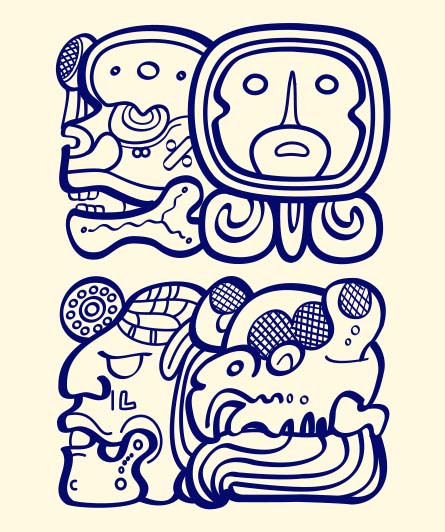
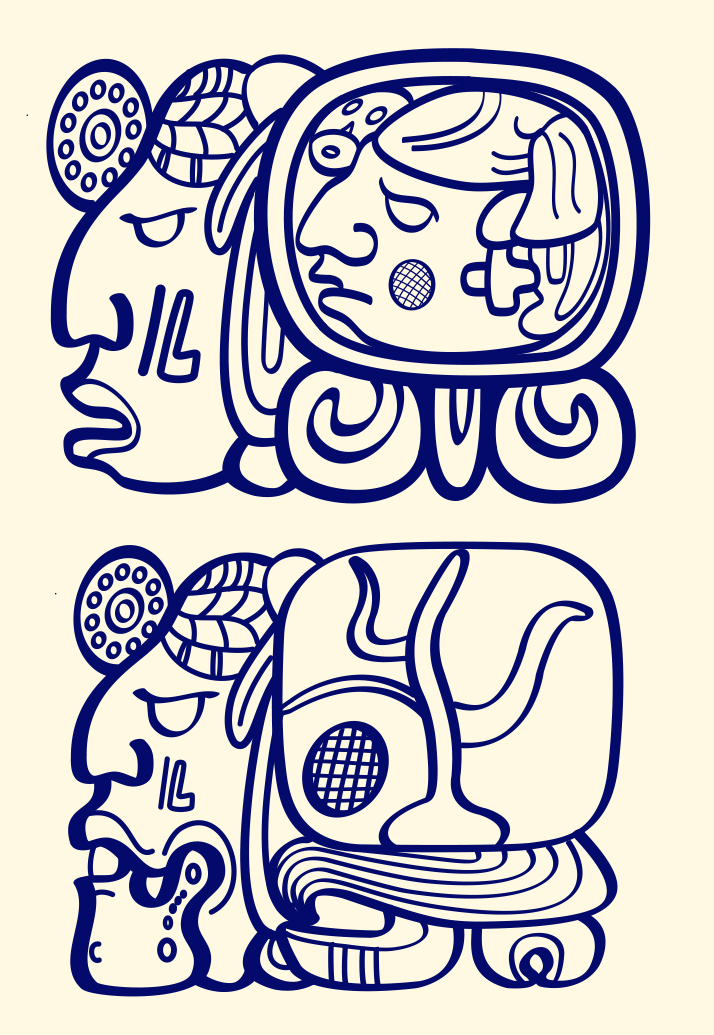
11 Ajaw 13 K'ayab. Drawing by Jorge Pérez de Lara.

11 Ajaw 13 K’ayab. Drawing by Jorge Pérez de Lara.

Dear readers, we have lingered on Santa Eulalia for some time now, this being the fourth and final blog post from there.

In the 1920s, almost a century ago, anthropologists rocked the academic world by discovering the Maya calendar still in use in the remote Cuchumatanes Mountains of Guatelmala, which of course was not news to the Mayas themselves who incorporate the tsolk’in and the year bearers in their daily lives.
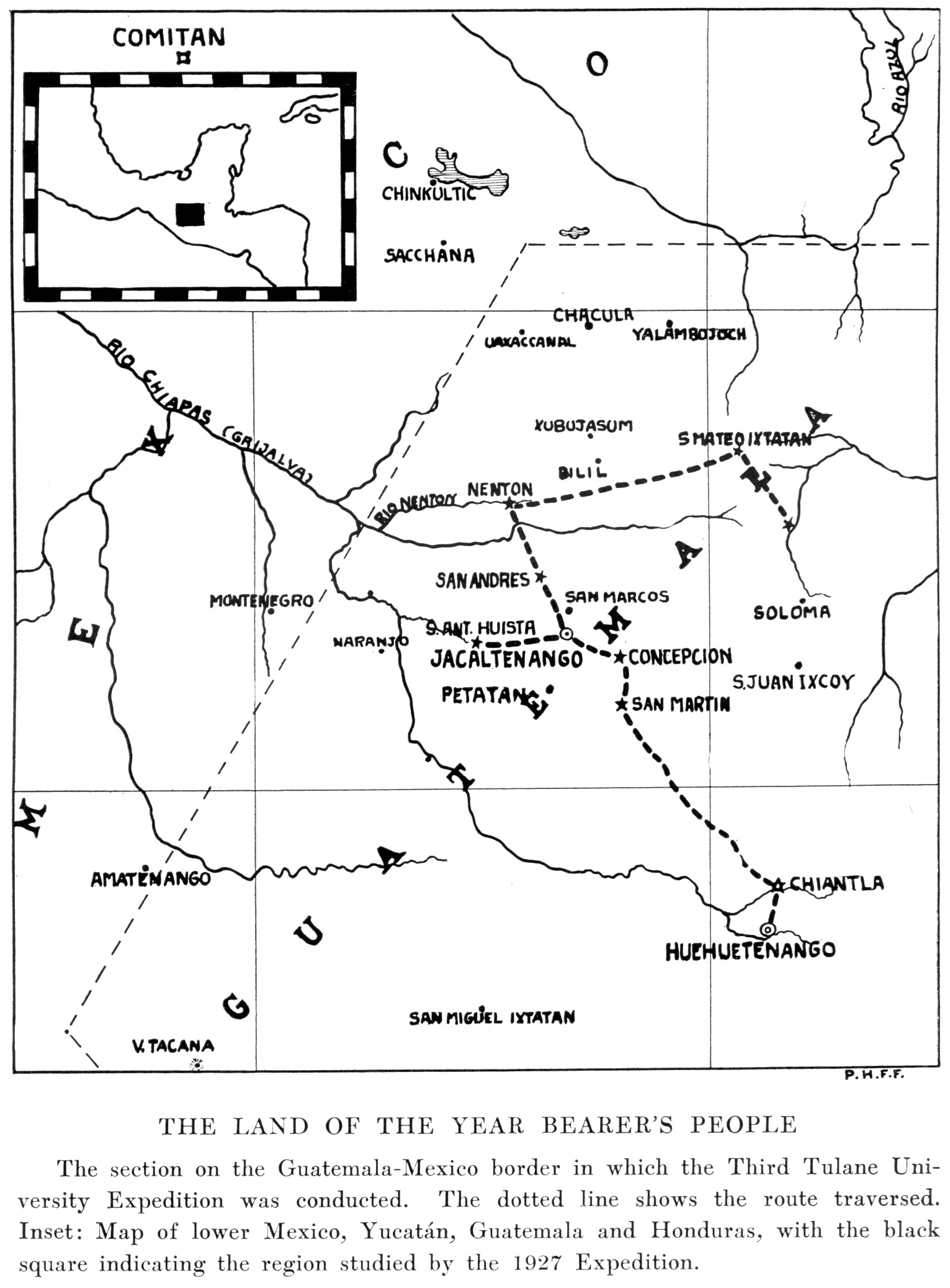
Study area of the 1927 Tulane University expedition from The Year Bearer’s People (1931) by Oliver La Farge and Douglas Byer.

Study area of the 1927 Tulane University expedition from The Year Bearer’s People (1931) by Oliver La Farge and Douglas Byer.

Oliver La Farge returned to Santa Eulalia in 1932 to focus specifically on the calendar and bring to the outside world its inner workings and the ways of the people using it.

11 Ajaw 13 K'ayab. Dibujo por Jorge Pérez de Lara.

11 Ajaw 13 K’ayab. Dibujo por Jorge Pérez de Lara.

Queridos lectores: nos hemos detenido en Santa Eulalia ya por bastante tiempo, siendo este el cuarto y último blog enviado desde ahí.

En la década de 1920, hace casi un siglo, los antropólogos causaron una sensación en el mundo académico cuando descubrieron que el calendario maya continuaba utilizándose en las remotas montañas de los Cuchumatanes, en Guatemala; esto, desde luego, no tenía nada de novedoso para los mayas mismos, quienes incorporan al tsolk’in y a los cargadores del año en sus vidas diarias.

Área de estudio de la expedición de la Universidad de Tulane en 1927, de The Year Bearer’s People (El Pueblo de los Cargadores del Año) (1931), de Oliver La Farge y Douglas Byer.

Área de estudio de la expedición de la Universidad de Tulane en 1927, de The Year Bearer’s People (El Pueblo de los Cargadores del Año) (1931), de Oliver La Farge y Douglas Byer.

Oliver La Farge volvió a Santa Eulalia en 1932, con el fin de concentrarse de manera específica en el calendario y poder así revelar al mundo exterior su mecanismo interno y las formas en que la gente lo usaba. Continue reading
Posted in New

4 Ajaw 13 Pax (Feburary 9, 2015): Jolom Konob’ (Santa Eulalia), Guatemala. Part III4 Ajaw 13 Pax (9 de febrero de 2015): Jolom Konob’ (Santa Eulalia), Guatemala. Parte III

4 Ajaw 13 Pax. Drawing by Jorge Pérez de Lara.

4 Ajaw 13 Pax. Drawing by Jorge Pérez de Lara.

The nature of Classic Maya writing was explained using examples taken directly from the stelae. This was followed by study of the calendar system, including the Long Count, the Tzolk’in (Stxolilal Q’inale’ in Q’anjob’al) and the Haab.

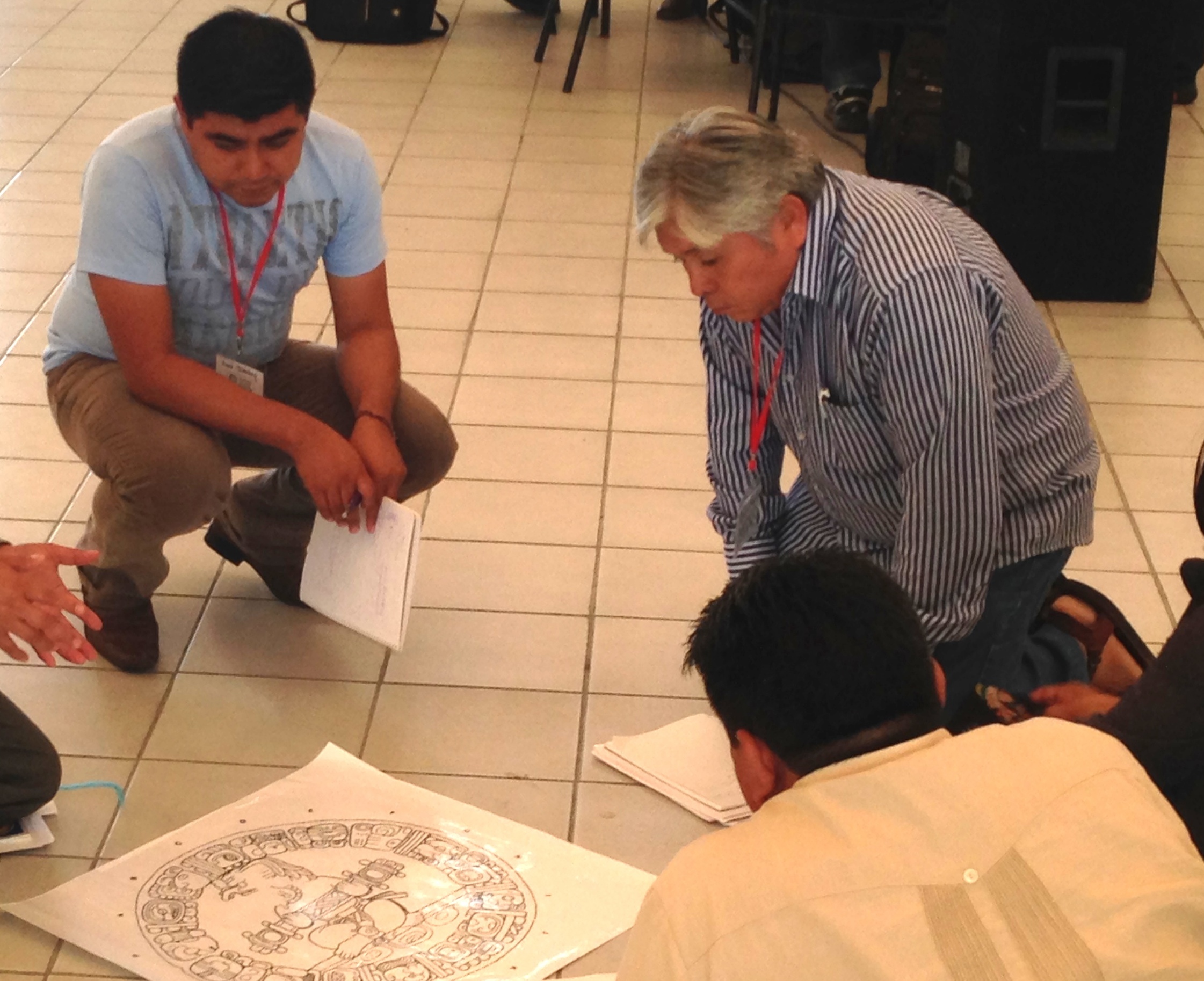
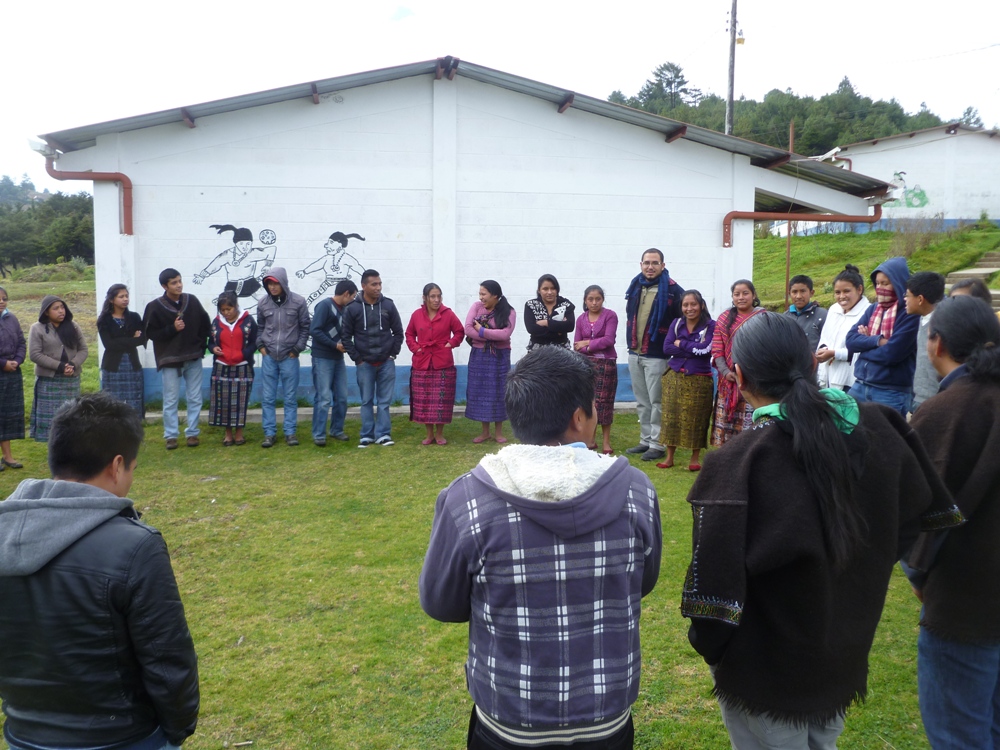
To better explain the calendars, exercise activities were done showing how the calendars worked. To understand the Cholq’ij (Tzolk’in) the participants formed two circles, one representing the 20 day-names and the other the numbers 1-13. The idea was the students learned how at the point where the two circles came together they were creating a single date; in effect the students themselves became a living calendar of 260 days!

An exercise to practice the numbers in Q’anjob’al directed by Igor.

An exercise to practice the numbers in Q’anjob’al directed by Igor.

4 Ajaw 13 Pax. Dibujo por Jorge Pérez de Lara.

4 Ajaw 13 Pax. Dibujo por Jorge Pérez de Lara.

Se explicó la naturaleza del sistema de escritura maya clásico, utilizando ejemplos tomados directamente de las estelas. Después de esto también se estudio el sistema calendárico, incluyendo la Cuenta Larga, el Tzolk’in (Stxolilal Q’inale’ en Q’anjob’al) y el Hab’il (Haab’).

Para explicar mejor los calendarios se realizaron algunas dinámicas para ejemplificar cómo funcionaban. Para entender mejor el funcionamiento del Cholq’ij (Tzolk’in), se hizo que los participantes formaran dos ruedas: una representando los 20 nombres de los días y otra los números del 1-13. La idea de la dinámica era que los estudiantes aprendieran como ambas ruedas se correspondían para crear una determinada fecha, de esta manera los mismos participantes se convirtieron en un calendario viviente de 260 días.

Una dinámica para practicar los números en Q'anjob'al dirigida por Igor.

Una dinámica para practicar los números en Q’anjob’al dirigida por Igor.

Continue reading

Posted in New

10 Ajaw 13 Muwan (January 20, 2015): Jolom Konob’ (Santa Eulalia), Guatemala. Part II10 Ajaw 13 Muwan (20 de enero 2015): Jolom Konob’ (Santa Eulalia), Guatemala. Parte II

10 Ajaw 13 Muwan. Drawing by Jorge Pérez de Lara.

10 Ajaw 13 Muwan. Drawing by Jorge Pérez de Lara.

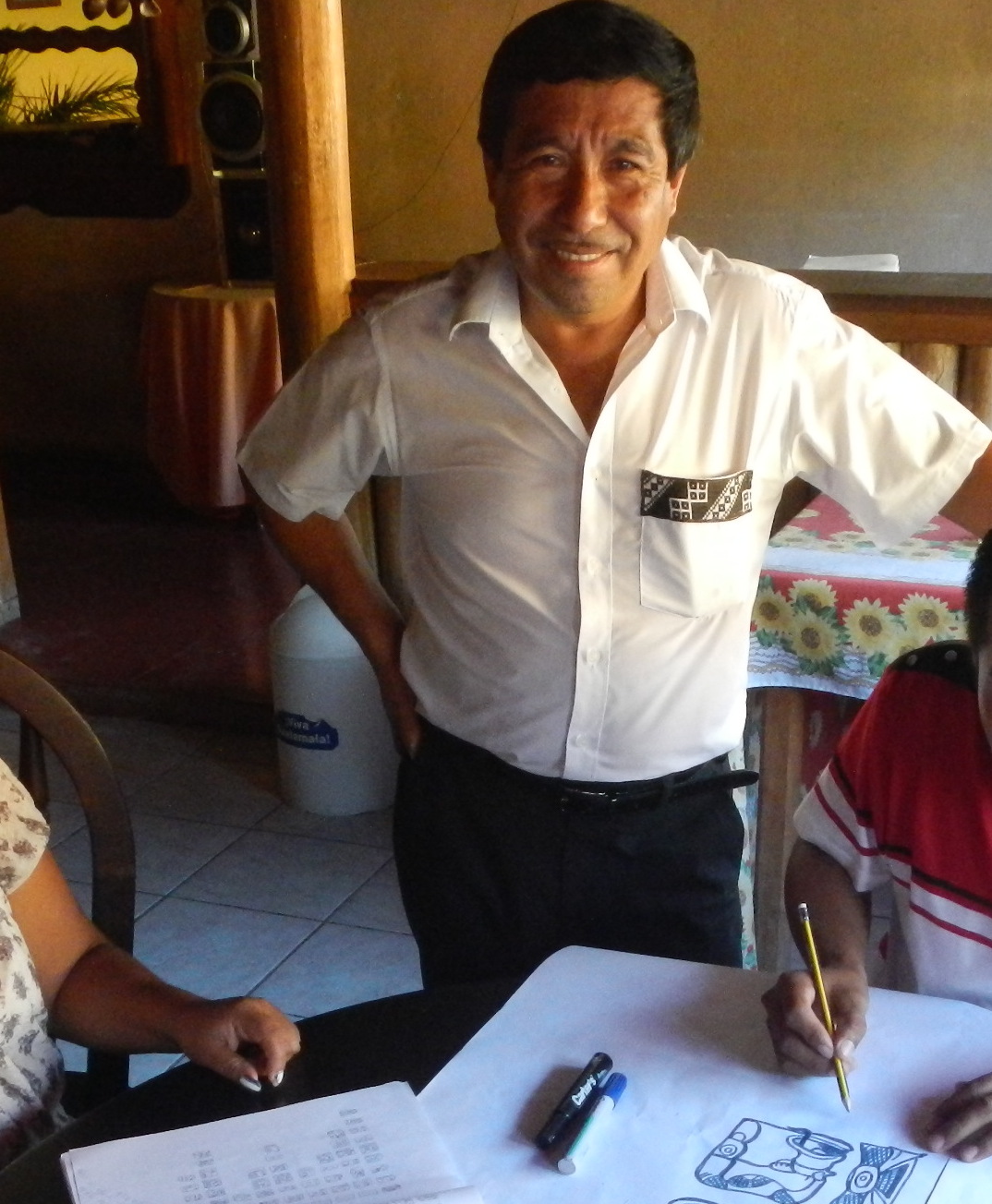
Happily, the workshop took place on the day 6 Kixkab’ (No’j/Kab’an) and 7 Chinax (Tijax/Etz’nab) (December 8 and 9, 2014). The facilitators were Igor Xoyón (Maya Kaqchikel), Karina Coy (Maya Kaqchikel) and Alejandro Garay of the Sak Chuwen Group, each of whom were participants in the recent International Congress of Maya Epigraphers that took place in Ocosingo, Chiapas.

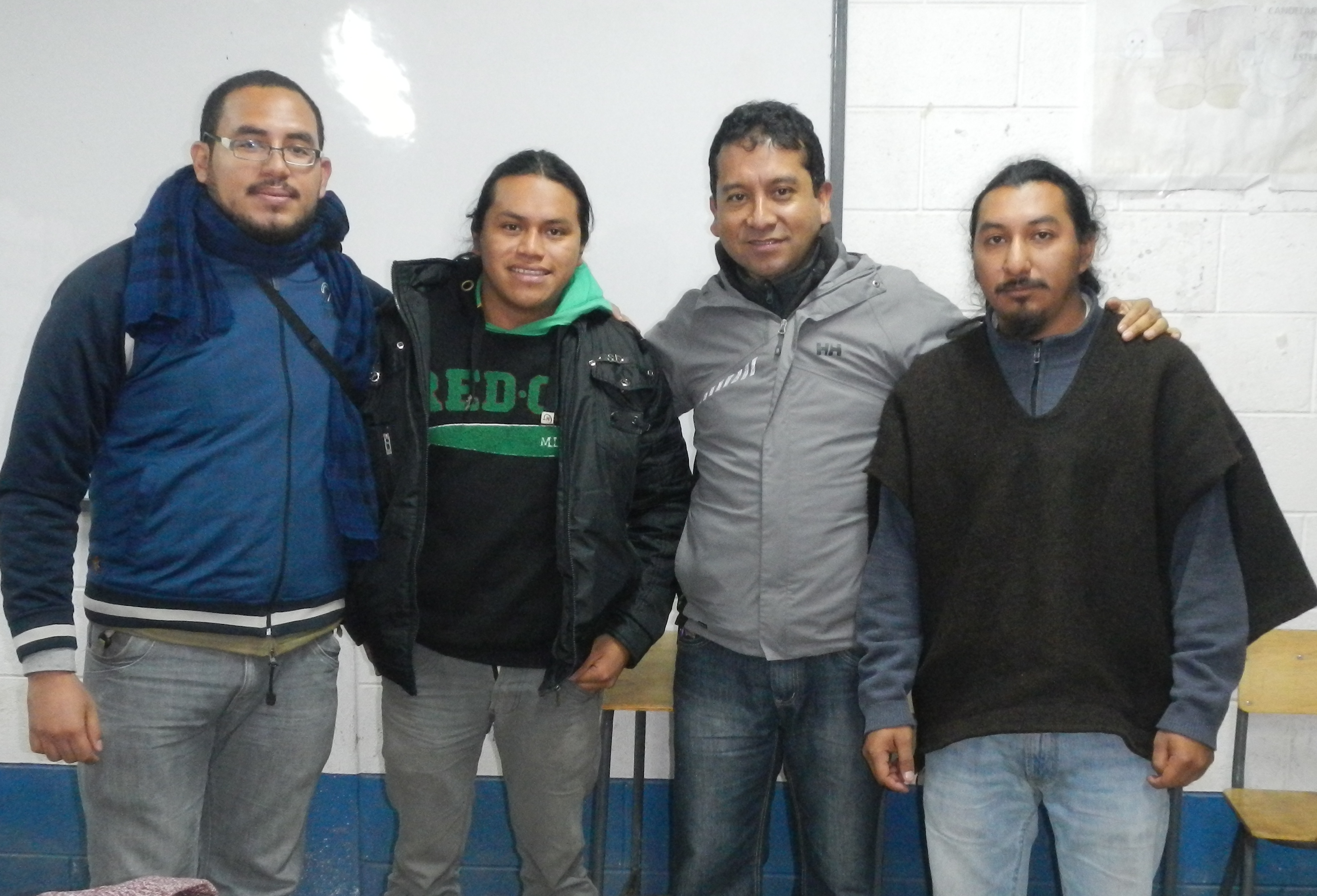
Organizers and instructors (left to right): Alejandro Garay, Kaxho, Igor Xoyon, and B’alam Sotz’.

Organizers and instructors (left to right): Alejandro Garay, Kaxho, Igor Xoyon, and B’alam Sotz’.

Although the workshop took place during very cold weather (around 45 degrees F.) the atmosphere was warm and friendly due to the great interest that the almost 40 participants showed, who were constantly asking questions and seeking answers. The workshop began with a short prayer invoking the ancestor Kixkab’, to thank him for the opportunity to learn about the history of the Maya people.

10 Ajaw 13 Muwan. Dibujo por Jorge Pérez de Lara.

10 Ajaw 13 Muwan. Dibujo por Jorge Pérez de Lara.

El taller felizmente se pudo realizar los días 6 Kixkab’ (No’j/Kab’an) y 7 Chinax (Tijax/Etz’nab’) (8 y 9 de diciembre de 2014). Como facilitadores para el taller llegaron: Igor Xoyón (Maya Kaqchikel), Karina Coy (Maya Kaqchikel) y Alejandro Garay del Grupo “Sak Chuwen”, todos ellos participantes del pasado Congreso Internacional de Mayistas que se realizó en Ocosingo, Chiapas.

Organizadores y facilitadores (izq. a der.): Alejandro Garay, Kaxho, Igor Xoyon, y B'alam Sotz'.

Organizadores y facilitadores (izq. a der.): Alejandro Garay, Kaxho, Igor Xoyon, y B’alam Sotz’.

Aunque el taller se realizó en un clima muy  frío (alrededor de 8°C), el ambiente del mismo fue muy cálido y amigable, debido al gran interés que mostraron los casi 40 participantes, que constantemente realizaron preguntas para resolver sus dudas. Se inició con una pequeña invocación al abuelo Kixkab’, para agradecer la oportunidad de aprender sobre el pasado del pueblo Maya. Continue reading

Posted in New

3 Ajaw 13 K’ank’in (December 31, 2014): Jolom Konob’ (Santa Eulalia), Guatemala. Part I3 Ajaw 13 K’ank’in (31 de diciembre 2014): Jolom Konob’ (Santa Eulalia), Guatemala. Parte I.

3 Ajaw 13 K'ank'in. Drawing by Jorge Pérez de Lara.

3 Ajaw 13 K’ank’in. Drawing by Jorge Pérez de Lara.

Jolom Konob’ (Santa Eulalia) in northern Huehuetenango is one of the most important towns of the Q’anjob’al Maya nation. It is also one of the most distant points in the Highlands that one can visit from Guatemala City, more than ten hours by car in the heart of the Cuchumatanes Mountains.

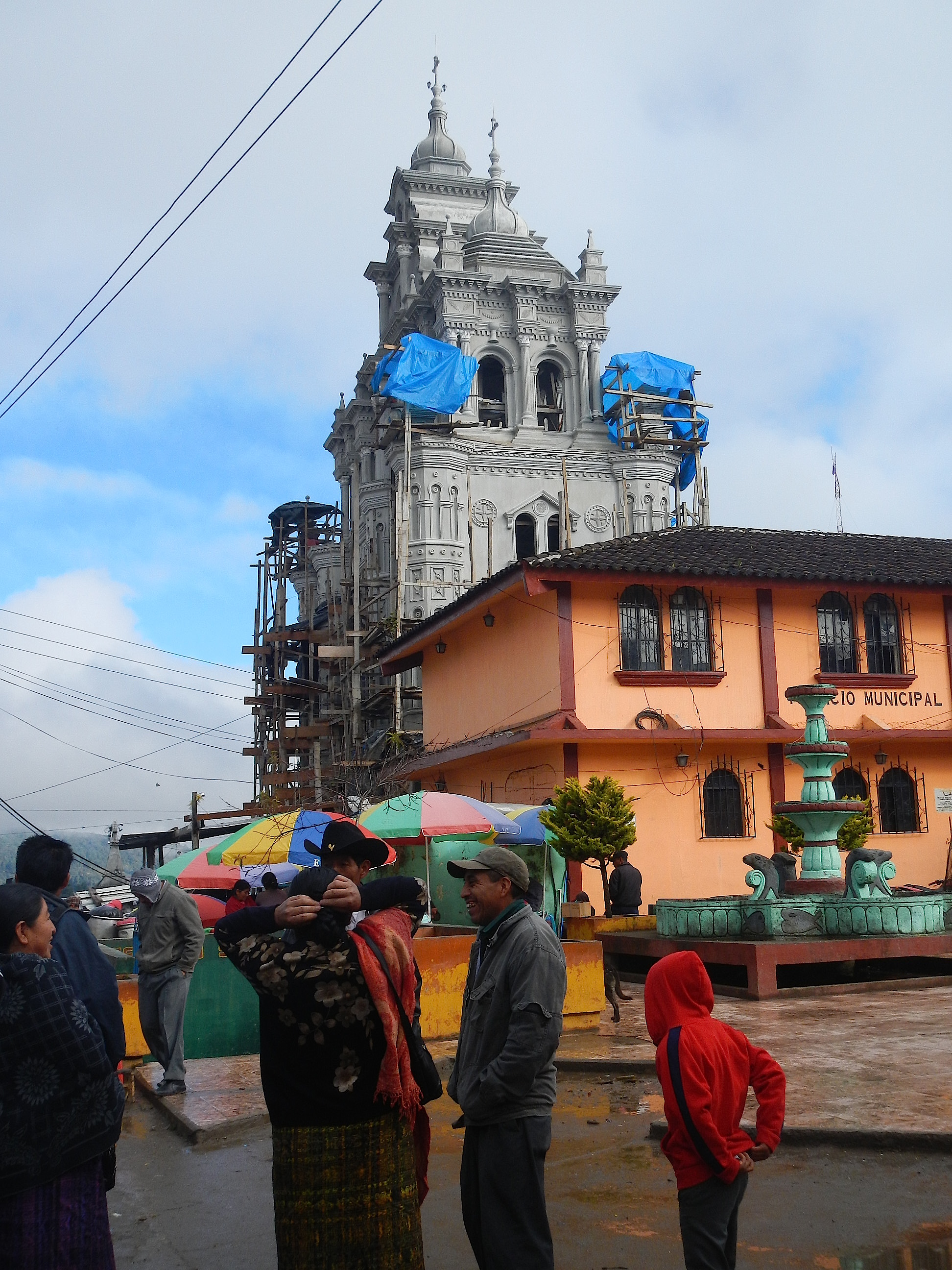
View of the church and central park of Santa Eulalia.

View of the church and central park of Santa Eulalia.

3 Ajaw 13 K'ank'in. Dibujo por Jorge Pérez de Lara.

3 Ajaw 13 K’ank’in. Dibujo por Jorge Pérez de Lara.

Jolom Konob’ (Santa Eulalia) es uno de los pueblos más importantes de la nación Maya Q’anjob’al del norte de Huehuetenango. Es uno de los puntos más distantes en las tierras altas que se pueden visitar desde la Ciudad de Guatemala, a poco más de 10 horas de camino, en plena Sierra de Los Cuchumatanes.

Panorámica de la iglesia y parque central de Santa Eulalia.

Panorámica de la iglesia y parque central de Santa Eulalia.

Continue reading

Posted in New

9 Ajaw 13 Mak (December 11, 2014): First Course in Epigraphy, Maní, Yucatán9 Ajaw 13 Mak (11 de diciembre de 2014): Curso Inicial de Epigrafía, Maní, Yucatán

9 Ajaw 13 Mak. Drawing by Jorge Pérez de Lara.

First Course in Epigraphy, Maní, Yucatán
July 14-18, 2014

Given by Iván Jiménez, Daniela Cano Chan, and Atilano Ceballos (these three were participants at the Second International Congress of Maya Epigraphers in Ocosingo, Chiapas).

Iván Jiménez (on the left) and Atilano Ceballos participating in the Second International Congress of Maya Epigraphers in Ocosingo, Chiapas.

Iván Jiménez (on the left) and Atilano Ceballos participating in the Second International Congress of Maya Epigraphers in Ocosingo, Chiapas.

July 14 and 15
2 Oc and 3 Chuen

The course began with a prayer to Father-Mother God giving thanks for the day and for what was occurring.

9 Ajaw 13 Mak. Dibujo por Jorge Pérez de Lara.

9 Ajaw 13 Mak. Dibujo por Jorge Pérez de Lara.

Curso Inicial de Epigrafía, Maní, Yucatán
14 -18 de Julio del 2014

Impartido por Iván Jiménez, Daniela Cano Chan, y Atilano Ceballos (los tres fueron participantes al Segundo Congreso Internacional de Epigrafistas Mayas en Ocosingo, Chiapas.)

Iván Jiménez (a la izquierda) y Atilano Ceballos (facilitadores) participando en el Segundo Congreso Internacional de Epigrafistas Mayas en Ocosingo, Chiapas.

Iván Jiménez (a la izquierda) y Atilano Ceballos (facilitadores) participando en el Segundo Congreso Internacional de Epigrafistas Mayas en Ocosingo, Chiapas.

14 y 15 de Julio
2 Oc y 3 Chuen

Se inicia el curso con una oración a Papá-Mamá Dios agradeciendo por el día y por lo que se llevara a cabo. Continue reading

Posted in New

2 Ajaw 13 Kej (November 21, 2014): Interview with MAM president Bruce Love2 Ajaw 13 Kej (21 de noviembre de 2014): Entrevista con el presidente de MAM Bruce Love

2 Ajaw 13 Kej. Drawing by Jorge Pérez de Lara.

2 Ajaw 13 Kej. Drawing by Jorge Pérez de Lara.

Dear Reader,

This month we are presenting a video interview instead of our usual blog entry. John Daigle, who produces the web site http://mayaglypher.com interviewed me at the recent Maya at the Playa Meetings in Palm Coast, Florida. The interview outlines our history and our future trajectory up to the point of our dissolution in 2016.

I apologize to our Spanish-speaking colleagues that this blog is only in English, but it may be worth playing the video to see the pictures. Next month we will return to our bi-lingual format.

Bruce Love, President
MAM

2 Ajaw 13 Kej. Dibujo por Jorge Pérez de Lara.

2 Ajaw 13 Kej. Dibujo por Jorge Pérez de Lara.

Estimados lectores:

Este mes les presentamos una entrevista en vídeo en lugar de nuestro habitual blog escrito. John Daigle, productor del sitio de internet http://mayaglypher.com me hizo una entrevista en la reciente conferencia conocida como Maya at the Playa, en Palm Coast, Florida. La entrevista presenta un esbozo de nuestro historial y aborda nuestro futuro, hasta llegar al momento de la disolución de MAM, en 2016.

De antemano, me disculpo con nuestros lectores hispanoparlantes por el hecho de que este blog se ofrezca sólo en inglés, pero podría tenerles cuenta reproducirlo para ver las imágenes. El mes entrante volveremos a nuestro formato bilingüe de siempre.

Bruce Love, Presidente
MAM

Posted in New

8 Ajaw 13 Sak (November 1, 2014): Mopan Maya Workshop, Petén8 Ajaw 13 Sak (2 de noviembre de 2014): Taller Mopán, Petén

8 Ajaw 13 Zak. Drawing by Jorge Pérez de Lara.

8 Ajaw 13 Zak. Drawing by Jorge Pérez de Lara.

During three days (October 1-3 or 3 Muluk-5 Chuwen) an introductory workshop of Maya epigraphy took place for Mopan Maya in San Luis, Petén. Mopanes arrived from Petén and Belize, as well as some Q’eqchi’ speakers, altogether more than 35 participants.

The workshop was inspired by one of the groups of participants at the 2nd International Congress of Maya Epigraphers. The Mopan Mayas that attended the congress, led by the president of the Mopan Linguistic Community, Otoniel Caal, assumed the responsibility of spreading knowledge of Maya epigraphy among his colleagues from Petén and Belize. He made contact with one of the groups of teachers from the congress, the Sak Chuwen Group.

Otoniel Caal, president of the Mopan Linguistic Community, promoted the workshop in San Luis.

Otoniel Caal, president of the Mopan Linguistic Community, promoted the workshop in San Luis.

8 Ajaw 13 Zak. Drawing by Jorge Pérez de Lara.

8 Ajaw 13 Zak. Dibujo por Jorge Pérez de Lara.

Durante tres días (1-3 de octubre/ 3 Muluk – 5 Chuwen) se estuvo realizando un taller introductorio a la epigrafía maya para los mayas mopanes, en San Luis, Petén. Llegaron mopanes de Petén y Belice, así como algunos hablantes del idioma Q’eqchi’. Fueron más de 35 los asistentes.

El taller fue motivado por uno de los grupos de participantes que asistió al Segundo Congreso Internacional de Epigrafistas mayas. Los maya mopanes que asistieron al congreso, liderados por el presidente de la Comunidad Lingüística Mopan, Otoniel Caal, asumieron la responsabilidad de continuar difundiendo el conocimiento de la epigrafía maya entre sus compañeros de Petén y Belice y se contactaron con uno de los grupos de facilitadores que conocieron durante el congreso, el Grupo Sak Chuwen.

Otoniel Caal, president of the Mopan Linguistic Community, promoted the workshop in San Luis.

Otoniel Caal, presidente del comunidad lingüística mopan, promovió el taller en San Luis.

Continue reading

Posted in New

1 Ajaw 13 Yax (October 12, 2014): Guatemalan Epigraphers Go To Chiapas, Mexico1 Ajaw 13 Yax (12 de octubre de 2014): Epigrafistas Guatemaltecos viajan a Chiapas, México

1 Ajaw 13 Yax. Drawing by Jorge Pérez de Lara.

1 Ajaw 13 Yax. Drawing by Jorge Pérez de Lara.

Introduction

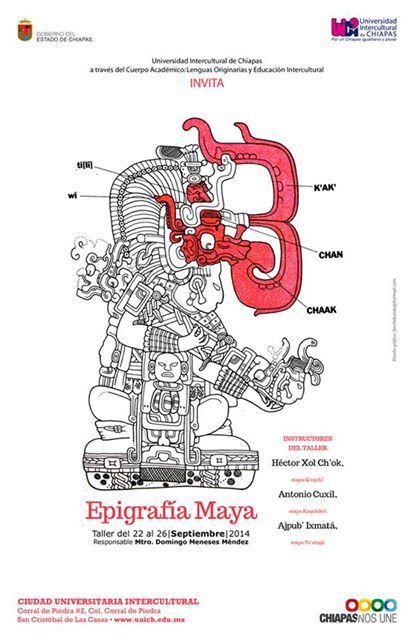
Approximately three years ago Aj Xol Ch’ok initiated conversations with a Ch’ol Maya friend with the idea of giving a workshop on Maya epigraphy for Maya students at the Intercultural University of Chiapas (UNICH), Mexico. Fortunately, this year the plans came to fruition, thanks to the leadership of that university.

PLFM Foundation provided an interdisciplinary team to teach Maya Tz’iib’ Antiguo (as we call it) for today’s Maya, traveling to San Cristobal de las Casas to give five days of lectures, workshops, and an archaeological site visit. The following is a summary of the event.

Hector workshop cartel

1 Ajaw 13 Yax. Dibujo por Jorge Pérez de Lara.

1 Ajaw 13 Yax. Dibujo por Jorge Pérez de Lara.

Introducción

Aproximadamente hace tres años Aj Xol Ch’ok inició pláticas con un amigo Maya Ch’ol con la idea de impartir un taller de epigrafía maya con estudiantes mayas de la Universidad Intercultural de Chiapas (UNICH), México. Afortunadamente hasta este año se concretó, contando con el aval de las autoridades de dicha universidad.

Fundación PLFM apoyó con un equipo Interdisciplinario la enseñanza del Maya Tz’iib’ Antiguo (como le llamamos), para los mayas de hoy, viajando a San Cristobal de las Casas para impartir cinco días de conferencias, talleres, y visita al sitio arqueológico. Lo que sique es el resumen del evento.

Hector workshop cartel

Continue reading

Posted in New

7 Ajaw 13 Ch’en (September 22, 2014): PLFM to host 2016 Congress of Maya Epigraphers7 Ajaw 13 ch’en (22 de septiembre de 2014): El PLFM albergará al Congreso de Epigrafistas Mayas de 2016

7 Ajaw 13 Ch'en. Drawing by Jorge Pérez de Lara.

7 Ajaw 13 Ch’en. Drawing by Jorge Pérez de Lara.

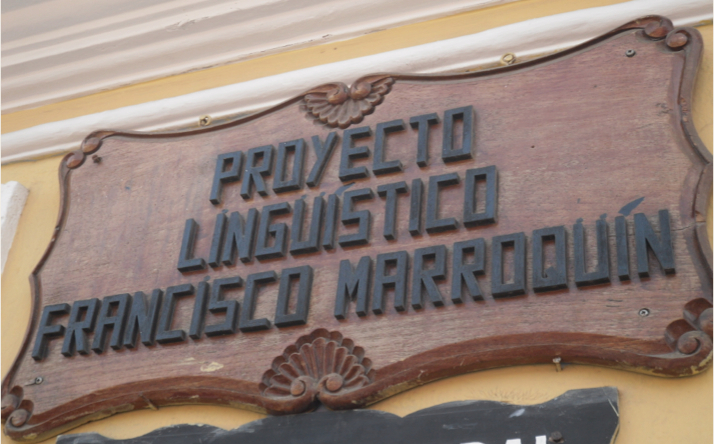
Announcement: In 2016, the Third International Congress of Maya Epigraphers will be organized and run by Fundación Proyecto Lingüístico Francisco Marroquín (PLFM).

Fundación Proyecto Lingüístico Francisco Marroquín headquarters in Antigua, Guatemala.

Fundación Proyecto Lingüístico Francisco Marroquín headquarters in Antigua, Guatemala.

7 Ajaw 13 Ch'en. Dibujo por Jorge Pérez de Lara.

7 Ajaw 13 Ch’en. Dibujo por Jorge Pérez de Lara.

Anuncio: En 2016, el Tercer Congreso Internacional de Epigrafistas Mayas será organizado por la Fundación Proyecto Lingüístico Francisco Marroquín (PLFM).

Oficinas de la Fundación Proyecto Lingüístico Francisco Marroquín, en Antigua, Guatemala.

Oficinas de la Fundación Proyecto Lingüístico Francisco Marroquín, en Antigua, Guatemala.

Continue reading

Posted in New

13 Ajaw 13 Mol (September 2, 2014): The Work Continues13 Ajaw 13 Mol (2 de septiembre de 2014): El trabajo continúa

13 Ajaw 13 Mol, drawing by Jorge Pérez de Lara

13 Ajaw 13 Mol, drawing by Jorge Pérez de Lara

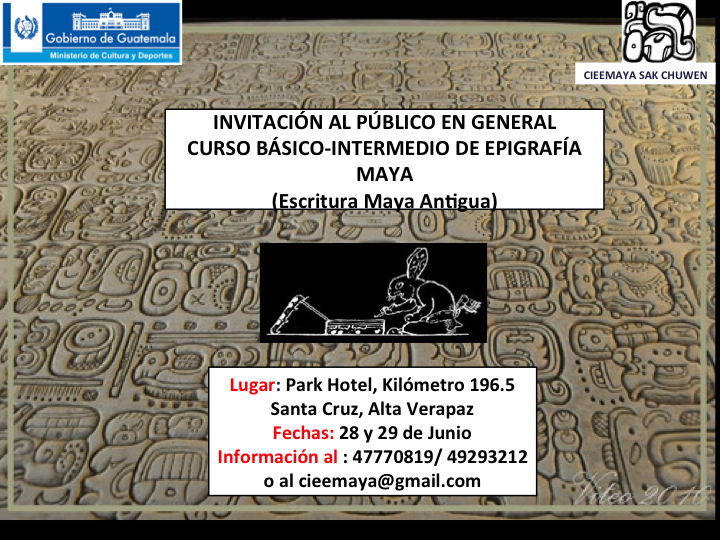
Our colleagues have wasted no time putting their knowledge to work since the congress. The Sak Chuwen Group, led by the ever-active Romelia Mo’, presented a glyph class for the general public in Santa Cruz, Alta Verapaz, Guatemala last June .

Fig. 1

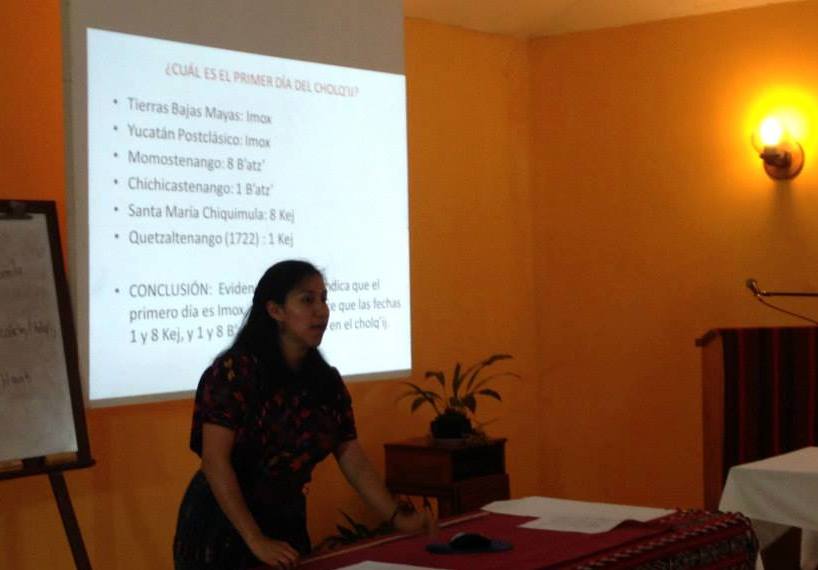
As part of the workshop, colleague Iyaxel (currently a Ph.D. student at Vanderbilt University) is giving a lecture on “What is the first day of the Cholq’ij (Tsolk’in)?”

Fig 2This workshop was followed by another one in Guatemala City in July.

13 Ajaw 13 Mol, dibujo por Jorge Pérez de Lara

13 Ajaw 13 Mol, dibujo por Jorge Pérez de Lara

Nuestros colegas no han perdido el tiempo en poner sus conocimientos a trabajar desde que concluyó el congreso. El grupo Sak Chuwen, encabezado por la siempre activa Romelia Mo’, presentó una clase de glifos al público general en Santa Cruz, Alta Verapaz, Guatemala el pasado mes de junio.

Fig. 1

Como parte del taller, la colega Iyaxel (quien actualmente cursa un doctorado en la Universidad de Vanderbilt) estará dando una conferencia llamada “¿Cuál es el primer día del Cholq’ij (Tsolk’in)?”.

Este taller fue seguido por otro en Ciudad de Guatemala en julio.

Fig 2 Continue reading

Posted in New