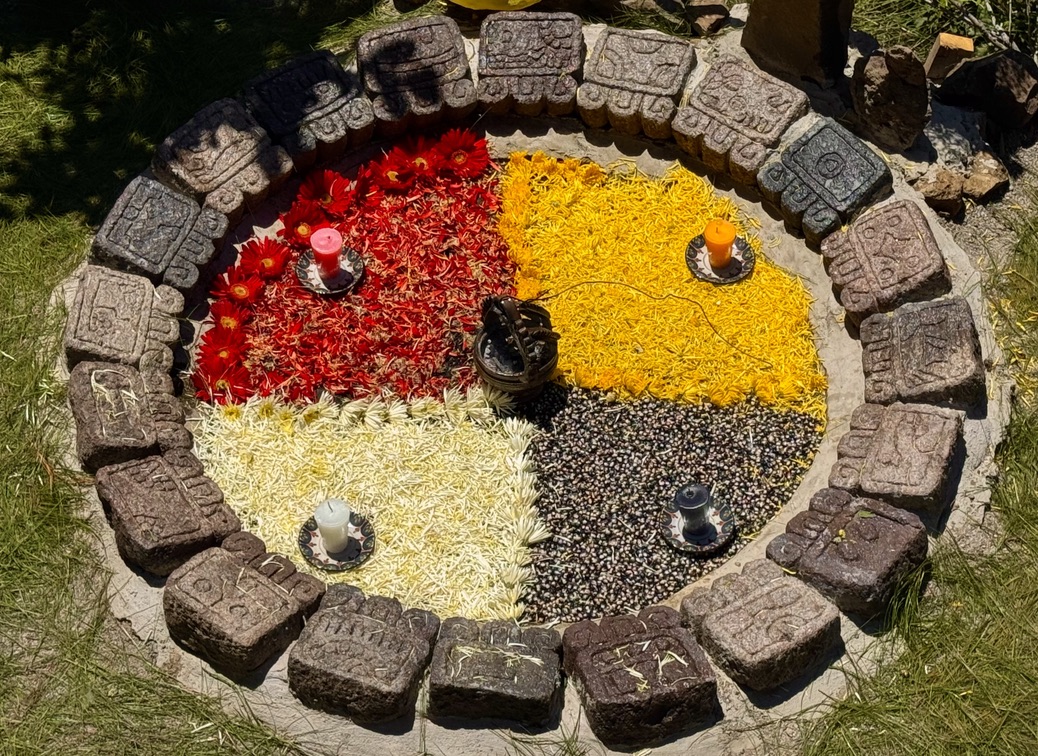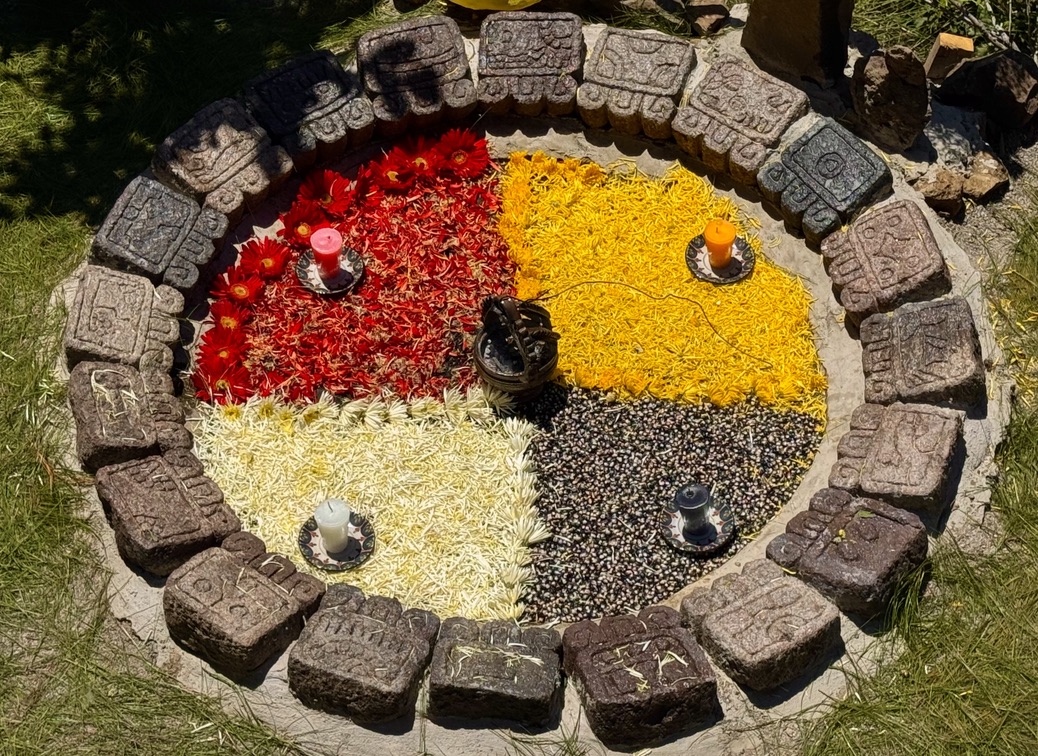
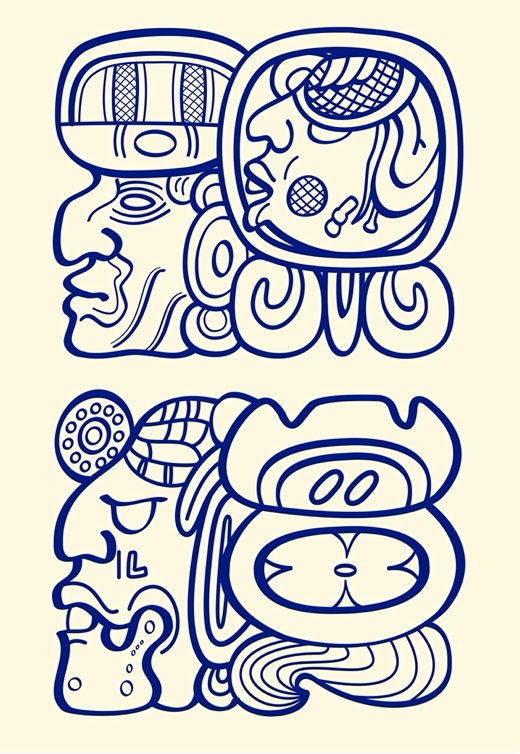
10 Ahaw 18 Ch’en (September 24, 2025)

In order the access this post in Spanish, click here

A yellow and blue sign

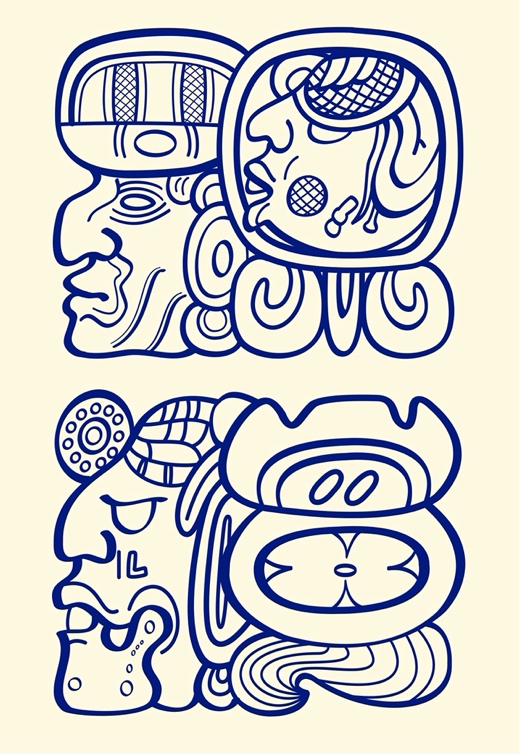
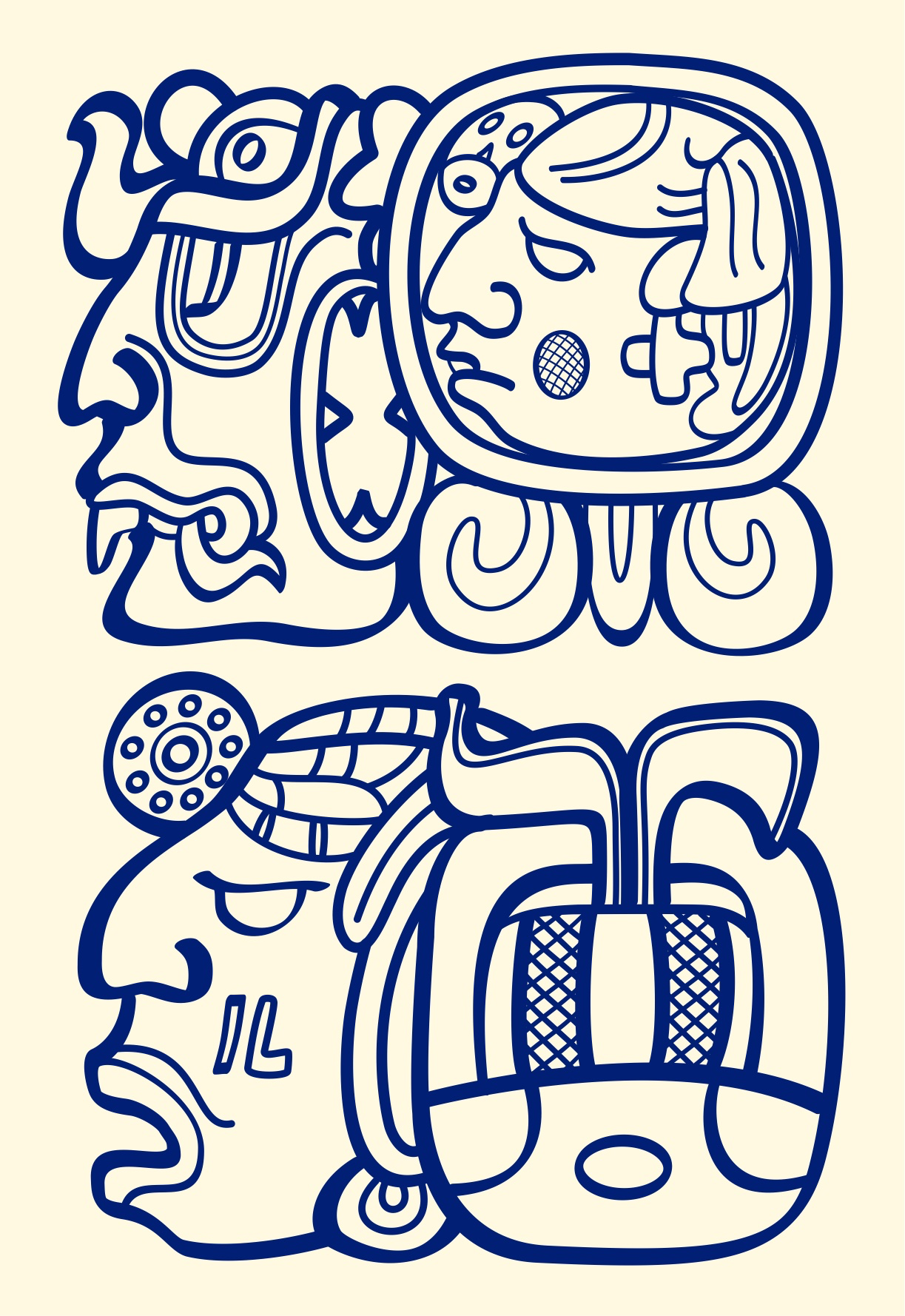
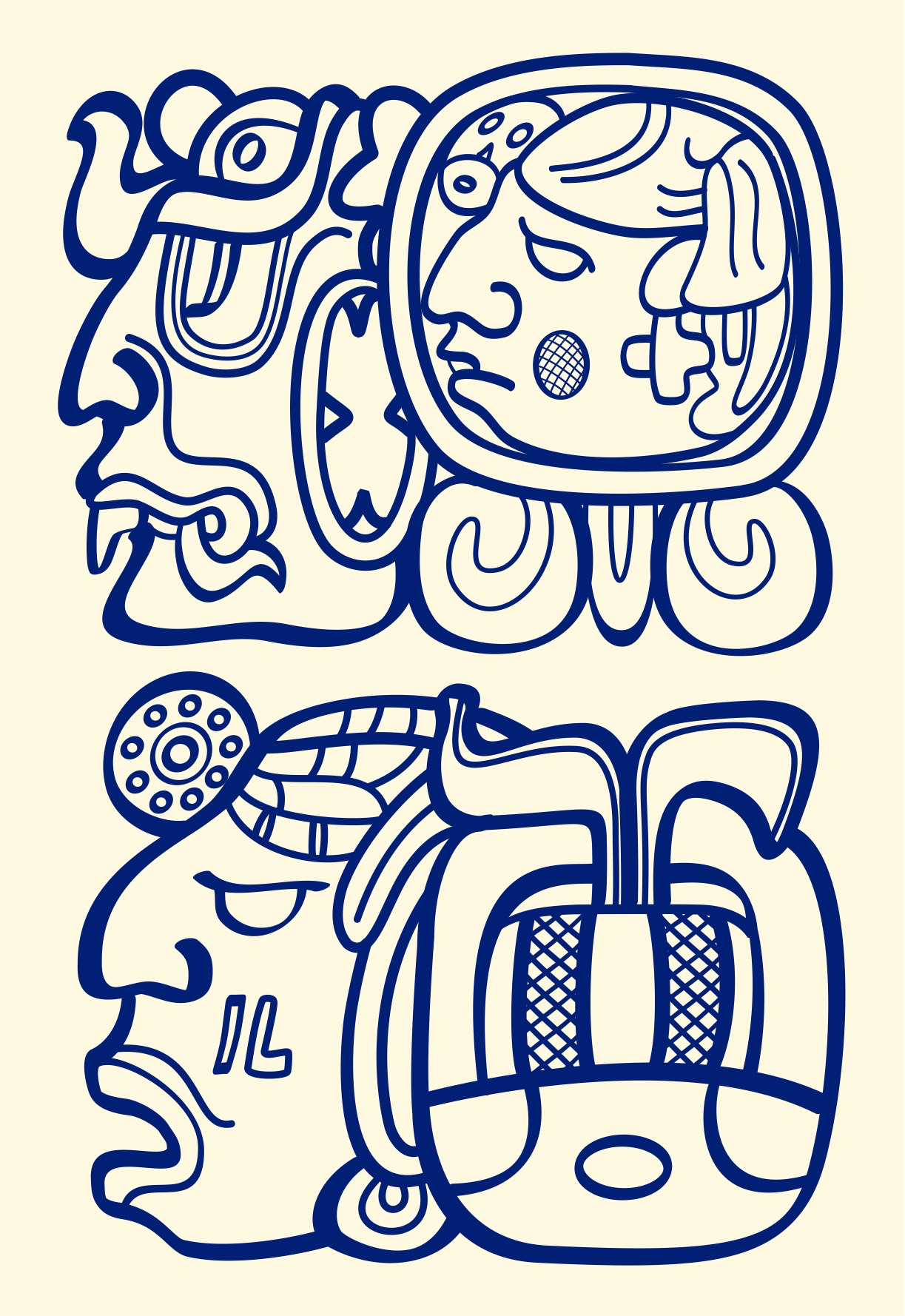
Glyph Block 10 Ahaw 18 Ch’en drawn by Jorge Pérez de Lara.

A group of children holding up signs

Description automatically generated

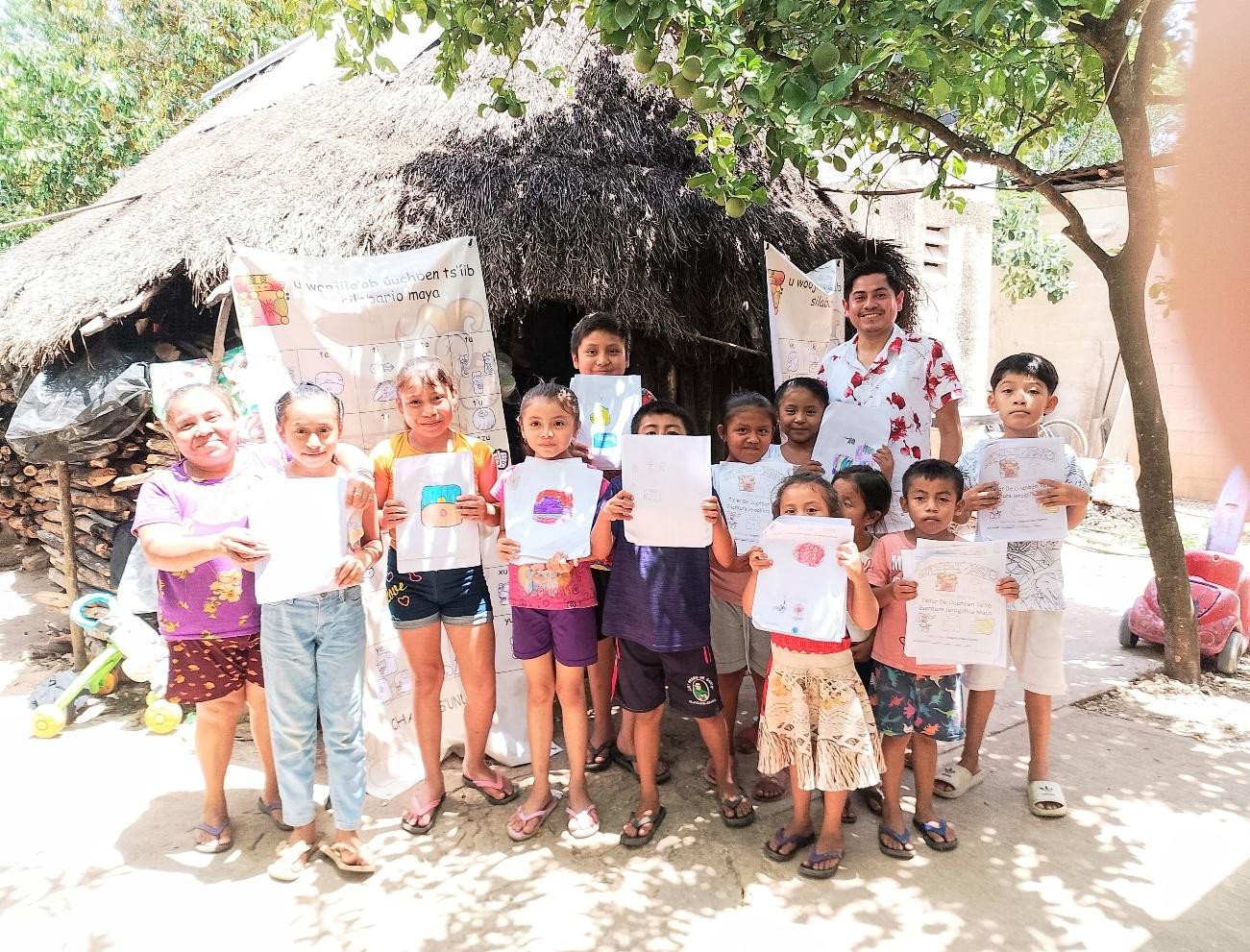
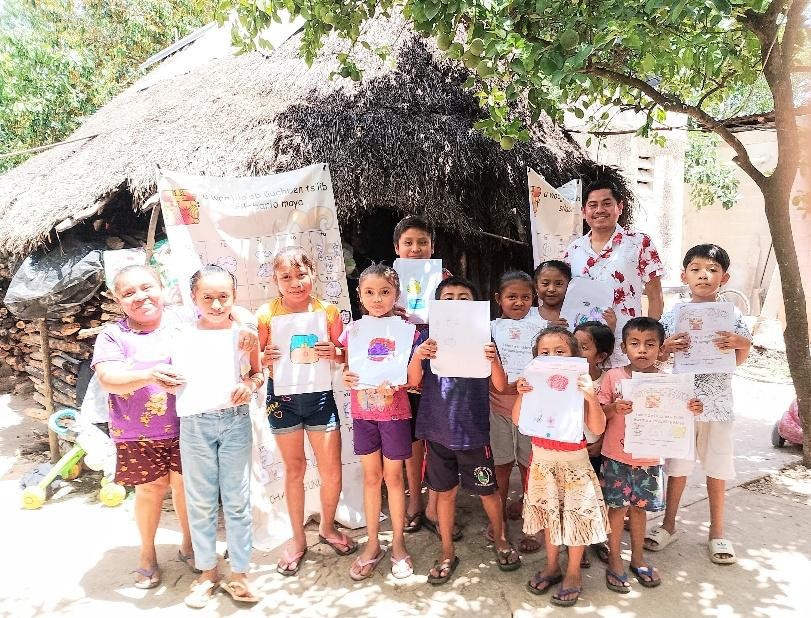
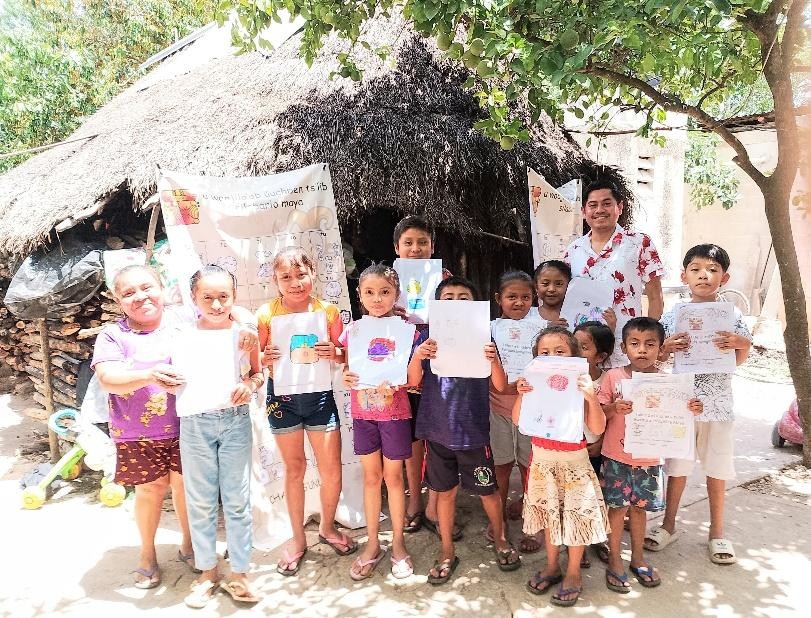
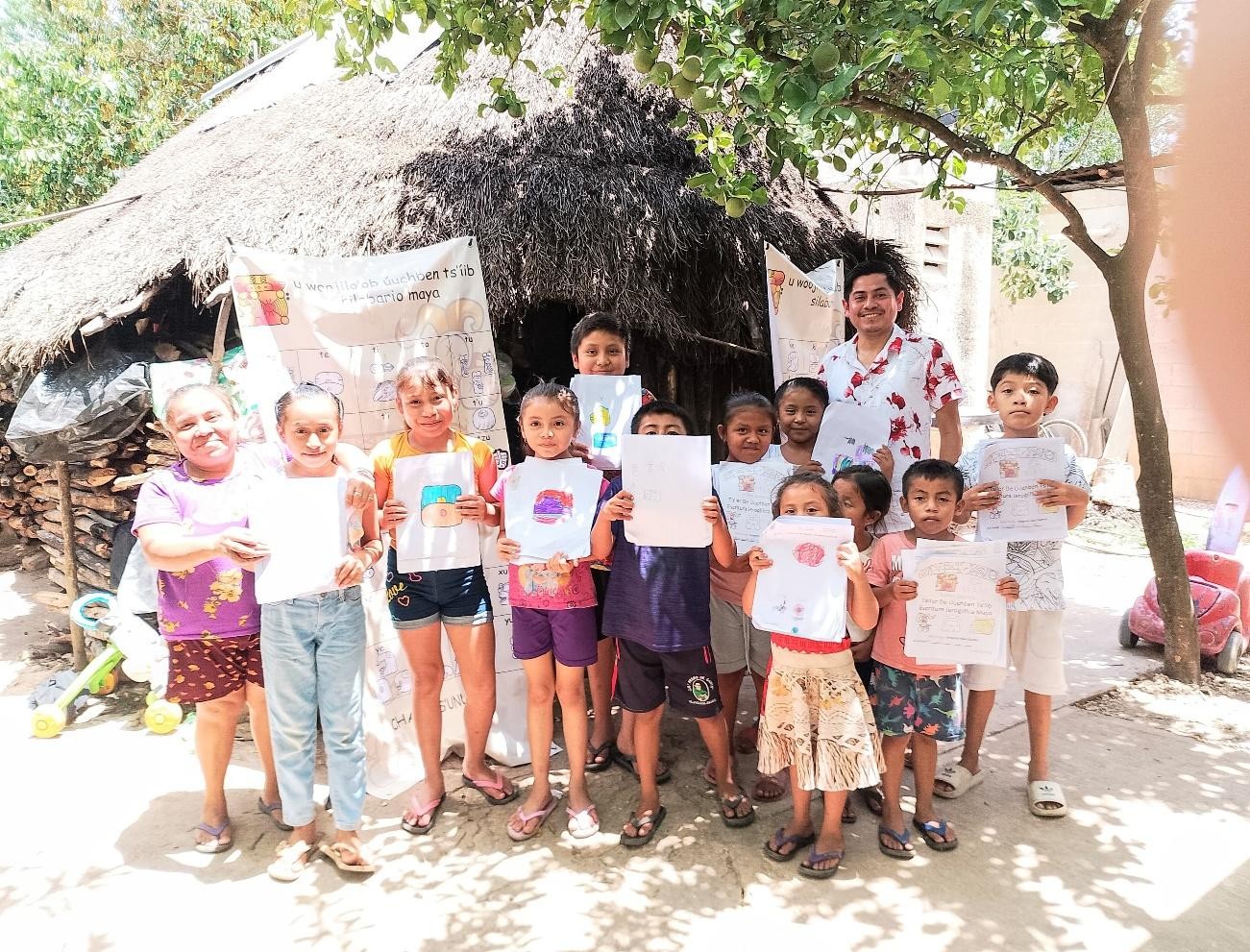
Group photo with Gregorio Hau Caamal and the children of X-Alau.

10 Ajaw 18 Ch’en (September 24th, 2025)
Múul Meyaj, Múul Áantaj, Múul Kaambal:
Teamwork Achieves Better Results—the Uuchben
Ts’iib Workshop in X-Alau, Yucatán

It has been a busy summer, and I have had to take a break from our regular blogs every 40 days, during which time we have been reorganizing and brainstorming at MAM. Many of our Maya colleagues have been busy carrying out various workshops around the region using funding from MAM mini-grants. Due to the increasing challenges of international travel, we are likewise considering more regionally targeted Congresos, rather than attempting to have one larger international Congreso every other year, as was our previous format.

We had a very productive meeting of the Executive Committee in August, where we were fortunate to have the participation of several additional colleagues, including Beth Spencer, who had previously worked with MAM for many years as our Secretary, as well as my good friends Alonso Mendez and Barb MacLeod. Alonso is a fellow archaeoastronomer, as well as being Tzeltal Maya from Tenejapa, Chiapas, and we are excited to have more of his input and participation in MAM. Barb is a world-renowned epigrapher and linguists, and she has likewise participated in the last two Congresos. Barb generously helped to translate and format this month’s excellent report from Gregorio Hau Caamal, particularly as I have been facing increasing responsibilities as Chair of my department at Sacramento City College as the teaching year once again begins.

We hope to soon update all of you about the various proposals on the table as we figure out how to best serve the Maya communities with whom we work, and their diverse needs.

Enjoy this wonderful report and photographs from Gregorio Hau Caamal and the children of X-Alau in Chemax, Yucatán!

Yum bo’otik,

Michael Grofe, President
MAM

Report on the Uuchben Ts’iib Workshop
Ancient Maya Writing
Given by Gregorio Hau Caamal
With Resources from MAM

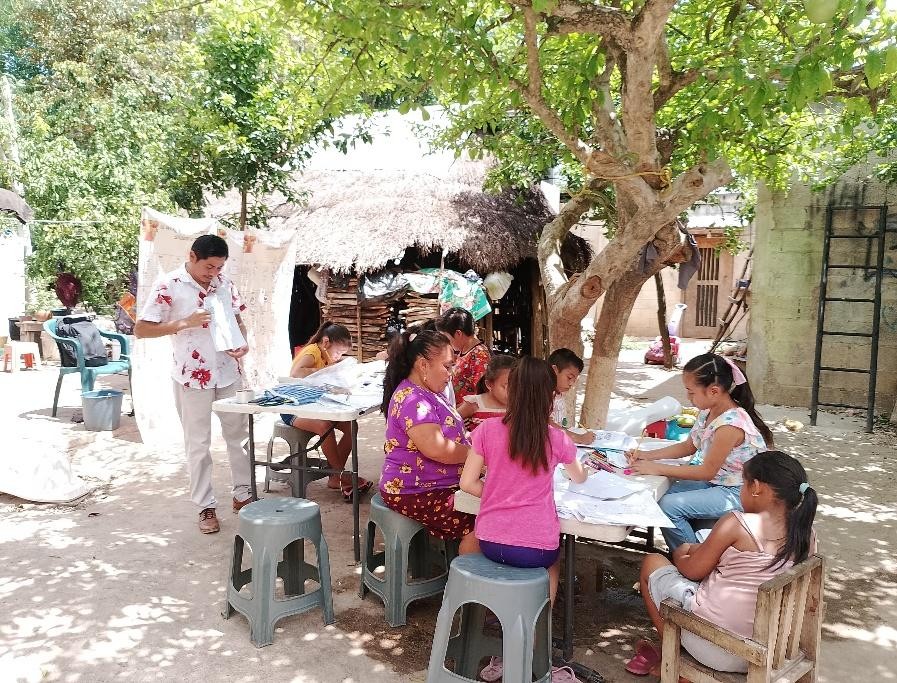
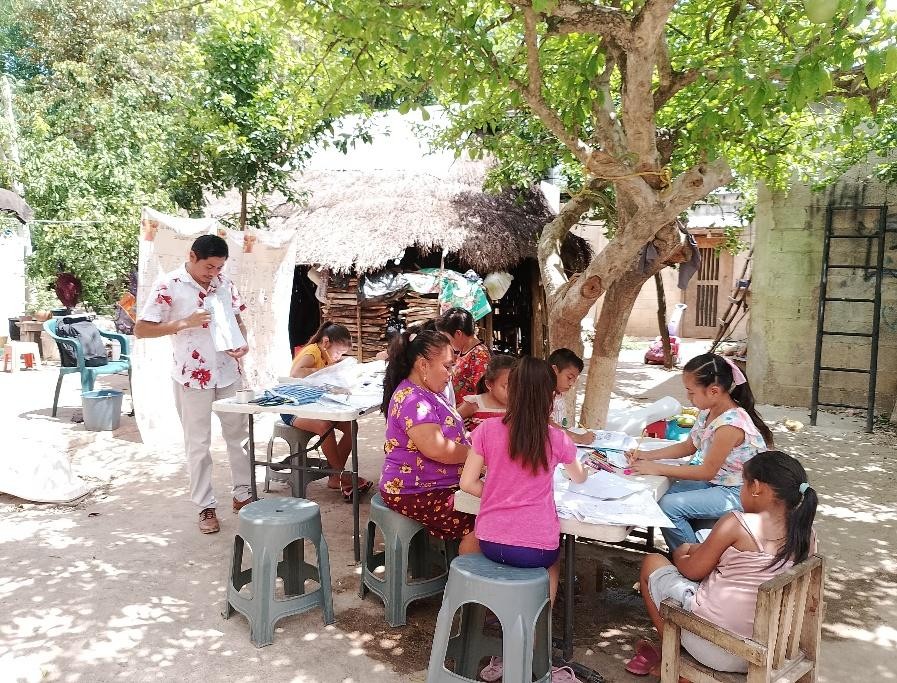
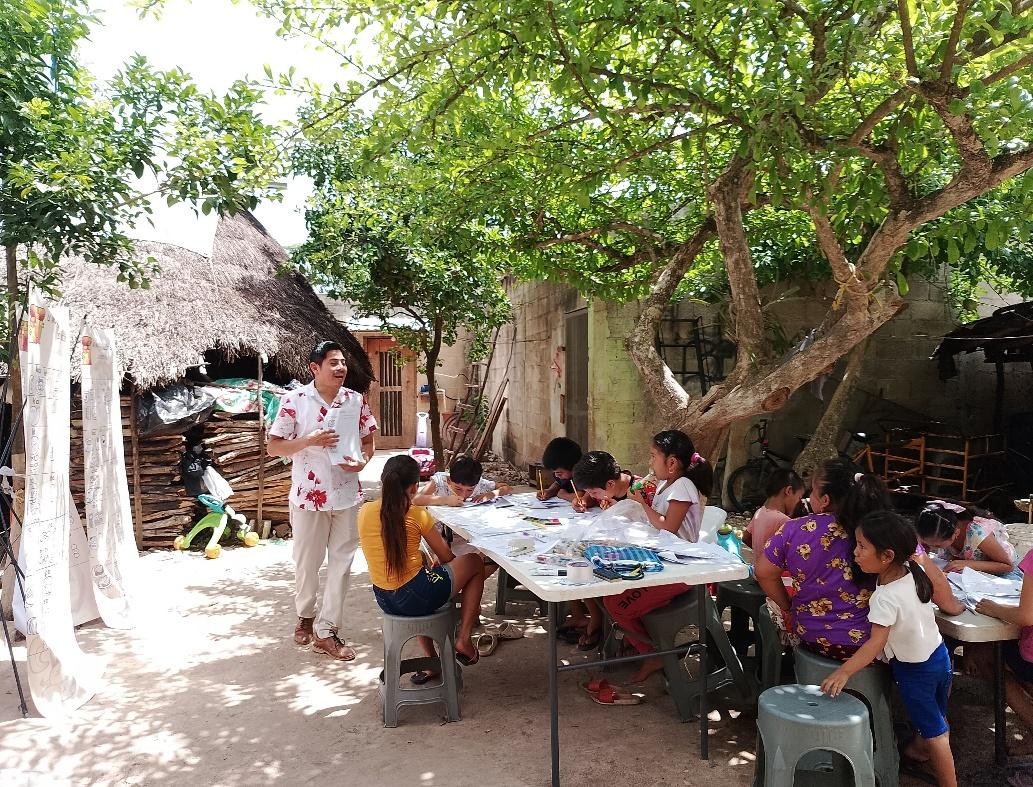
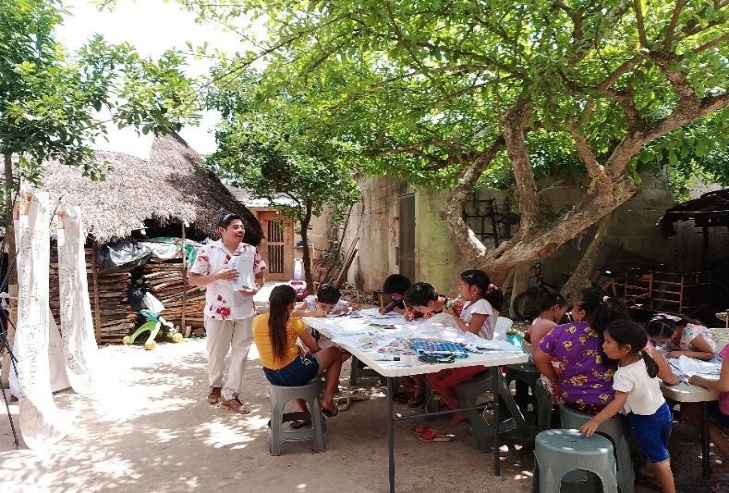
A workshop on úuchben ts’íib was held for children aged 8, 9, 10, and 12 years in the community of X-Alau in the municipality of Chemax, Yucatán, Mexico. Under the shade of the luuch (gourd) tree, the children awakened the memory of our grandparents and the ajts’íib. On that day, 12 Ets’nab 16 Soots’, they wrote with the úuchben ts’íib, the ancient Maya script also known as Maya hieroglyphs.

A group of children sitting around a table

Description automatically generated

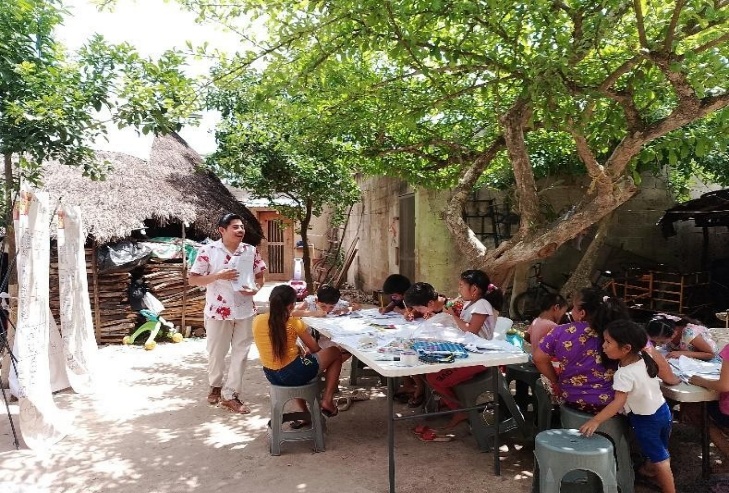
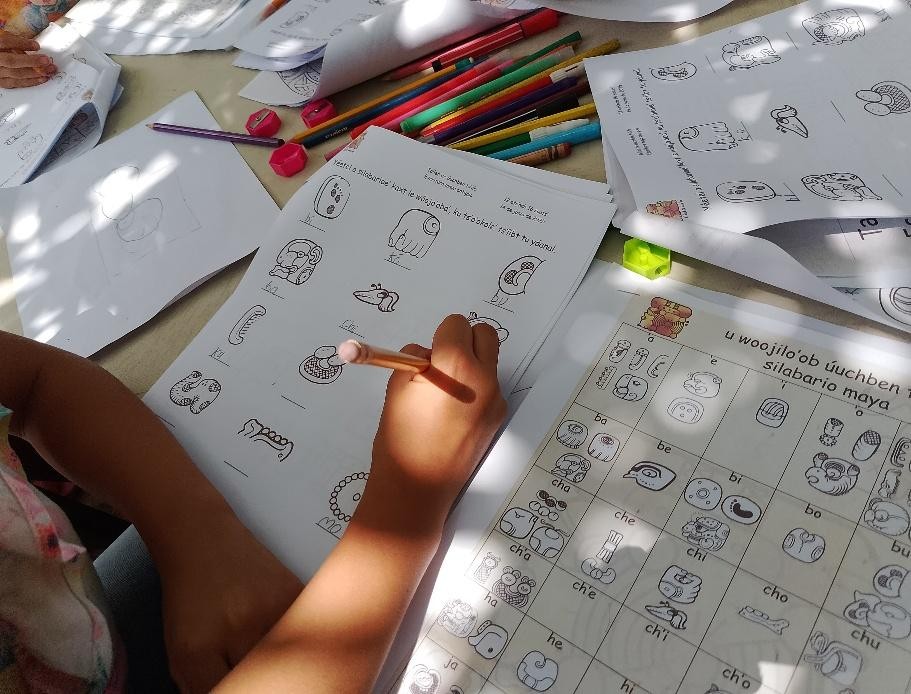
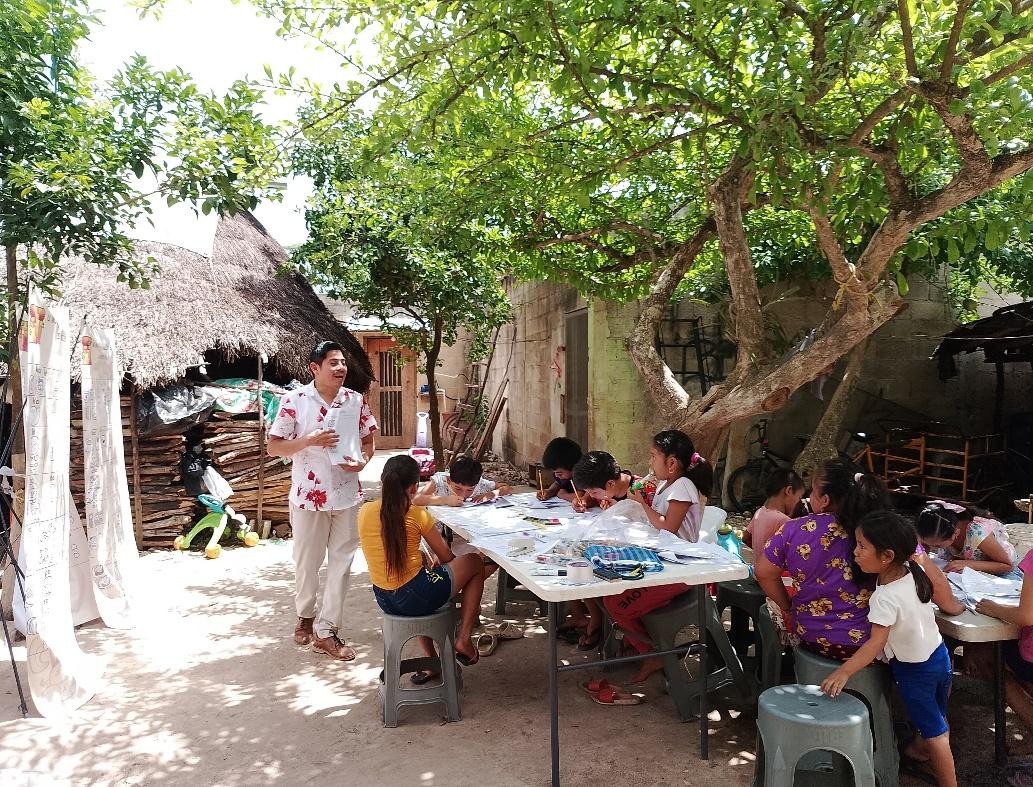
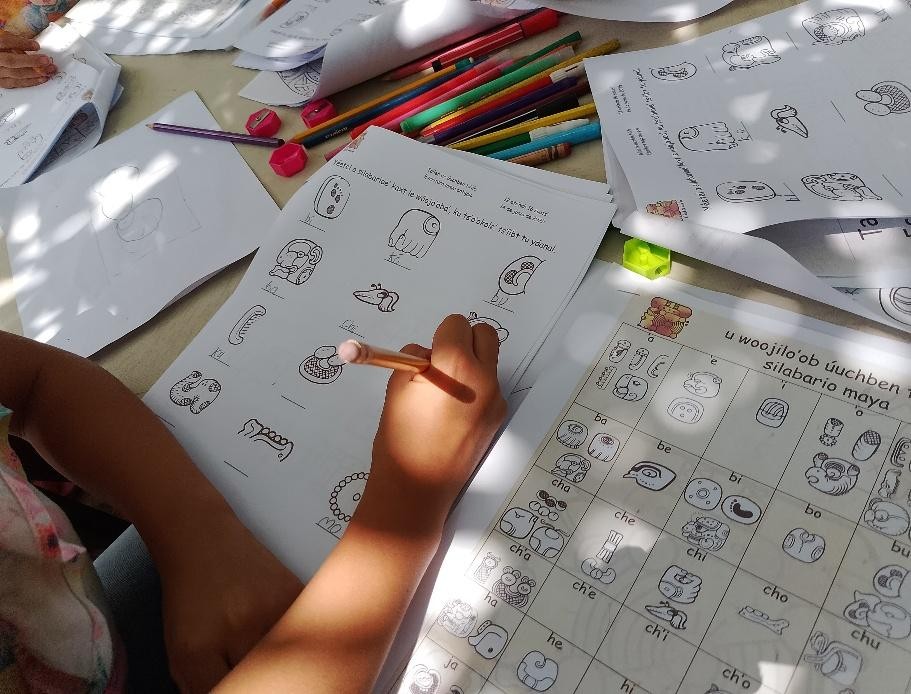
Image 1.- The teacher explaining the úuchben ts’íib to the group.

The community garden is a space where one plants and harvests, where one teaches and learns, where life, food, language, and identity are cared for and preserved. In this context, it was agreed to hold the workshop in the garden or the back yard of the house, because it is an optimal space for learning and the children responded to the call on the day they were convened.

The workshop was a success, because on that day they were very attentive, observing and listening. They asked questions, shared reflections, wrote, and collaborated with each other to carry out the requested activities.

In this workshop, each child achieved:

➢ Identifying syllables with the syllabary.

➢ Writing the corresponding syllable in their working materials.

➢ Knowing the rules, the order of reading and writing of a block of glyphs.

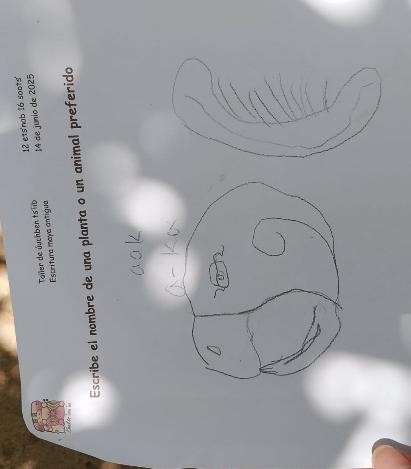
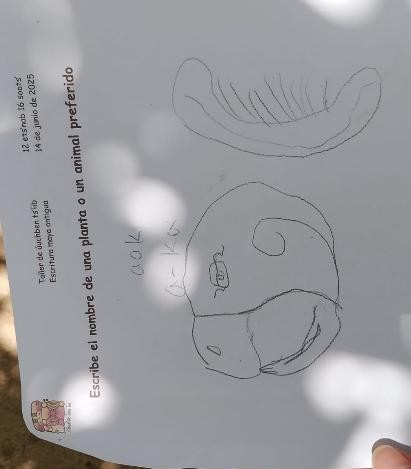
➢ Writing the name of a known animal.

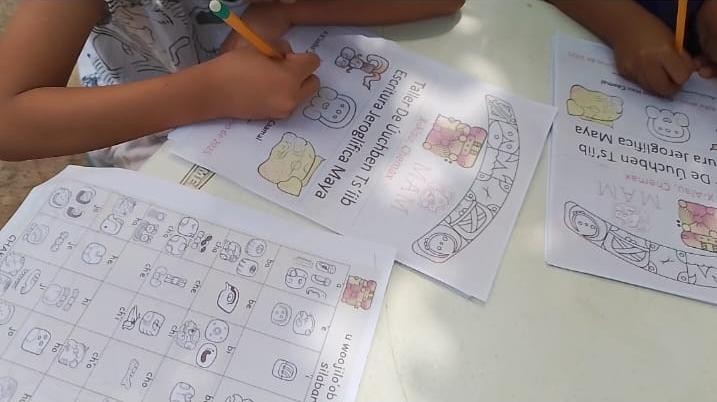
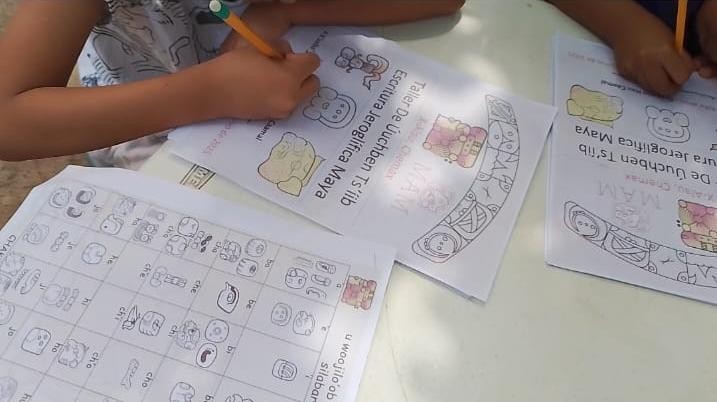
A group of children drawing on paper

Description automatically generated

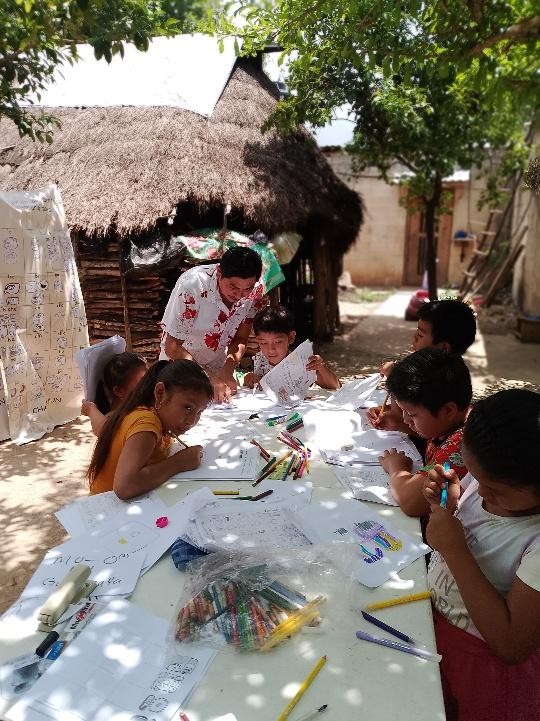
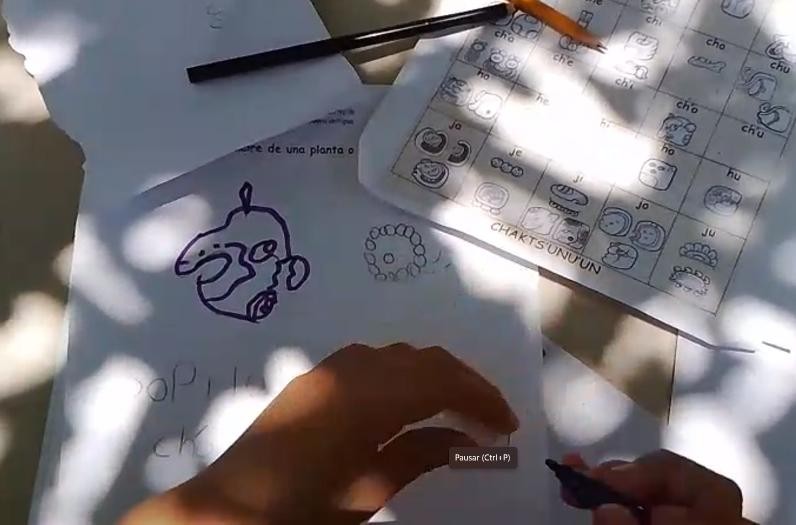
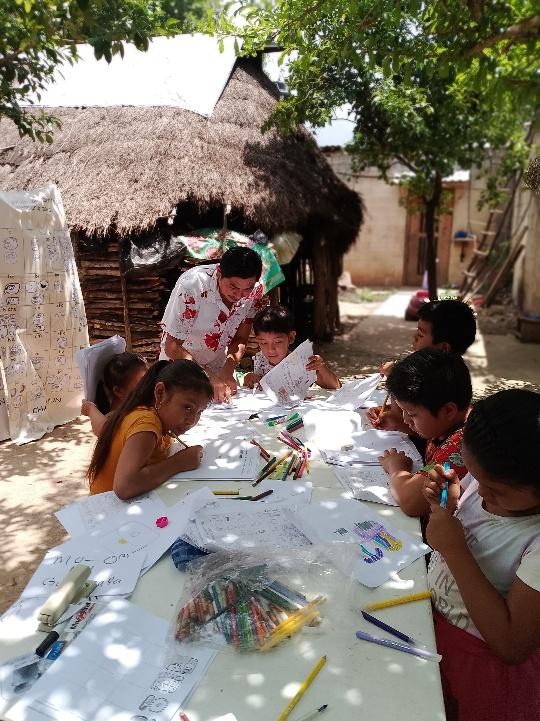
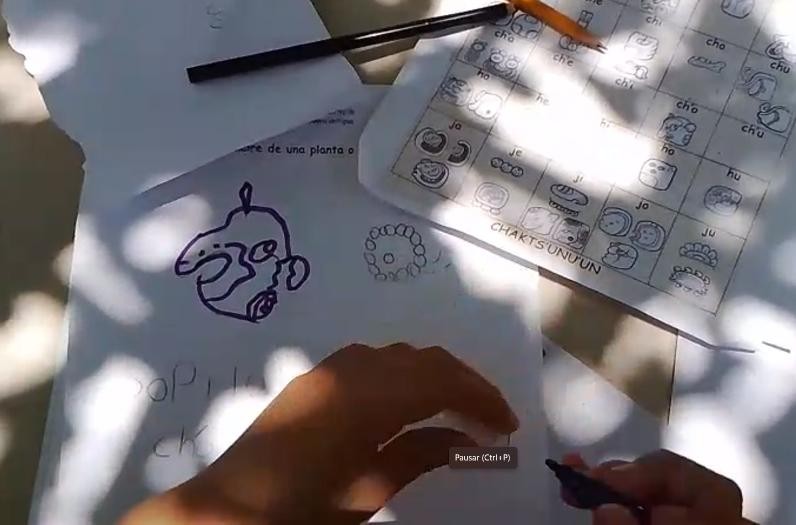
Image 2.- The teacher addressing students’ questions.

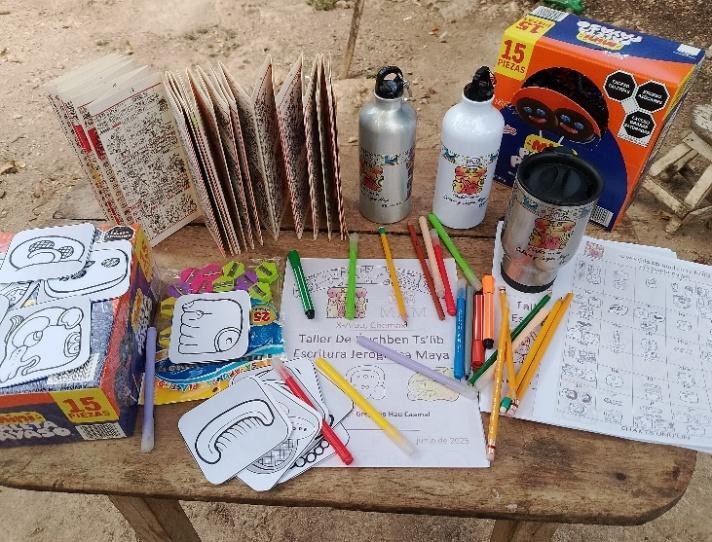
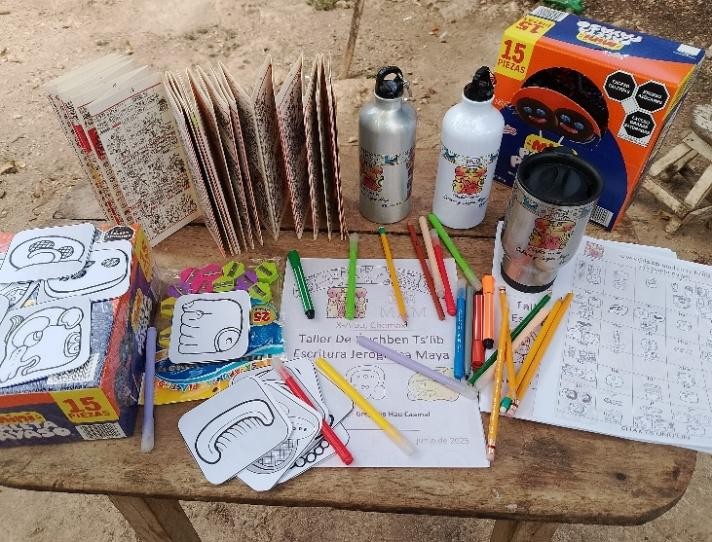
A table with signs and drinks on it

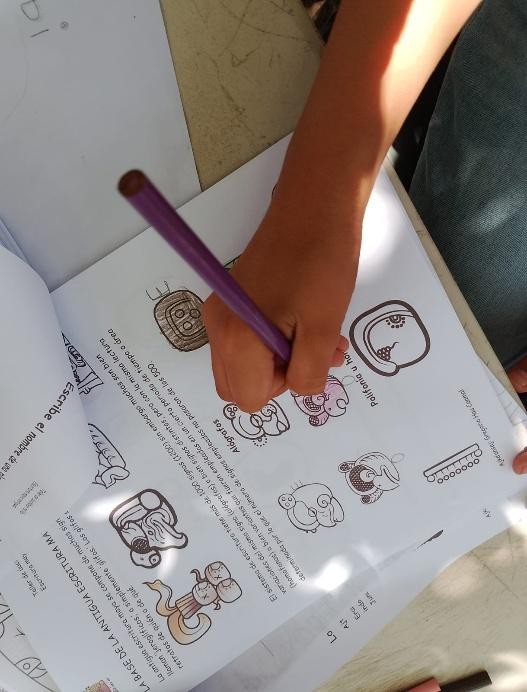
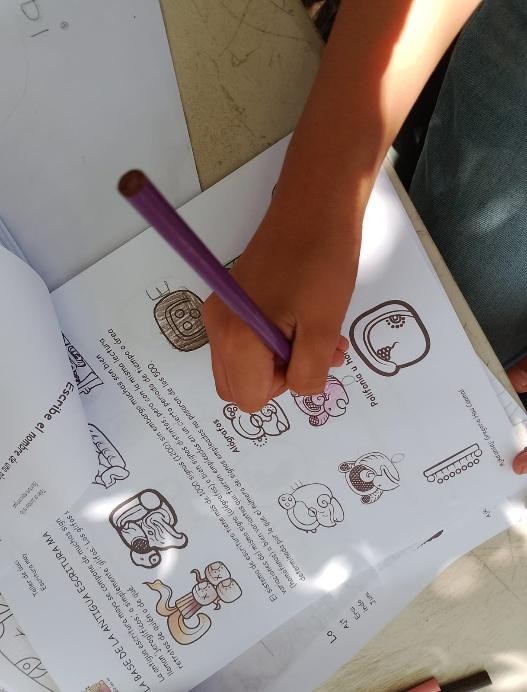
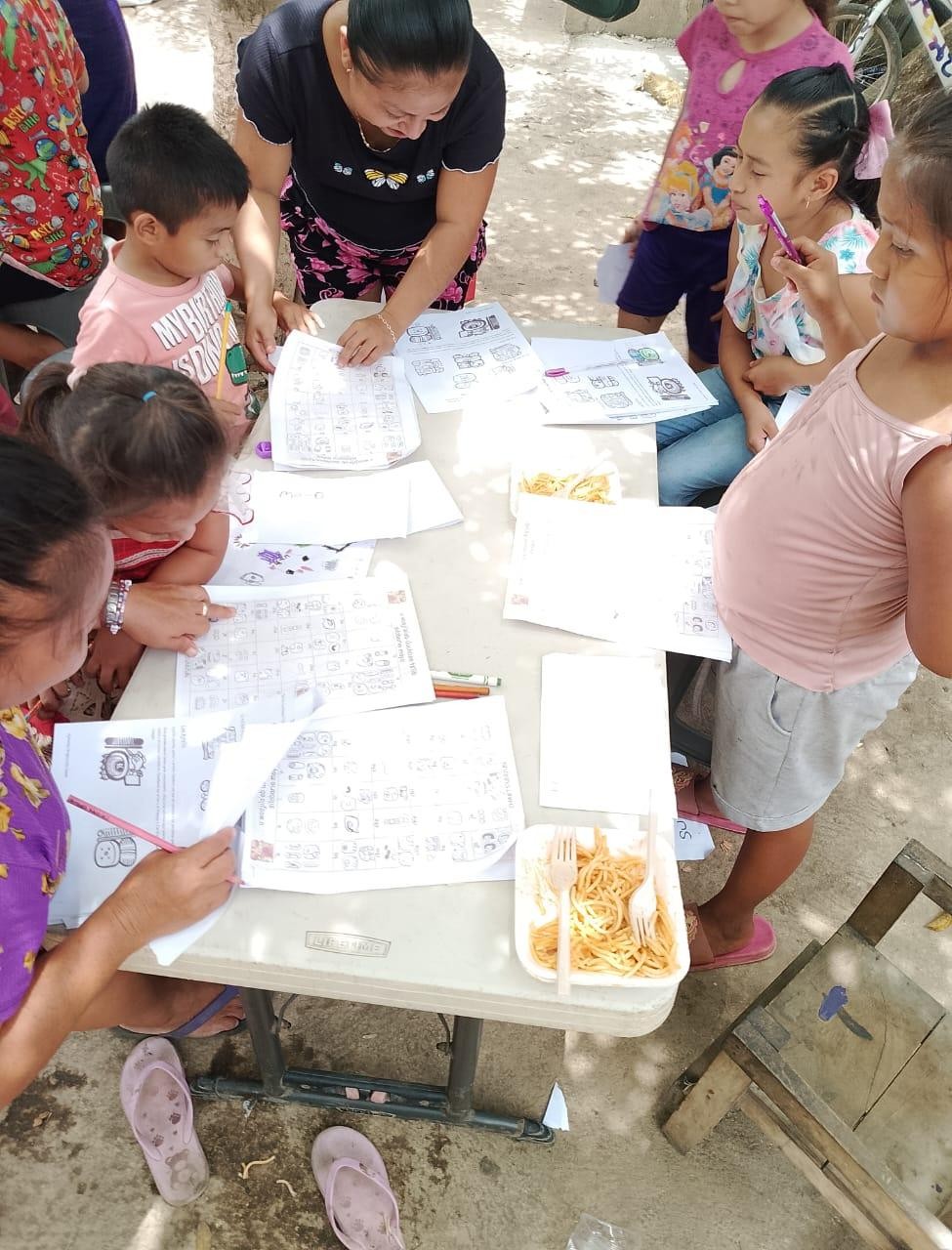
Description automatically generated A close-up of a person's hands holding a paper

Description automatically generated


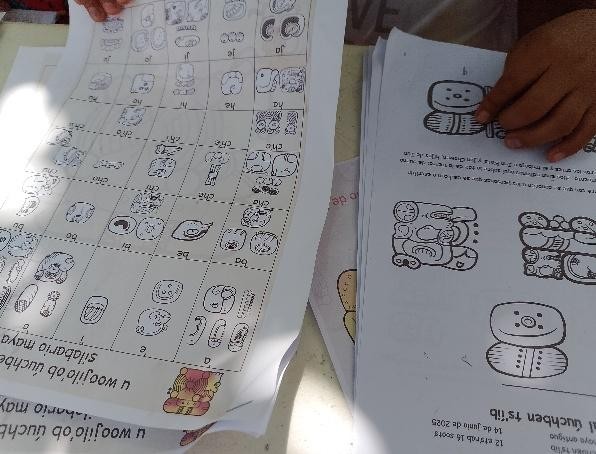
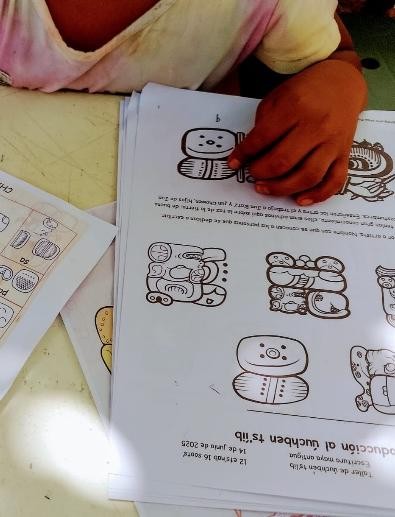
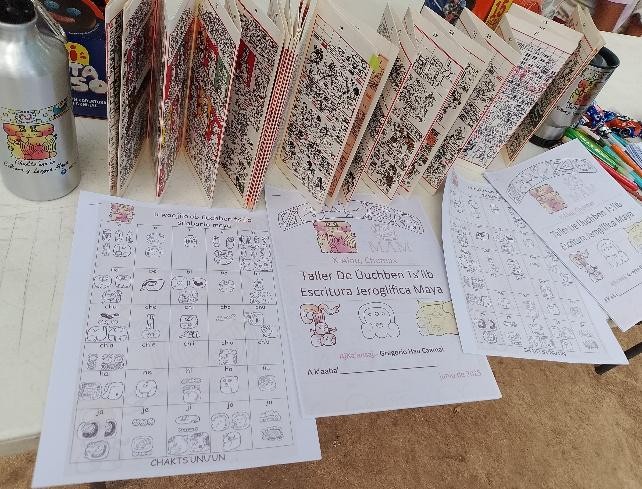
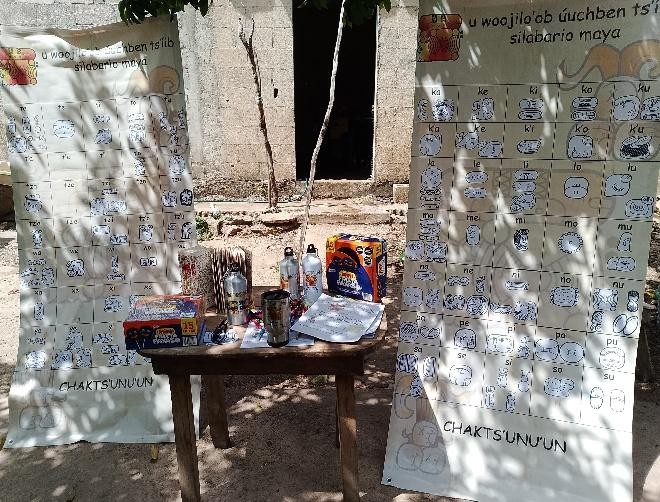
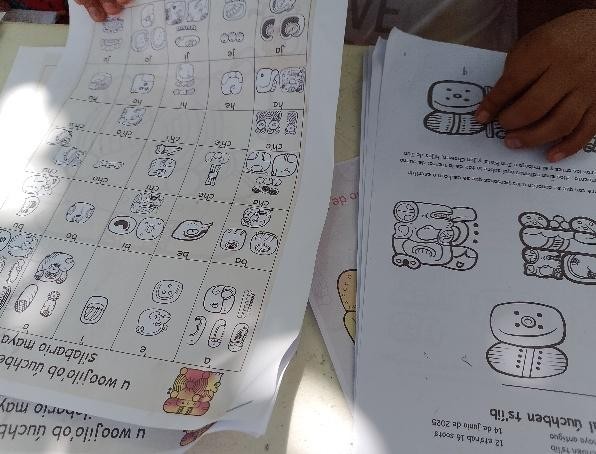
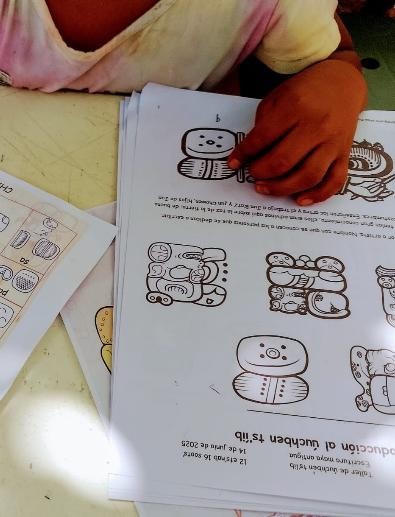
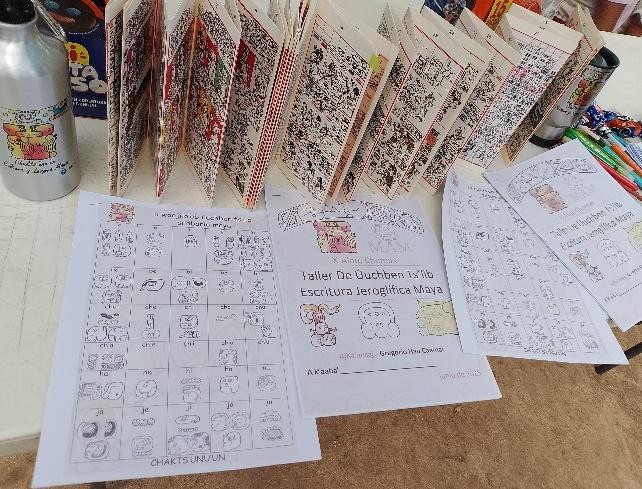
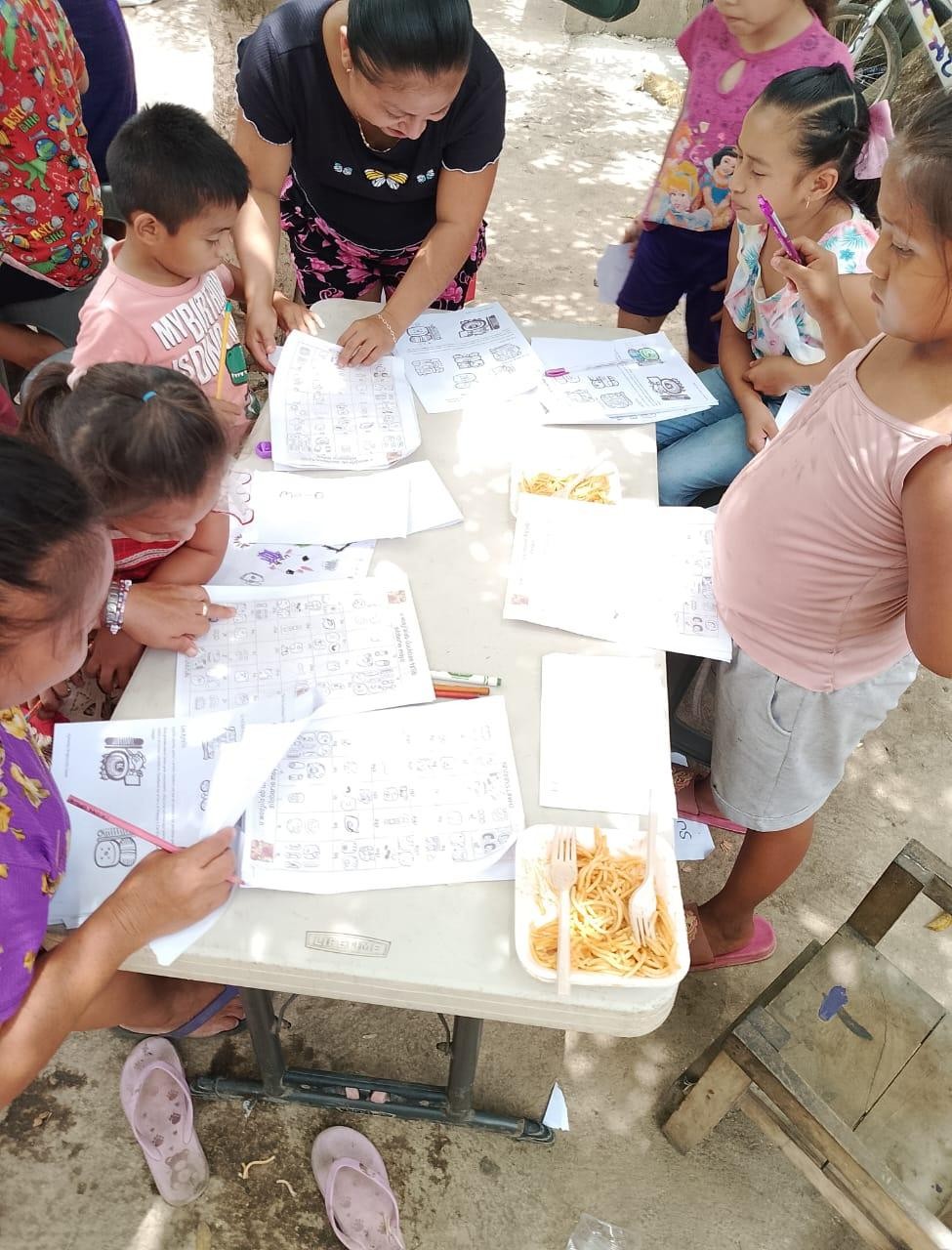
Image 4.- Pages of the Maya syllabary and blocks of Maya glyphs.

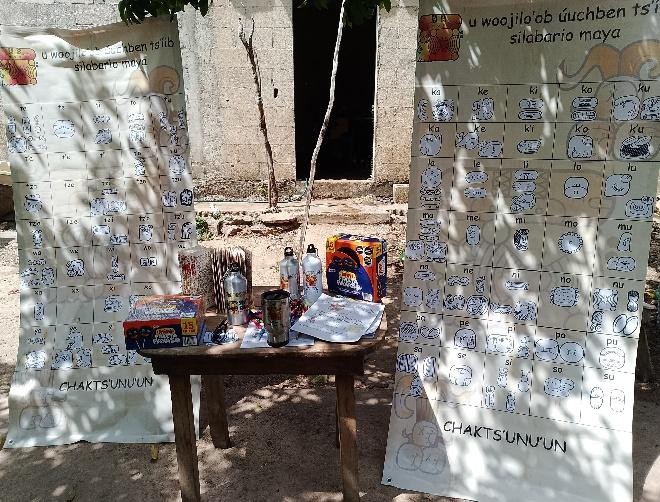
Image 3.- Large sheets with the Maya syllabary.

A person drawing on a piece of paper

Description automatically generated

Image 5.- Writing the corresponding syllable.

In this way we contributed to the strengthening of knowledge that our grandparents have passed down to us in oral tradition. In ancient Maya writing, one finds confirmation of everything that our parents and ancestors used to tell. All of this is recorded in the úuchben ju’un or codices, and on the stelae and lintels of the wíitso’ob or múulo’ob.

A person drawing on a piece of paper

Description automatically generated

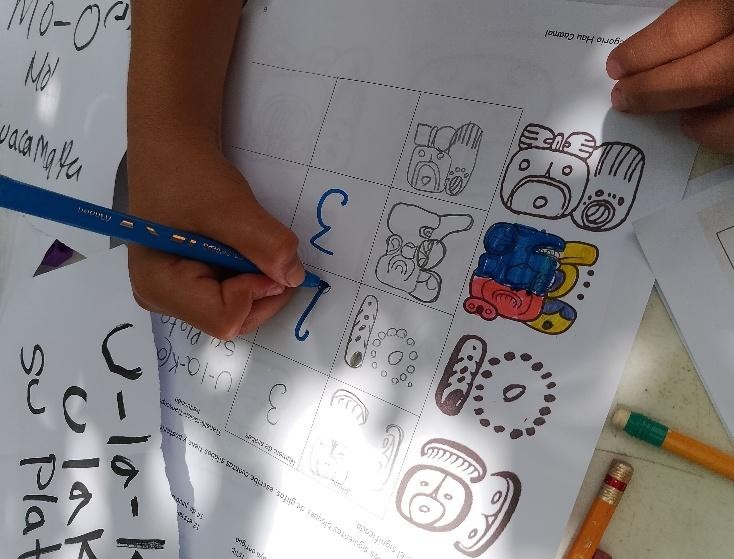
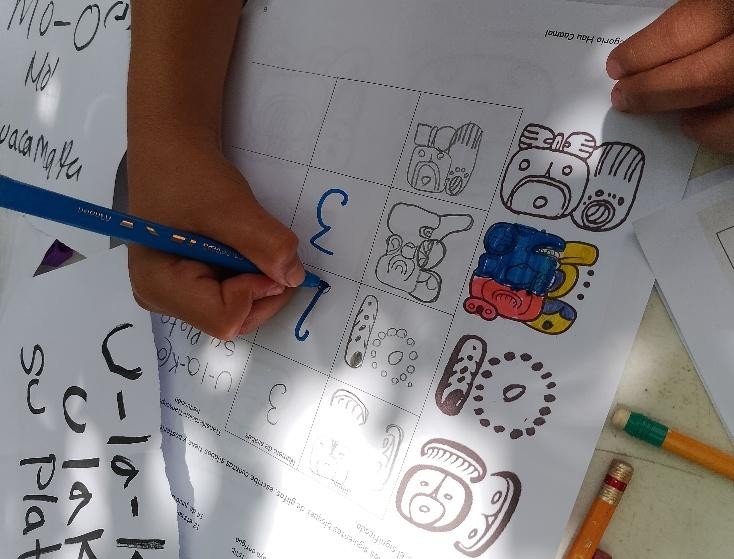
Image 6.- Writing and identifying syllables in blocks of glyphs.

Another goal was to reinforce and promote the Maya language, since this workshop was taught in the children’s mother tongue, which is Maayat’aan. Reconnecting with the writing of our grandparents is to recognize the úuchben ts’íib as evidence that the tsikbalo’ob told to children and young people are a truth not limited to simple stories, myths, or legends, and are as deep as the roots of the jícara tree where the workshop was held. This tree has survived different chak ik’alo’ob (hurricanes), so much so that several generations have harvested and continue to harvest its fruits.

A group of children holding signs

Description automatically generated

Image 7.- Group photo of the children who took the úuchben ts’íib workshop.

Between children and adolescents, there were a total of 15 participants, including one adult who joined the workshop to accompany their children. The start date was June 14 at 9:00 am in a known location in the village. All participants were welcomed, but not before passing by the table to receive their respective work materials: pencil, colors, white sheets, markers, the syllabary, and the workbook.

A table with various coloring books and pencils

Description automatically generated

Image 8.- Table where the material was set out for its respective delivery.

The material used to conduct this workshop was taken from sources such as Harri Kettunen and Christophe Helmke’s ‘Introduction to Maya Hieroglyphs’ and Alfonso Lacadena’s ‘Appendix I: List of Maya Logograms,’ generating a small booklet for easy-to-understand teaching material for children.

A child writing on a piece of paper

Description automatically generated

Image 9.- Children writing their name in their work booklet.

To recall and remember some of the ceremonial sites or any place where there might have been vestiges of Úuchben ts’íib or ancient Mayan writing that survived the time of colonial contact, the children named some known and even visited sites such as Palenque, Ek Balam, Uxmal, and Chichen Itzá, among others.

It was also explained to them that there were people dedicated to painting and writing who were and are called AJ TSÍIB, and that one day they could become one if they set their minds to it. They learned the importance of reading, studying, and writing, and most importantly, listening to and understanding what our grandparents tell us when they speak about the yuntsilo’ob, the fathers or mothers who live in the mountains or jungle (some call them gods). While they reviewed the syllabary, they were taught that the basis of the ancient Maya writing consists of many signs and symbols known as hieroglyphs, or simply glyphs.

A group of people sitting at tables outside

Description automatically generated

Image 10.- The teacher explaining to the children who is an aj ts’íib and who can become one.

During their exercises with the syllabary, the children discovered that despite there being many signs, many of them are variations of the same sign, or there can also be a different sign but with the same meaning, for which several examples were given.

A person holding a pencil over a piece of paper

Description automatically generated

Image 11.- Identification of the variations of the same sign.

In the material provided along with their syllabary, either individually or in teams, the children were identifying syllables which, once they were recognized, they indicated out loud to which syllable it was. After identifying the syllables, they proceeded to study the reading order within a text and within a block. For this, the children relied on their work materials.

A child reading a book

Description automatically generated

Image 12.- A student identifying the reading and writing order of a block of glyphs.

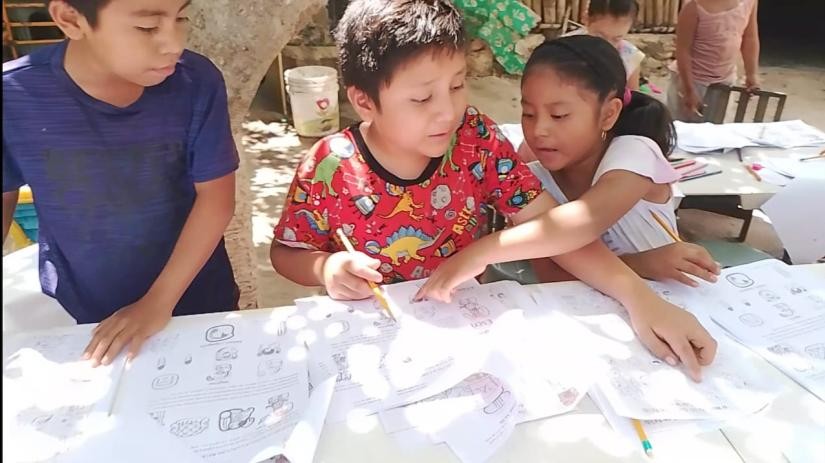
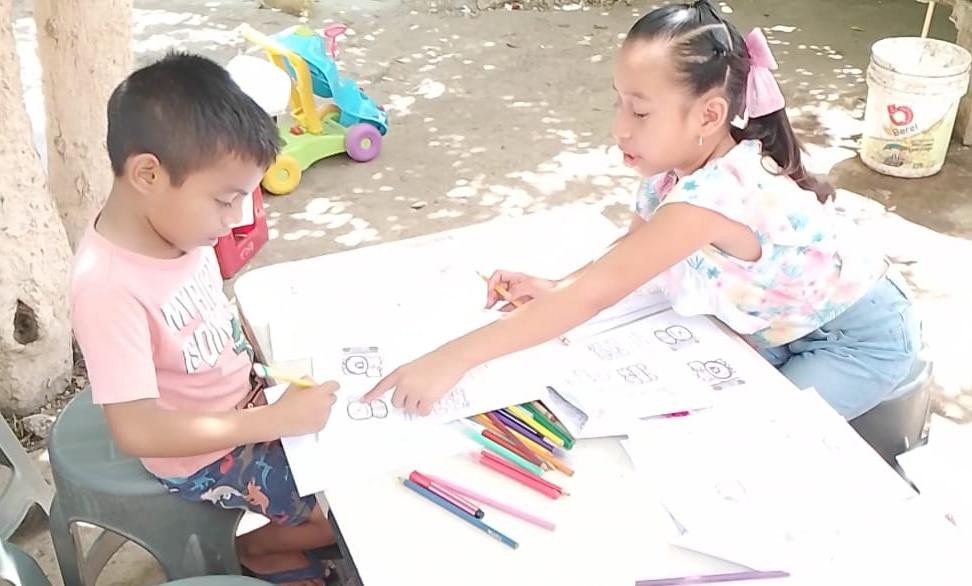
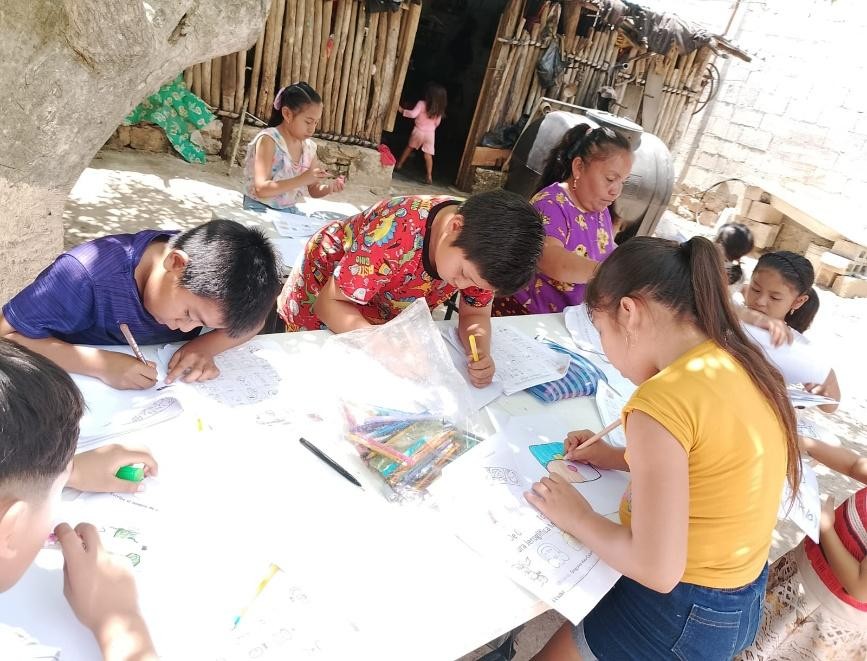
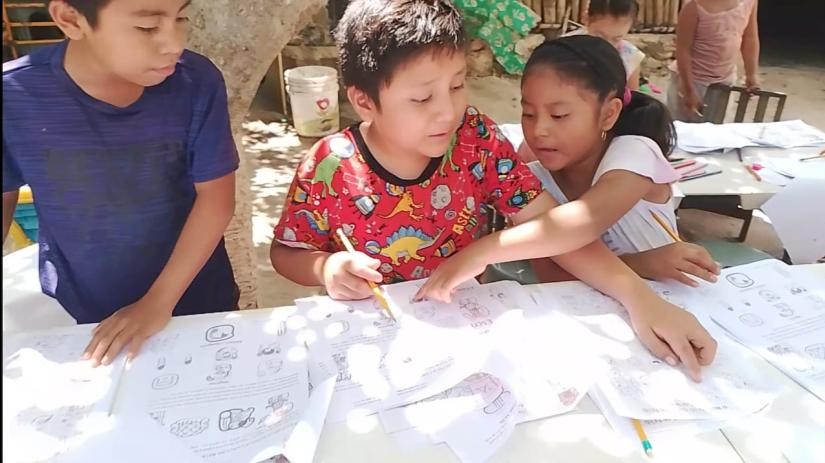
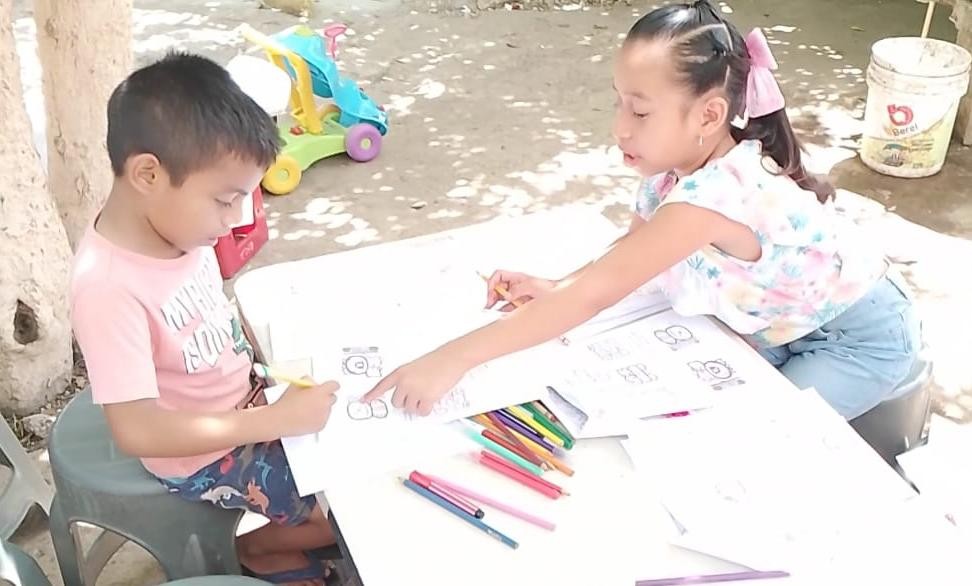
With the exercises from the teaching material, each student dedicated themselves to developing the exercises with the support of their classmates, guided by the instructor. Occasionally, the students themselves took on the task of teaching their peers. This is a demonstration of múul áantaj, mutual support to strengthen learning and knowledge.

A group of children drawing on paper

Description automatically generated

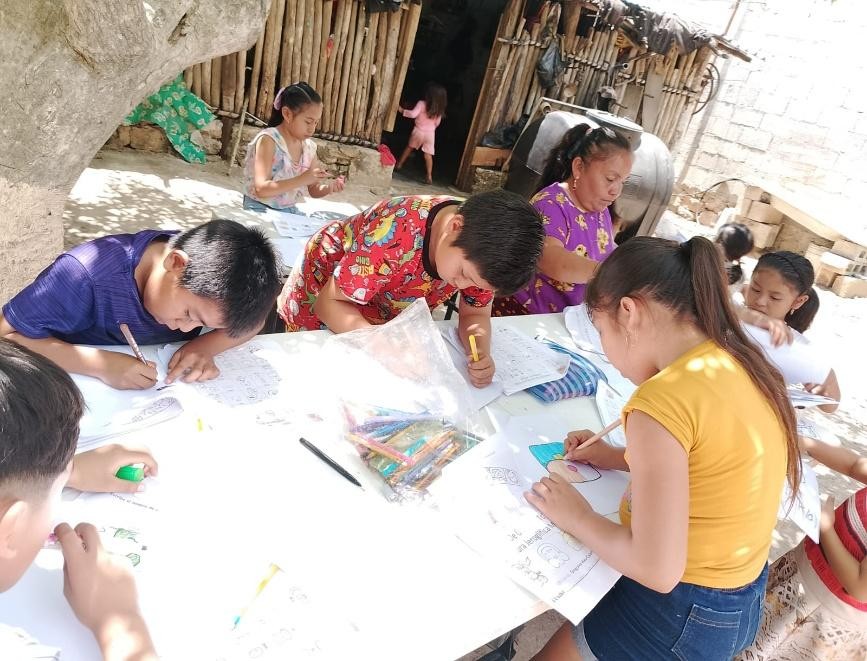
Image 13.- Students solving exercises, painting, and writing glyphs.

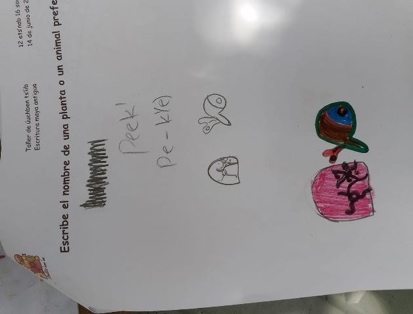
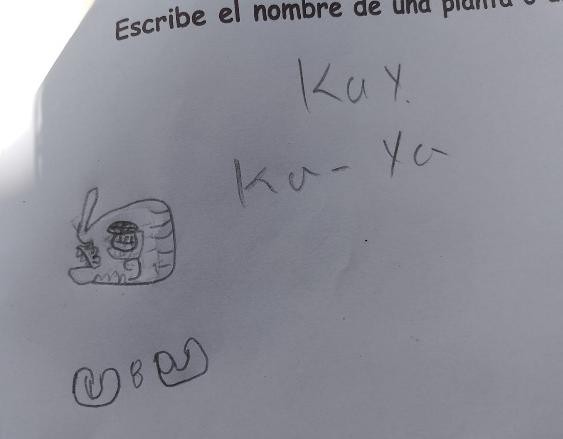
Once the children completed the exercises, they proceeded to verify if they were indeed correct. Once the syllabary was understood and the reading and writing order of the blocks of glyphs was established, they set out to create the final product, which consisted of writing in glyphs the name of an animal or an endemic tree from the region.

A white paper with writing on it

Description automatically generated A piece of paper with writing on it

Description automatically generated A drawing on a paper

Description automatically generated

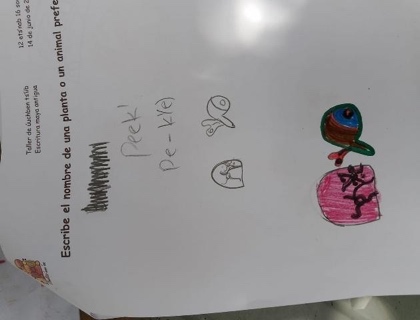
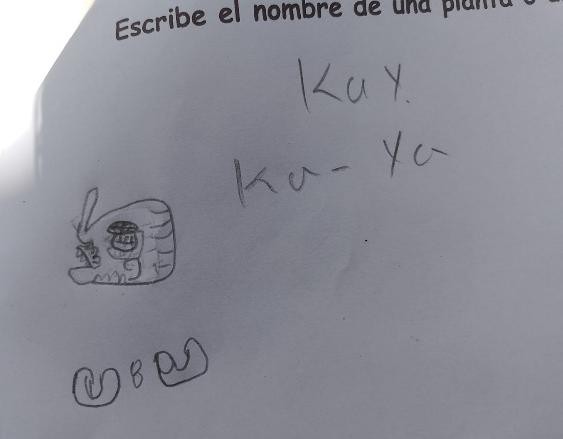
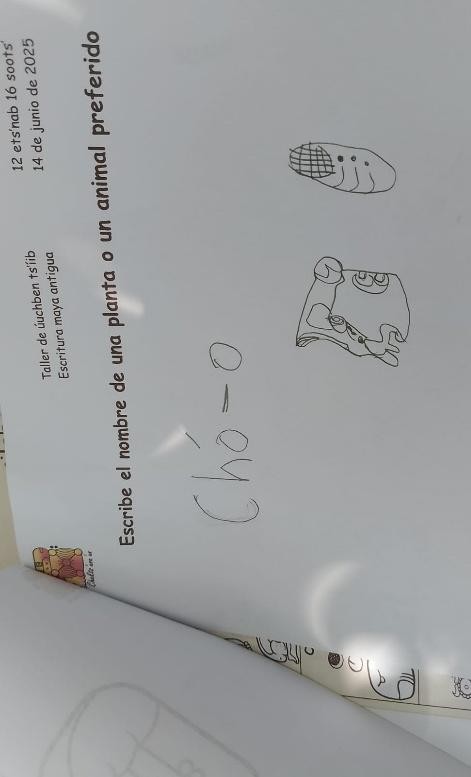
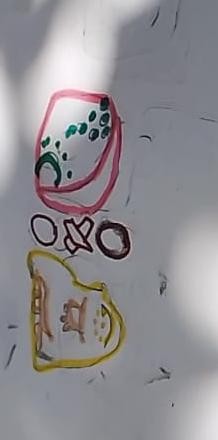
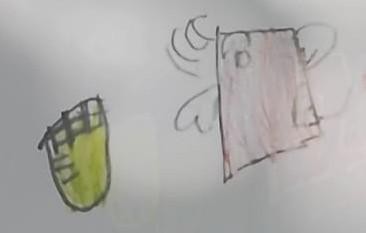
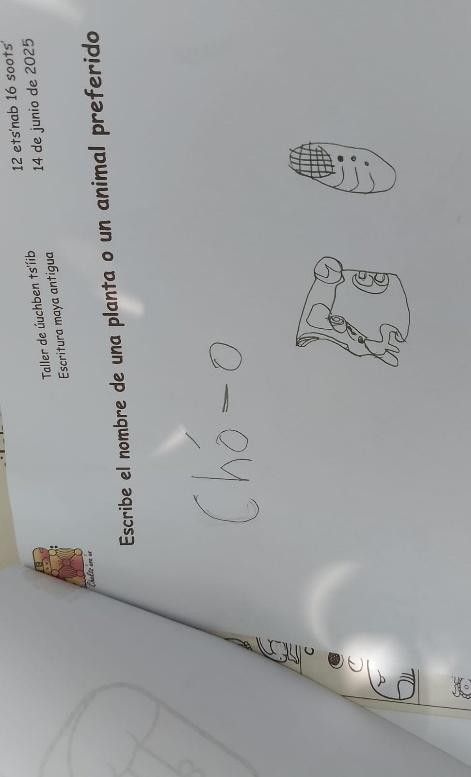
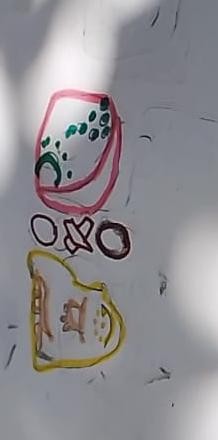
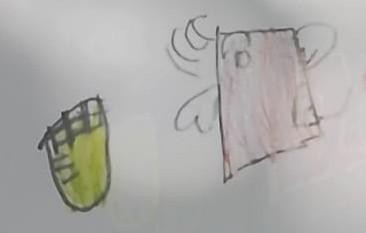
Images 14, 15, and 16.- From left to right, some final products. Development of a block of glyphs that consisted of writing the name of an animal or a plant from the region.

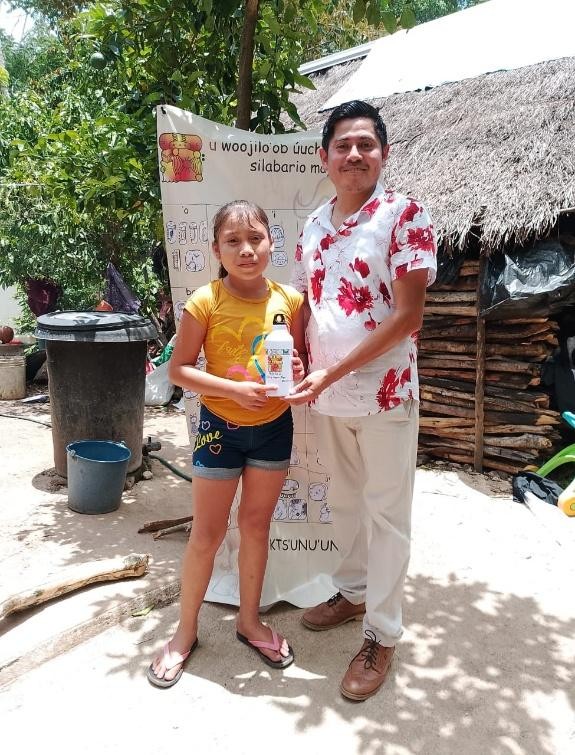
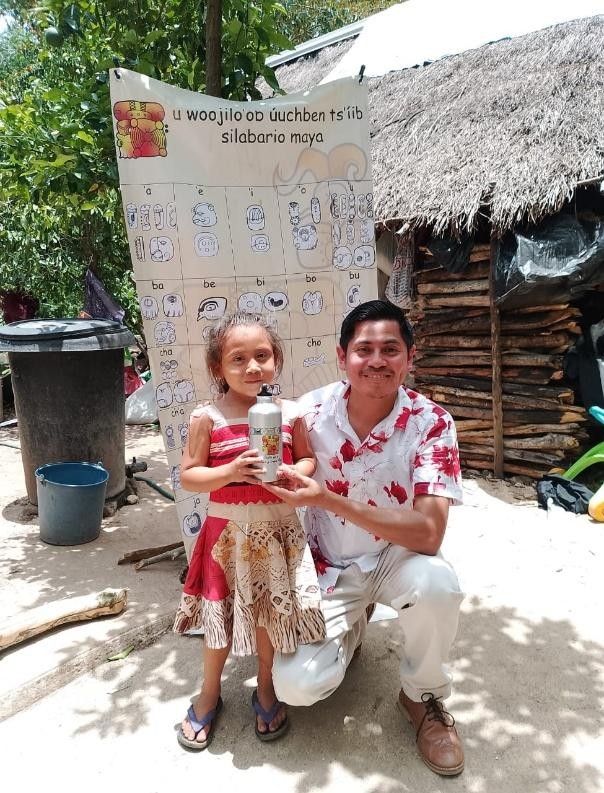
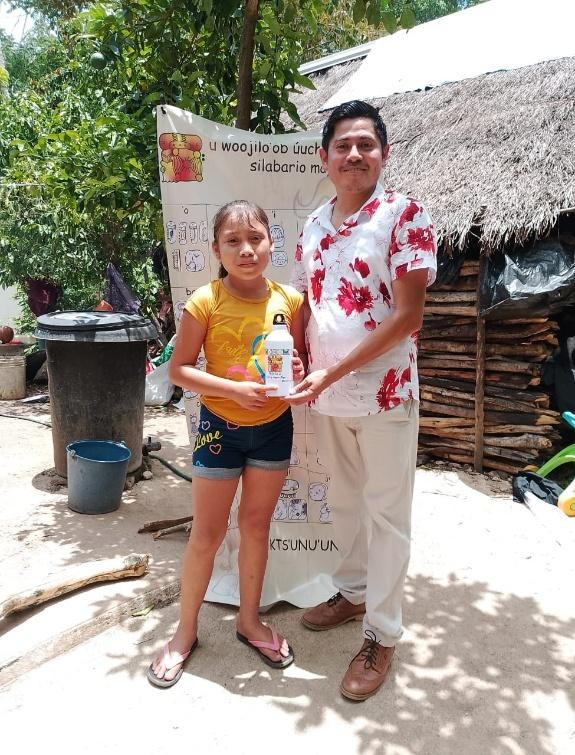
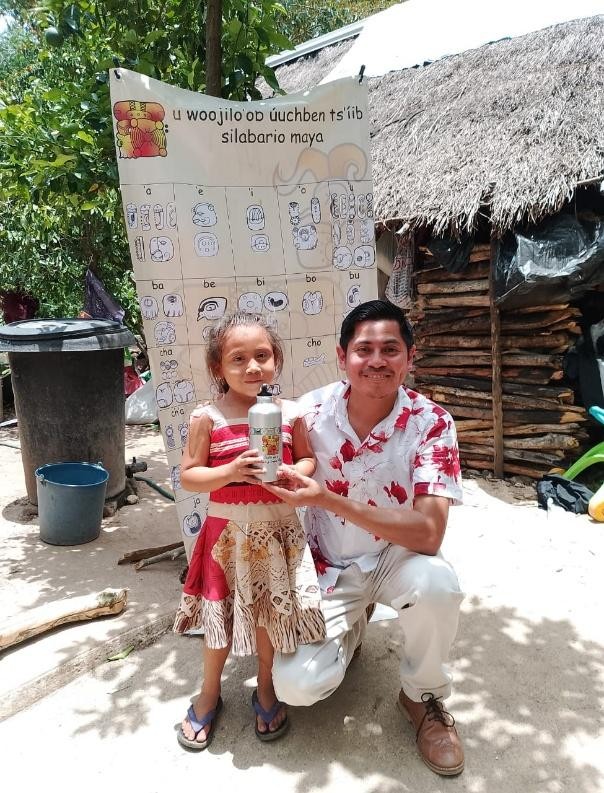
To conclude the workshop, two 60 ml bottles of water were given as a gift through an exercise that consisted of identifying a block of glyphs by performing transliteration, transcription, and translation.

A group of children sitting around a table with paper

Description automatically generated A person and a child posing for a picture

Description automatically generated

Image 18.- One of the students from the workshop receiving their gift (a 60 ml bottle with Maya glyphs).

Image 17.- Some students from the workshop doing the transliteration, transcription, and translation of Maya glyphs.

A person and a child posing for a picture

Description automatically generated

Image 19.- One of the students from the workshop

receiving their gift (a 60 ml bottle with Maya glyphs).

An important outcome of this workshop is the children’s interest in continuing to acquire this knowledge and to participate in activities related to ancient Maya writing.

A group of books on a table

Description automatically generated

Image 20.- Codex on the work table, from which

they could see how the Ajts’íib wrote.

I want to close this report by thanking MAM for the support provided to this workshop, because more children from the X-Alau community in the municipality of Chemax, Yucatán, Mexico have learned about úuchben ts’íib.

Múul meyaj, múul áantaj, múul kaambal

With mutual support and collaborative work, it is easier to learn úuchben ts’íib.

A group of children working on paper

Description automatically generated

Image 21.- Múul meyaj, múul áantaj, múul kaambal: teamwork achieves better results.

A child and child drawing on paper

Description automatically generated

Image 22.- Discovering meanings. She tells her companion,

‘this block says ts’i-b(i) and means writing.’

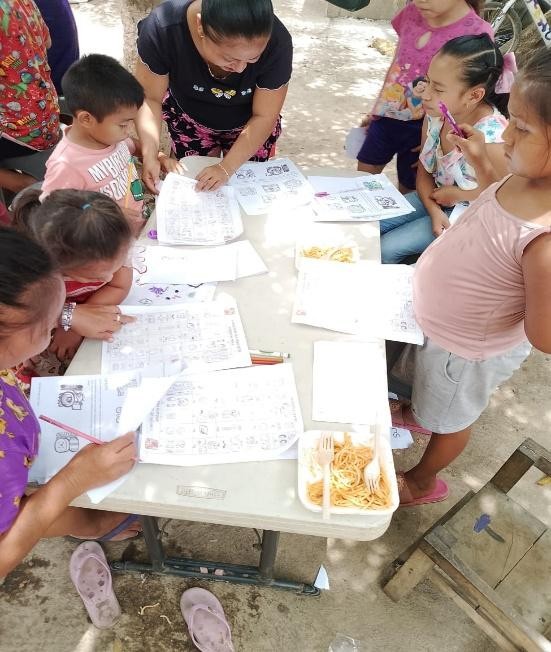
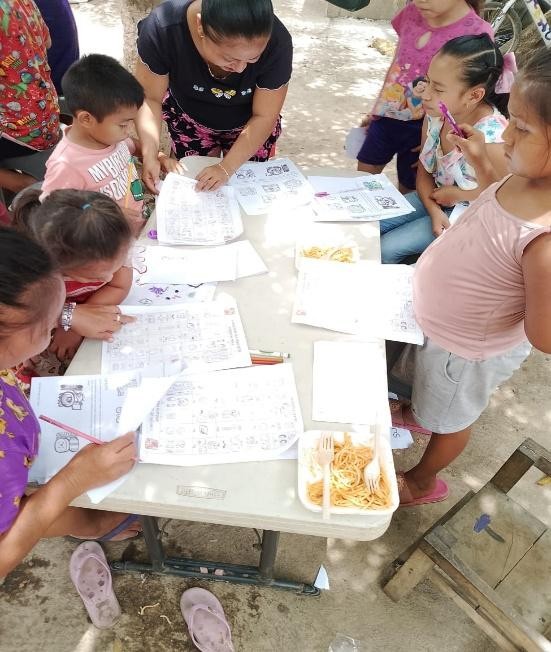
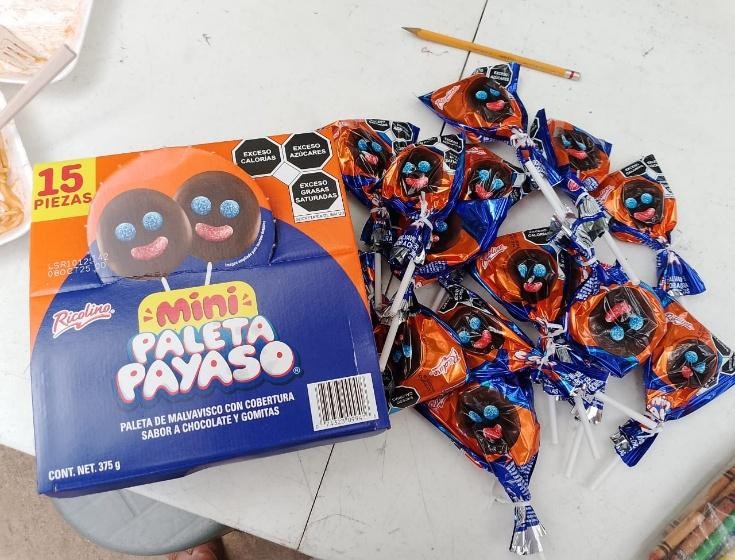
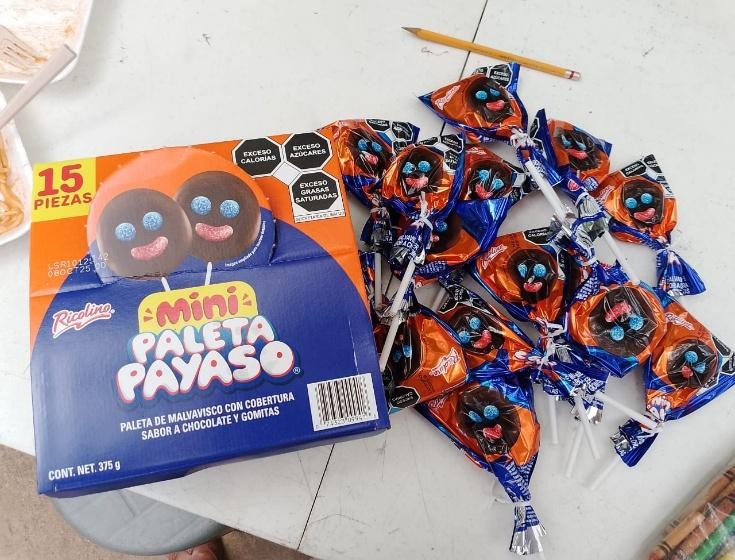
At the end, the children received a snack (spaghetti, a clown lollipop, and a glass of hibiscus juice) that was prepared by the family that offered us their space for the realization of the workshop, all thanks to MAM’s resources.

Annexes

A drawing of a bird

Description automatically generated

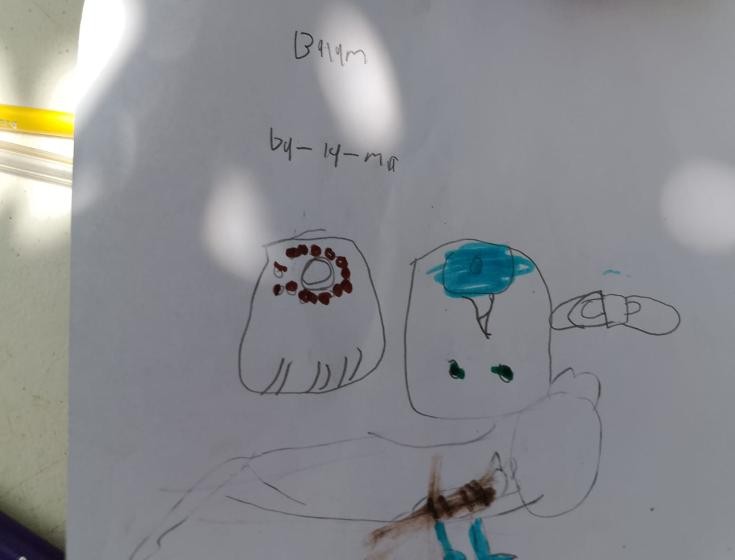
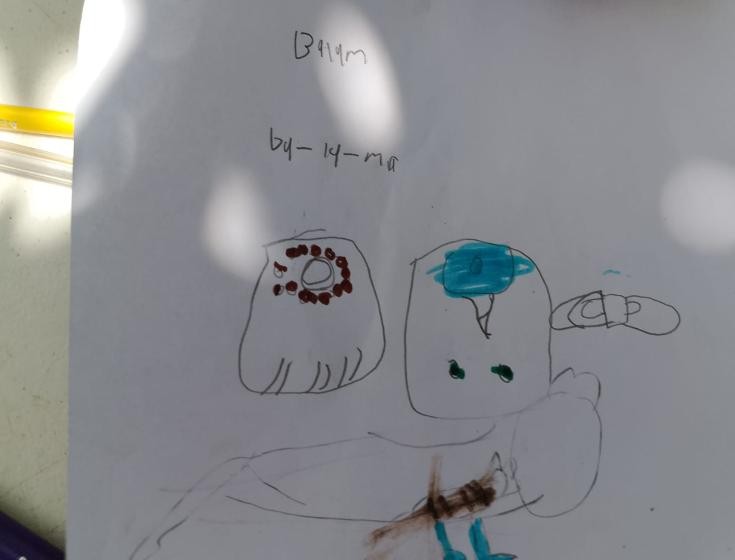
Image 23.- The word báalam written with úuchben ts’íib by children from X-Alau.


A paper with writing on it

Description automatically generated

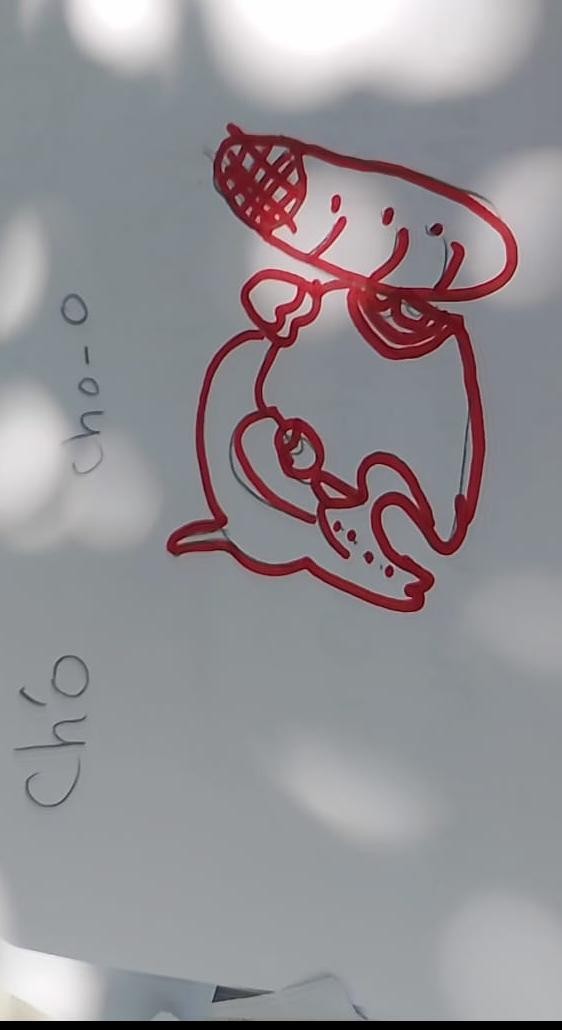
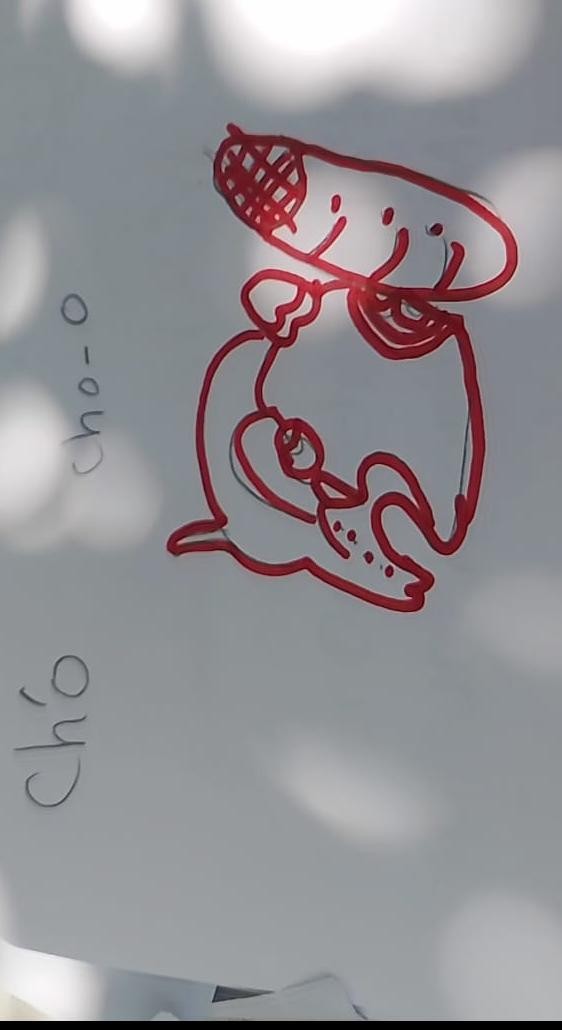
Image 24.- Syllable ch’o-o, which means mouse.

A hand drawing on paper

Description automatically generated

Image 25.-ch’oom ch’o-m(o): vulture.

A drawing on a wall

Description automatically generated

Image 26.- In this image, the syllables ku-u-k(u) can be read to signify the word ku’uk,

which in English means squirrel.

A drawing of a square and a square

Description automatically generated

Image 27.- In this image, the syllables o-ch’o can be read,

although the little Ajts’íib tried to write with glyphs the word ooch, opossum.

A drawing of a dog

Description automatically generated

Image 28.- Syllables ch’o-o: ch’o’ mouse.

A group of children sitting around a table

Description automatically generated

Image 29.- Teacher Gregorio Hau Caamal explaining the activity for the children of X-Alau.

A plate of food and candy

Description automatically generated A box of candy and a pencil

Description automatically generated

A group of children sitting around a table

Description automatically generated

Images 30, 31, and 32.- Snacks received by the students who attended the workshop.


Posted in New

10 Ahaw 18 Ch’en (el 24 de septiembre de 2025)


Para acceder a esta publicación en inglés, haga clic aqu

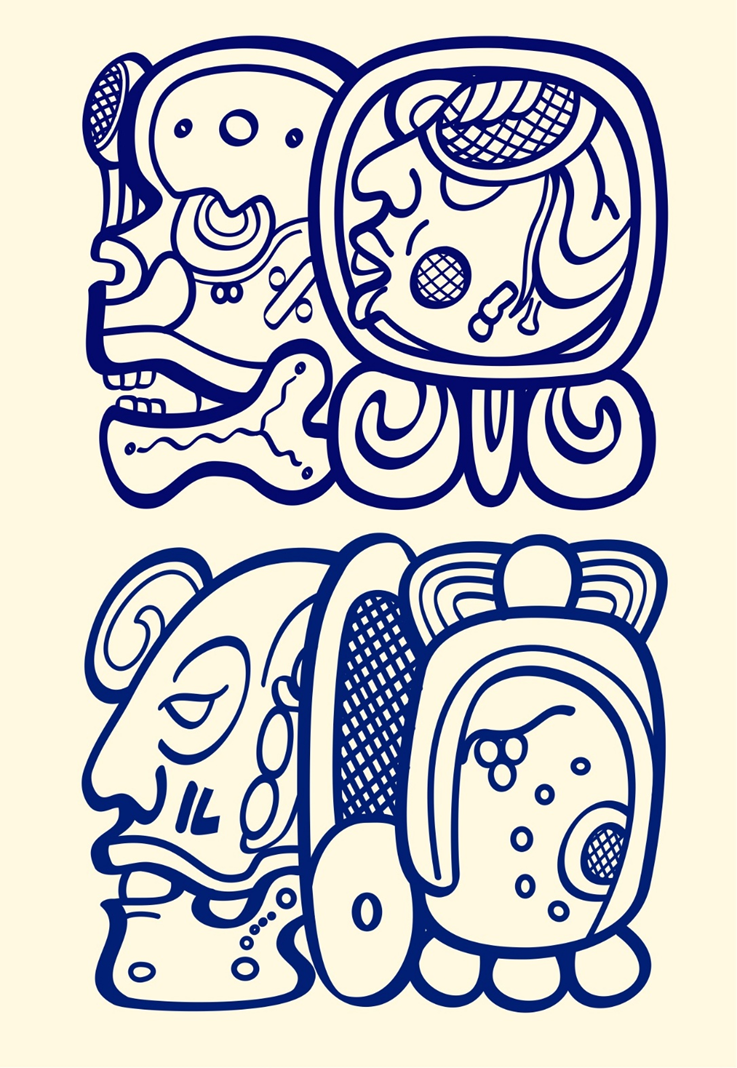
Bloque de glifos 10 Ahaw 18 Ch’en dibujado
por
Jorge Pérez de Lara

A group of children holding up signs

Description automatically generated

Foto de grupo con Gregorio Hau Caamal y los hijos de X-Alau.

10 Ajaw 18 Ch’en (24 de septiembre, 2025)
Múul Meyaj, Múul Áantaj, Múul Kaambal:

El trabajo en equipo logra mejores resultados: el taller Uuchben Ts’iib en X-Alau, Yucatán

Ha sido un verano muy ajetreado, y he tenido que tomarme un descanso de nuestros blogs habituales cada 40 días, durante los cuales hemos estado reorganizándonos y generando ideas en MAM. Muchos de nuestros colegas mayas han estado ocupados realizando diversos talleres en la región con fondos de las minibecas de MAM. Debido a los crecientes desafíos de los viajes internacionales, también estamos considerando congresos más regionales, en lugar de intentar celebrar un congreso internacional más grande cada dos años, como era nuestro formato anterior.

Tuvimos una reunión muy productiva del Comité Ejecutivo en agosto, donde tuvimos la fortuna de contar con la participación de varios colegas adicionales, entre ellos Beth Spencer, quien trabajó con MAM durante muchos años como nuestra Secretaria, así como mis buenos amigos Alonso Méndez y Barb MacLeod. Alonso es un colega arqueoastrónomo, además de ser maya tzeltal de Tenejapa, Chiapas, y nos entusiasma contar con más de su aportación y participación en MAM. Barb es una epigrafista y lingüista de renombre mundial, y también ha participado en los dos últimos Congresos. Barb colaboró ​​generosamente con la traducción y el formato del excelente informe de este mes de Gregorio Hau Caamal, especialmente dado que he estado asumiendo mayores responsabilidades como directora de mi departamento en Sacramento City College al comenzar de nuevo el año académico.

Esperamos pronto informarles sobre las diversas propuestas que tenemos en mente mientras buscamos la mejor manera de servir a las comunidades mayas con las que trabajamos y sus diversas necesidades.

¡Disfruten de este maravilloso reportaje y fotografías de Gregorio Hau Caamal y los niños de X-Alau en Chemax, Yucatán!

Yum bo’otik,

Michael Grofe, Presidente
MAM


Informe del Taller de Úuchben Ts’íib
Escritura Maya Antigua
Impartido por Gregorio Hau Caamal
Con recursos de MAM

En la comisaría de X-Alau municipio de Chemax, Yucatán, México se impartió un taller de úuchben ts’íib a niños de 8, 9, 10, y 12 años. Bajo la sombra del árbol de luuch (jícara) los niños despertaron la memoria de nuestros abuelos y de los ajts’íib. ese día, 12 ets’nab 16 soots’ escribieron con el úuchben ts’íib, escritura maya antigua o escritura jeroglífica maya como también es conocida.

A group of children sitting around a table

Description automatically generated

Imagen 1.- El maestro explicando al grupo el úuchben ts’íib.

El solar de los pueblos es un espacio donde se siembra, y se cosecha, donde se enseña y se aprende, donde se cuida y se conserva la vida,la alimentación, la lengua y la identidad. En este contexto Se acordó, hacer el taller en el solar o patio de la casa, porque es un espacio óptimo para el aprendizaje y los niños acuden al llamado el día que se les convoca.

El taller fue un éxito porque ese día estuvieron muy atentos observaban y escuchaban, hicieron preguntas, compartieron reflexiones, escribieron, colaboraron entre ellos para realizar las actividades que se solicitaban.

En este taller cada niño logró:

➢ Identificar silabas con el silabario
➢ Escribir en su material de trabajo la silaba correspondiente.
➢ Conocer las reglas, el orden de lectura y escritura de un bloque de glifos. ➢ Escribieron el nombre de un animal conocido.

A group of children drawing on paper

Description automatically generated

Imagen 2.- El maestro atendiendo dudas de los alumnos.

A table with signs and drinks on it

Description automatically generated

Imagen 3.- Lonas con el silabario maya.

A close-up of a person's hands holding a paper

Description automatically generated

Imagen 4.- Hojas del silabario maya y bloques de glifos mayas.

A person drawing on a piece of paper

Description automatically generated

Imagen 5.- Escribiendo la silaba correspondiente.

De esta manera contribuimos a fortalecer el conocimiento que nuestros abuelos y abuelas, nos han heredado en la tradición oral. En la escritura maya antigua se encuentra una prueba de todo lo que nuestros padres y ancestros contaban. Todo esto está registrado en los úuchben ju’un o códices y en las estelas y dinteles de los wíitso’ob o múulo’ob.

A person drawing on a piece of paper

Description automatically generated

Imagen 6.- Escribiendo e identificando silabas en bloques de glifos.

Otro de los objetivos fue reforzar y fomentar la lengua maya ya que este taller se impartió en la lengua materna de los niños que es el maayat’aan. Reconectarse con la escritura de nuestros abuelos y abuelas es reconocer al úuchben ts’íib como evidencia de que los tsikbalo’ob que se cuentan a los niños y jóvenes es una verdad y no se limita a simples cuentos, mitos o leyendas y es tan profundo, así como las raíces del árbol de la jícara donde se impartió el taller y que ha sobrevivido a diferentes chak ik’alo’ob (huracanes), tanto así que varias generaciones han cosechado y siguen cosechando sus frutos.

A group of children holding signs

Description automatically generated

Imagen 7.- Foto grupal de los niños que tomaron el taller de úuchben ts’íib.

Entre niños y adolescentes fueron en total 15 participantes entre ellos un adulto que se integró al taller al acompañar a sus hijos. La fecha de inicio fue el día 14 de junio a las 9:00 am en un domicilio conocido del pueblo. Todos los participantes fueron recibidos no sin antes pasar por la mesa para recibir su respectivo material de trabajo, lápiz, colores, hojas blancas, marcadores, el silabario y el cuadernillo de trabajo.

A table with various coloring books and pencils

Description automatically generated

Imagen 8.- Mesa donde se asentó el material para su respectiva entrega.

El material que se utilizó para la aplicación de este taller fue tomado de fuentes como Harri kettunen y christophe Helmke “Introducción a los Jeroglíficos mayas”, y A. la Cadena “Apéndice I lista de Logogramas mayas” generando un pequeño cuadernillo como material didáctico de fácil comprensión para los niños.

A child writing on a piece of paper

Description automatically generated

Imagen 9.- Niños escribiendo su nombre en su cuadernillo de trabajo.

Para hacer memoria y recordar algunos de los sitios ceremoniales o algún lugar donde hubiera vestigios de Úuchben ts’íib o escritura maya antigua que sobrevivieron al momento del contacto colonial, los niños fueron nombrando algunos conocidos e incluso visitados, como por ejemplo Palenque, Ek Balam, Uxmal, Chichen Itzá entre otros.

Se les explicó también, que existen personas dedicadas a la pintura y escritura y que fueron nombrados como AJ TSÍIB y que algún día ellos podrían llegar a serlo si se lo proponen. Aprendieron la importancia de leer, estudiar y escribir y lo más importante escuchar y entender lo que los abuelos nos platican cuando hablan de los yuntsilo’ob padres o madres que habitan en el monte o selva (algunos los llaman dioses). Mientras revisaron el silabario se les enseñó que la base de la antigua escritura maya se compone de muchos signos y símbolos que se les conoce como jeroglíficos o simplemente glifos.

A group of people sitting at tables outside

Description automatically generated

Imagen 10.- El maestro Explicando a los niños quien es un aj ts’íib y quien puede llegar a serlo.

Durante la manipulación del silabario los niños descubrieron que a pesar de que existen muchísimos signos, muchos de ellos son variaciones del mismo signo o también puede ser un signo distinto, pero con el mismo significado y para ello se dieron varios ejemplos.

A person holding a pencil over a piece of paper

Description automatically generated

Imagen 11.- Identificación de la variación de un mismo signo.

En el material proporcionado junto con su silabario, de manera personal o en equipo los niños fueron identificando silabas mismas que una vez reconocidas a viva voz decían a qué silaba correspondía. Después de la identificación de las silabas se prosiguió a estudiar el orden de lectura dentro de un texto y de un bloque. Para ello los niños se apoyaron en su material de trabajo.

A child reading a book

Description automatically generated

Imagen 12.- Un alumno en la identificación del orden de lectura y escritura de un bloque de glifos.

Con los ejercicios del material didáctico, cada alumno se dedicó a desarrollar los ejercicios con apoyo de sus compañeros asesorado por el instructor. En ocasiones los mismos alumnos se encargaron de enseñar a sus compañeros. Esto es muestra del múul áantaj o apoyo mutuo para fortalecer el aprendizaje y conocimiento.

A group of children drawing on paper

Description automatically generated

Imagen 13.- Alumnos resolviendo ejercicios, pintando y escribiendo glifos.

Una vez que los niños realizaron los ejercicios se prosiguió a corroborar si efectivamente estaban correctas. Una vez conocido el silabario, el orden de lectura y escritura de los bloques de glifos se dispusieron a realizar el producto final que consistió en escribir en glifos el nombre de un animal o un árbol endémico de la región.

A white paper with writing on it

Description automatically generated A piece of paper with writing on it

Description automatically generated A drawing on a paper

Description automatically generated

Imagen 14, 15 y 16.- De arriba a abajo algunos productos finales. Elaboración de un bloque de glifos que consistió en escribir el nombre de un animal o una planta de la region.

Ya para finalizar el taller se obsequiaron dos botellones de agua de 60 ml. mediante un ejercicio el cual constó en identificar un bloque de glifos haciendo la transliteración, transcripción y traducción.

A group of children sitting around a table with paper

Description automatically generated

Imagen 17 – Algunos alumnos del taller haciendo la transliteración, transcripción y traducción de los glifos mayas.

A person and a child posing for a picture

Description automatically generated

Imagen 18.- Uno de los alumnos del taller recibiendo su obsequio (botellón de 60 ml. con glifos mayas)..

A person and a child posing for a picture

Description automatically generated

Imagen 19.- Uno de los alumnos del taller recibiendo

su obsequio (botellón de 60 ml. con glifos mayas).

Un resultado importante de este taller es el interés de los niños en continuar adquiriendo estos conocimientos y participar en actividades relacionadas con la escritura maya antigua.

A group of books on a table

Description automatically generated

Imagen 20.- Códice en la mesa de trabajo, con el cual pudieron apreciar como escribían los Ajts’íib.

Quiero cerrar este reporte agradeciendo a MAM por el apoyo brindado a este taller porque más niños de la comisaría de X-Alau municipio de Chemax, Yucatán, México han conocido el úuchben ts’íib.

Múul meyaj, múul áantaj. Múul kaambal

Con el apoyo mutuo y el trabajo colaborativo es más fácil aprender úuchben ts’íib.

A group of children working on paper

Description automatically generated

Imagen 21.- Múul meyaj, múul áantaj, múul kaambal el trabajo
en equipo logra tener mejores resultados.

A child and child drawing on paper

Description automatically generated

Imagen 22.-Descubriendo significados. Le dice a su compañero

“este bloque dice ts’i-b(i) y significa escritura.

Al finalizar los niños recibieron un refrigerio (espagueti, una paleta payaso y su vaso de jugo de Jamaica) que fue preparado por la familia que nos ofreció su espacio para la realización del taller todo esto con el recurso de MAM.

Anexos

A drawing of a bird

Description automatically generated

Imagen 23.- la palabra báalam escrita con úuchben ts’íib por niños de Xalau.


A paper with writing on it

Description automatically generated

Imagen 24.- Silaba ch’o-o, el cual significa ratón.

A hand drawing on paper

Description automatically generated

Image 25.-ch’oom ch’o-m(o): zopilote.

A drawing on a wall

Description automatically generated

Imagen 26.- En esta imagen se puede leer las silabas ku-u-k(u)

para significar la palabra ku’uk que en español significa ardilla.

A drawing of a square and a square

Description automatically generated

Imagen 27.- En esta imagen se puede leer las silabas o-ch’o.

Aunque el pequeño Ajts’íib intentó escribir con glifos la palabra ooch zarigüeya.

A drawing of a dog

Description automatically generated

Image 28.- Syllabas ch’o-o: ch’o’ ratón.

A group of children sitting around a table

Description automatically generated

Imagen 29.- El maestro Gregorio Hau Caamal Explicando

la actividad correspondiente a los niños de X-Alau.

A plate of food and candy

Description automatically generated A box of candy and a pencil

Description automatically generated

A group of children sitting around a table

Description automatically generated

Imagen 30, 31 y 32 .- Refrigerios que recibieron los alumnos que acudieron al taller.

Posted in New

7 Ahaw 18 Sip (May 27, 2025)


A orange sign with blue and yellow text

AI-generated content may be incorrect.


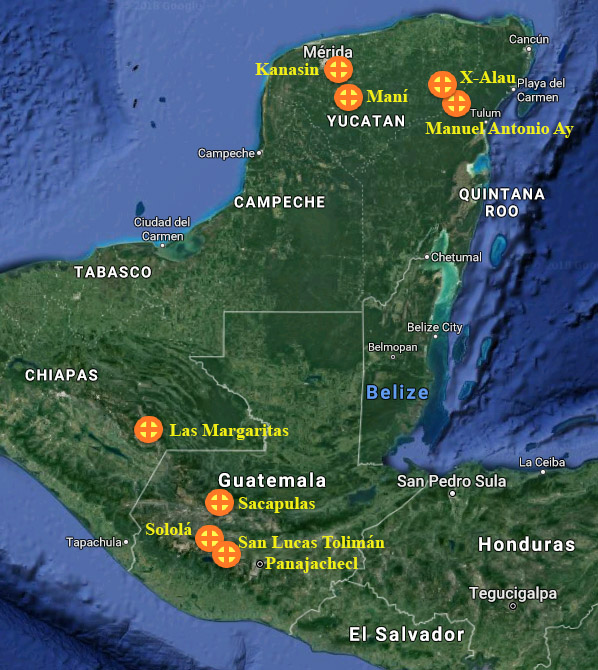
3:Users:michaelgrofe:Desktop:MAM:MAM backup Nov 2019:MAM Blogs:MAM Minigrant map 2025.jpg

7 Ajaw 18 Sip (May 27th, 2025)
Announcing the Newest MAM Mini-grant Recipients!
It has been a whirlwind of the end of the semester for me, and we have had to take a break from our usual blog posts every 40 days. But the school year is finally over and we are very happy to announce our latest round of MAM mini-grant recipients!

Here are our latest recipients of our MAM mini-grant awards:

Guatemala:

Luis Francisco Chalí Sotz
San Lucas Tolimán & Panajachel, Guatemala: Kaqchikel

Kanek German Francisco López Arcón
Sacapulas, Guatemala: Sakapulteko/Tujaal

Marta Dominga Cux Yac
Sololá, Guatemala: K’iche’, Kaqchikel

Chiapas, México:

Avenamar López Gómez
Las Margaritas, Chiapas: Tojol-ab’al

Yucatan Peninsula, Mexico:

Gregorio Hau Caamal
X-Alau, Chemax: Yucatec

Gloria Nayeli Tun Tuz
Manuel Antonio Ay: Yucatec

Milner Rolando Pacab Alcocer
Kanasin: Yucatec

Iván de Jesús Jiménez Balan
Maní & Valladolid: Yucatec

These various workshops are designed to instruct various Mayan language speaking community members to learn to read and write using the Maya script, and to learn about the calendars used by their ancestors. We are very proud of the work these instructors are continuing as a way of encouraging cultural pride and language preservation!

Sincerely,

Michael Grofe, President
MAM


Posted in New

7 Ahaw 18 Sip (27 de Maya de 2025)

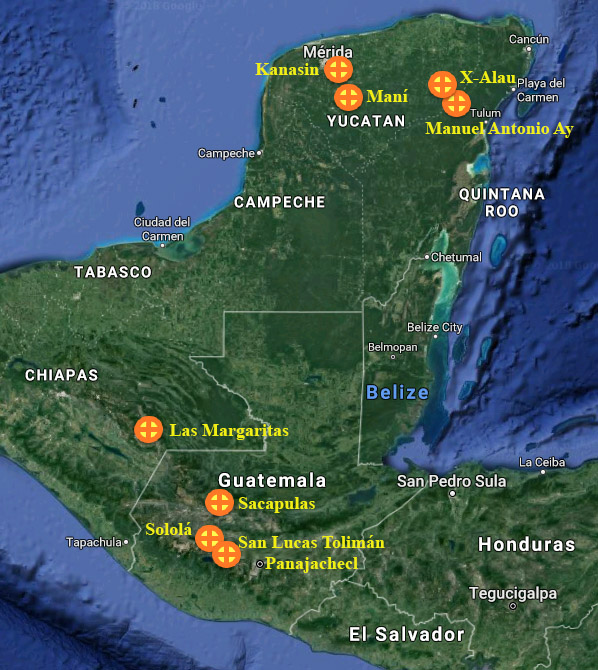
3:Users:michaelgrofe:Desktop:MAM:MAM backup Nov 2019:MAM Blogs:MAM Minigrant map 2025.jpg

Nuestros últimos beneficiarios de las mini-becas MAM

7 Ajaw 18 Sip (27 de mayo de 2025)
¡Anunciamos los Nuevos Beneficiarios de la Mini-beca MAM!

El final del semestre ha sido un torbellino para mí, y hemos tenido que tomarnos un descanso de nuestras publicaciones habituales en el blog cada 40 días. Pero el año escolar por fin ha terminado y estamos muy contentos de anunciar nuestra última ronda de beneficiarios de las minibecas MAM.

Aquí están los últimos beneficiarios de nuestras minibecas MAM:

Guatemala:

Luis Francisco Chalí Sotz 
San Lucas Tolimán & Panajachel, Guatemala: Kaqchikel

Kanek German Francisco López Arcón 
Sacapulas, Guatemala: Sakapulteko/Tujaal

Marta Dominga Cux Yac 
Sololá, Guatemala: K’iche’, Kaqchikel

Chiapas, México:

Avenamar López Gómez 
Las Margaritas, Chiapas: Tojol-ab’al

Yucatan Peninsula, Mexico:

Gregorio Hau Caamal 
X-Alau, Chemax: Yucatec

Gloria Nayeli Tun Tuz 
Manuel Antonio Ay: Yucatec

Milner Rolando Pacab Alcocer 
Kanasin: Yucatec

Iván de Jesús Jiménez Balan 
Maní & Valladolid: Yucatec

Estos talleres están diseñados para enseñar a diversos miembros de la comunidad maya a leer y escribir con la escritura maya, así como a conocer los calendarios de sus antepasados. Nos enorgullece el trabajo que estos instructores continúan realizando para fomentar el orgullo cultural y la preservación de las lenguas.

Atentamente,

Michael Grofe, Presidente
MAM

Posted in New

5 Ahaw 3 Kumk’u (March 8, 2025)

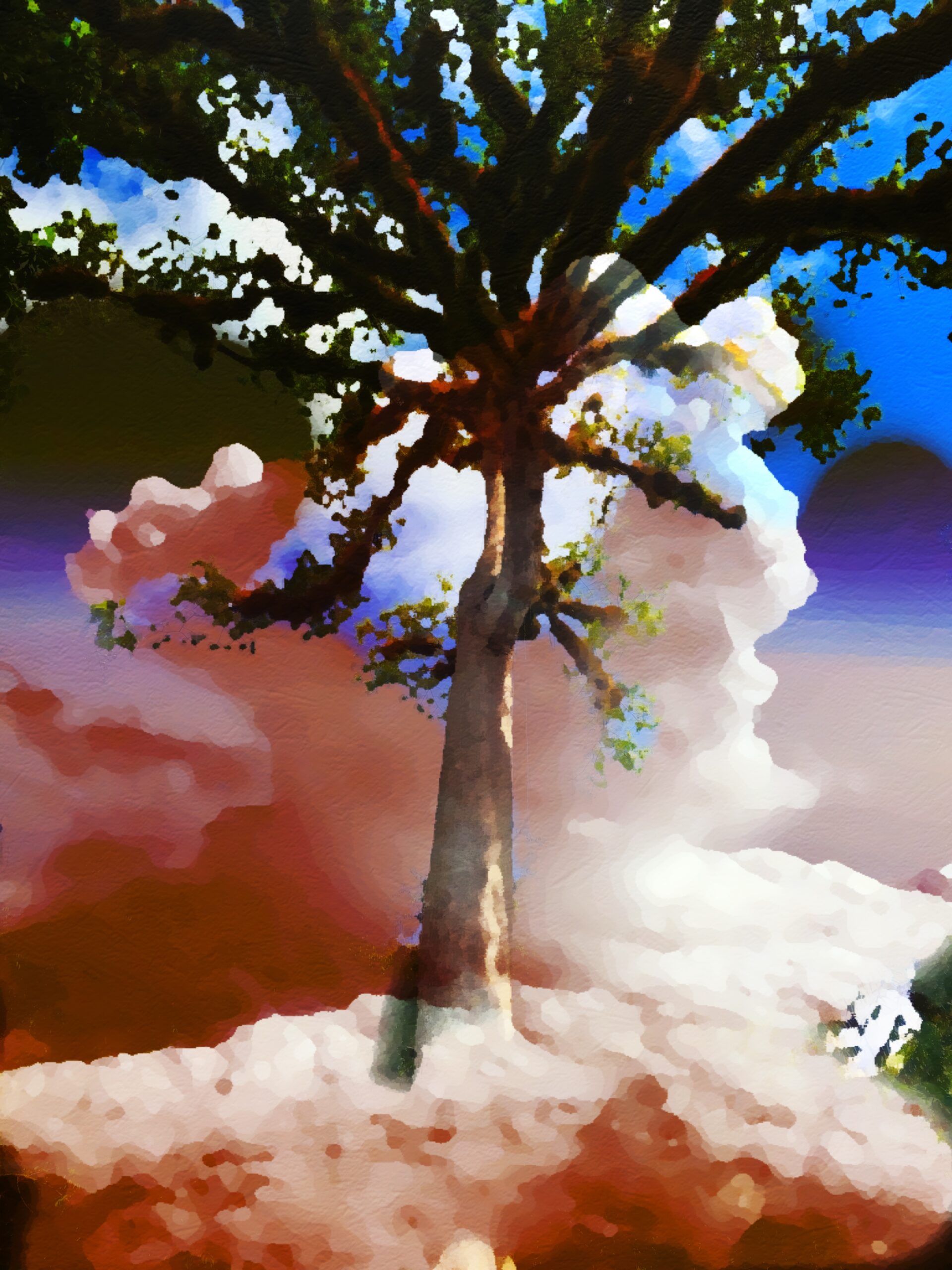
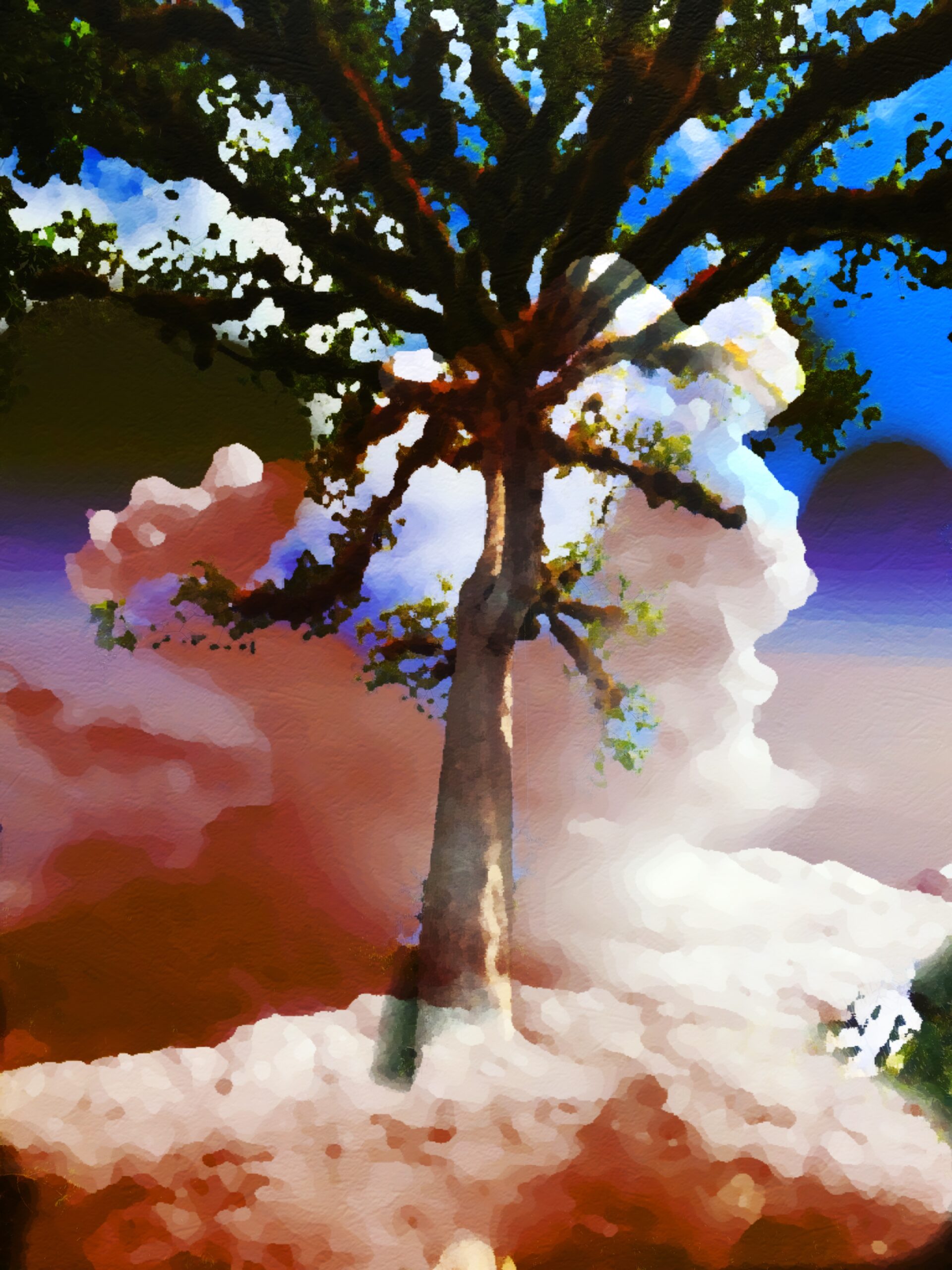
 Ceiba Tree in the clouds by Michael Grofe

5 Ajaw 3 Kumk’u (March 8, 2025)
Soul-Searching in a Challenging Time:
Our Work Must Go On!

After a meeting of the MAM Executive Committee, and in consultation with the Congreso planning committee, we have decided to postpone the 6th Congreso until next year for a number of reasons. The current climate of political and financial instability makes it especially difficult for us to raise adequate funds this year, while transportation of our Maya colleagues across the borders between Guatemala and Mexico and between Belize and Mexico or Guatemala is particularly challenging in these times of increased border security and the chaos of deportations. We know that this is a painful and difficult time for many of us—for many of our fellow citizens and fellow human beings on this continent and throughout the world, especially in Ukraine and Palestine. Regrettably, this will mean that we must wait another year before the next Congreso and reassess in 2026. In the meantime, we are in discussions regarding a series of smaller, online conferences that will be much easier to fund and carry out, most likely towards the end of the year.

I also realize that I have been the President of MAM now since 2016, and it is coming up on nine years this Spring! I have been doing a lot of soul-searching and reflection about where MAM has been and what our goals will be in the future. Since I have taken on the responsibility of being the Department Chair of the Anthropology Department at Sacramento City College, as well as teaching five classes this semester, I recognize that I have had less time to focus effectively on MAM or on my own publications and research. One of the items we discussed at the Executive Committee meeting was the possibility for us to bring on a Vice President that could help me carry out some of my obligations, looking toward a future date when I will eventually step down as President. That time has not yet arrived, but it will be important for us to ensure that our work continues.

We also propose sending out a survey to our colleagues asking what the greatest needs are regarding the teaching and dissemination of the Maya script and the calendar. High on the list, we know, is the importance of the preservation of the living Mayan languages, which are all suffering from varying degrees of language pressure and language shift. Another important issue is the teaching of the script and the calendar as a way of celebrating the achievements of Maya people in mathematics, astronomy, and history, especially when this history has been taught or understood very little in education systems in Mesoamerica, as well as in the United States.

At this moment in history, we are all being inundated with an extreme, xenophobic backlash of Eurocentric thought that seeks to whitewash history. Old and familiar prejudices against non-Western peoples, histories, and achievements that devalue the contributions of Mesoamerican people are reappearing and attempting to render them invisible. But the truths of history—both the painful truth of ongoing colonialism, as well as the truth of the histories and achievements of Mesoamerican peoples—never can be erased completely, and we will firmly stand against this by continuing our work. Attempts to performatively and selfishly rename longstanding geographic features like the Gulf of Mexico will hopefully not last the test of time and rationality, and now more than ever it is vitally important for us to celebrate and share the recovered knowledge of the Maya script and the extraordinary achievements of Maya mathematics and astronomy. We know it means a great deal to many people, and I believe that it is profoundly important for the history of the world to set the record straight and to give credit where it is due. That is my own connection to this work, and it is something that I am dedicating my life to pursuing as a teacher and a scholar.

In continuing our work with Maya communities, we recognize that there are many different Mayan language communities, each with their own needs. Some wish to involve only those who are active speakers of their languages, while others seek to broaden their scope to involve others who may be actively losing their languages, or some who may have lost them entirely. It is our role to support all of these groups as they wish to be supported. Likewise, it is also our role to involve non-Maya people in this work by enlisting them for help, as well as getting them excited about Maya writing and calendrics. Through sharing online video presentations on our website, in Spanish, English, and Mayan languages, it may be possible to involve many more people in this collective work. Likewise, supporting the publication of resources for Maya and non-Maya students may be very helpful.

Speaking of online and video presentations, I was graciously invited to present some of my own research for the Aztlander’s virtual programs on March 24th at 8 pm Eastern Time. Here is a link to the free program:

https://us02web.zoom.us/j/89353789932

The title of my presentation is “The Maya Great Year: An Astronomical Key Embedded in the Palenque Tablet of the Cross.” It corresponds with one of my publications from 2021 at Glyph Dwellers.com:

http://glyphdwellers.com/pdf/R70.pdf

The presentation, like the article, is in English, but I hope to be able to record the presentation and then later provide Spanish subtitles for posting on our MAM website afterword.

Lastly, I am also interested in involving my own students from Sacramento College in our shared work through Mesoamerican field courses that can be incorporated with MAM workshops as I have done in the past through the Maya Exploration Center. These courses can allow many students, particularly those with Mesoamerican heritage, as well as those from any background, the opportunity to travel and study abroad in Mesoamerica for the first time for college credit, and, to help efforts to revitalize Maya writing, mathematics, and astronomy through working with Maya communities. I will be exploring the possibilities with my college district, and through pursuing grants to help support international travel for my students and our work with MAM.

These have been my recent thoughts on the importance of our work, and my role at MAM for as long as I am able to continue as President. In the meantime, it is my distinct pleasure now to announce our most recent call for applications for MAM minigrants! We have some funds available for several minigrants for those who have participated in previous Congresos. I will be sending out an email with the application form soon, but applicants can simply send a request to the following address to receive an application:

discovermam@gmail.com

We look forward to receiving these next applications!
Thank you, as always, for your ongoing support for our shared work!

May there be peace and justice for all in this world, for ourselves, and for our children.

Sincerely,
Michael Grofe, President
MAM


Posted in New

5 Ahaw 3 Kumk’u (8 de Marzo, 2025)

La Ceiba en las nubes por Michael Grofe.

5 Ajaw 3 Kumk’u (8 de marzo, 2025)
La búsqueda del alma en tiempos difíciles:
¡Nuestro trabajo debe continuar!

Después de una reunión del Comité Ejecutivo del MAM, y en consulta con el comité de planificación del Congreso, hemos decidido posponer el 6º Congreso hasta el próximo año por varias razones. El clima actual de inestabilidad política y financiera nos dificulta especialmente recaudar fondos adecuados este año, mientras que el transporte de nuestros colegas mayas a través de las fronteras entre Guatemala y México y entre Belice y México o Guatemala es particularmente complicado en estos tiempos de mayor seguridad fronteriza y el caos de las deportaciones. Sabemos que éste es un momento doloroso y difícil para muchos de nosotros—para muchos de nuestros conciudadanos y seres humanos en este continente y en todo el mundo, especialmente en Ucrania y Palestina.Lamentablemente, esto significará que debemos esperar otro año antes del próximo Congreso y reevaluar la situación en 2026. Mientras tanto, estamos en conversaciones sobre una serie de conferencias más pequeñas, en línea, que serán mucho más fáciles de financiar y llevar a cabo, muy probablemente hacia finales de año.

También me doy cuenta de que he sido presidente de MAM desde 2016, ¡y esta primavera se cumplirán nueve años! He estado haciendo un profundo examen de conciencia y reflexionando sobre dónde ha estado MAM y cuáles serán nuestros objetivos en el futuro. Desde que asumí la responsabilidad de ser el presidente del Departamento de Antropología en Sacramento City College, además de enseñar cinco clases este semestre, reconozco que he tenido menos tiempo para concentrarme de manera efectiva en MAM o en mi propia publicación e investigación. Uno de los temas que discutimos en la reunión del Comité Ejecutivo fue la posibilidad de que contratemos a un vicepresidente que pudiera ayudarme a llevar a cabo algunas de mis obligaciones, y la perspectiva de una fecha futura en la que finalmente dejaré el cargo de presidente. Ese momento aún no ha llegado, pero será importante para nosotros asegurarnos de que nuestro trabajo continúe.

También propusimos enviar una encuesta a nuestros colegas para preguntarles cuáles son las mayores necesidades en cuanto a la enseñanza y difusión de la escritura maya y el calendario. Sabemos que en un lugar destacado de la lista está la importancia de la preservación de las lenguas mayas vivas, que están sufriendo diversos grados de presión y cambio lingüístico. Otro tema importante es la enseñanza de la escritura y el calendario como una forma de celebrar los logros del pueblo maya en matemáticas, astronomía e historia, especialmente cuando esta historia se ha enseñado o entendido muy poco en los sistemas educativos tanto de Mesoamérica como de los Estados Unidos.

En este momento de la historia en particular, todos estamos siendo inundados por una reacción xenófoba extrema del pensamiento eurocéntrico que busca blanquear la historia. Los viejos y familiares prejuicios contra los pueblos, historias y logros no occidentales que devalúan las contribuciones de los pueblos mesoamericanos están reapareciendo y tratando de hacerlos invisibles. Pero las verdades de la historia -tanto la dolorosa verdad del colonialismo en curso como la verdad de las historias y logros de los pueblos mesoamericanos- nunca podrán ser borradas por completo, y nos opondremos firmemente a esto mediante la continuación de nuestro trabajo. Los intentos de renombrar de manera performativa y egoísta características geográficas de larga data como el Golfo de México, esperemos que no resistan la prueba del tiempo y la racionalidad, y ahora más que nunca es de vital importancia para nosotros celebrar y compartir el conocimiento recuperado de la escritura maya y los extraordinarios logros de las matemáticas y la astronomía mayas. Sabemos que significa mucho para mucha gente, y creo que es de suma importancia para la historia del mundo poner las cosas en su sitio y darle el crédito a quien lo merece. Ésa es mi propia conexión con este trabajo, y es algo a lo que dedico mi vida como profesor y académico.

Al continuar nuestro trabajo con las comunidades mayas, reconocemos que hay muchas comunidades de lenguas mayas diferentes, cada una con sus propias necesidades. Algunas desean involucrar sólo a aquellos que son hablantes activos de sus idiomas, mientras que otras buscan ampliar su alcance para involucrar a otros que pueden estar perdiendo activamente sus idiomas, o algunos que pueden haberlos perdido por completo. Es nuestro papel apoyar a todos estos grupos como ellos desean ser apoyados. Asimismo, también es nuestro papel involucrar a las personas no mayas en este trabajo, tanto al reclutarlas para que ayuden como al entusiasmarlas con la escritura maya y los calendarios. Al compartir presentaciones de video en línea en nuestro sitio web, en español, inglés y en idiomas mayas, puede ser posible involucrar a muchas más personas en este trabajo colectivo. Asimismo, puede ser muy útil apoyar la publicación de recursos para estudiantes mayas y no mayas.

Hablando de presentaciones en línea y en video, me invitaron gentilmente a presentar algunas de mis propias investigaciones para los programas virtuales de Aztlander el 24 de marzo a las 8 p. m., hora del Este. Aquí hay un enlace al programa gratuito:

https://us02web.zoom.us/j/89353789932

El título de mi presentación es “El Gran Año Maya: Una Clave Astronómica Incrustada en la Tabla de la Cruz de Palenque” y el corresponde a una de mis publicaciones de 2021 en Glyph Dwellers.com:

http://glyphdwellers.com/pdf/R70.pdf

La presentación, al igual que el artículo, será en inglés, pero espero poder grabar la presentación y luego proporcionar subtítulos en español para publicarlos en nuestro sitio web MAM.

Por último, también me interesa involucrar a mis propios estudiantes de Sacramento en nuestro trabajo compartido a través de cursos de campo sobre Mesoamérica que se puedan incorporar a los talleres de MAM, como lo he hecho en el pasado a través del Centro de Exploración Maya. Estos cursos pueden brindar a muchos estudiantes, particularmente a aquellos con herencia mesoamericana, así como a aquellos de cualquier origen, la oportunidad de viajar y estudiar en el extranjero en Mesoamérica por primera vez para obtener créditos universitarios, y ayudar a los esfuerzos por revitalizar la escritura, las matemáticas y la astronomía mayas a través del trabajo con las comunidades mayas. Exploraré las posibilidades con mi distrito universitario y buscaré subvenciones para ayudar a apoyar los viajes internacionales de mis estudiantes y nuestro trabajo con MAM.

Estas han sido mis reflexiones recientes sobre la importancia de nuestro trabajo y mi papel en el MAM mientras pueda seguir como presidente. Mientras tanto, ¡tengo el gran placer de anunciar nuestra convocatoria más reciente para la presentación de solicitudes de minibecas del MAM! Tenemos algunos fondos disponibles para una serie de minibecas para quienes hayan participado en congresos anteriores. Pronto enviaré un correo electrónico con el formulario de solicitud, pero los solicitantes pueden simplemente enviar una solicitud a la siguiente dirección para recibir una solicitud:

discovermam@gmail.com

¡Esperamos recibir las próximas solicitudes!

Gracias, como siempre, por su continuo apoyo a nuestro trabajo compartido!

Que haya paz y justicia para todos en este mundo, para nosotros y para el futuro de nuestros hijas y hijos.

Atentamente,
Michael Grofe, Presidente
MAM

Posted in New

4 Ahaw 3 Pax (January 27, 2025)

YOU CAN HELP OUR MAYA COLLEAGUES REDISCOVER THEIR CULTURAL HERITAGE! DONATE NOW AT:

http://discovermam.org/support/

4 Ajaw 3 Pax: Drawing by Jorge Pérez de Lara

4 Ajaw 3 Pax (January 27th, 2025)

Felicitaciones to Maestra K’anal Santiz!

Happy New Year to everyone! I recently returned from Guatemala and began my semester teaching last week, and I am looking forward to a year of new possibilities amidst the hardships.

For our first blog of the year, and to celebrate the work of one of our esteemed colleagues, all of us at MAM wanted to congratulate Maestra K’anal Santiz, María Bertha Santiz Pérez, on her new appointment as Academic Coordinator of the Las Margaritas Multidisciplinary Academic Unit at the Intercultural University of Chiapas, UNICH, Mexico! K’anal is a tireless defender of human rights, and a Master of Science in Education. She is a recipient of multiple MAM minigrants, and she was instrumental as one of the host coordinators of the 5th International Congreso on Ojer Maya Tz’ib’ in San Cristóbal de las Casas in July of 2023. We are very proud of K’anal’s excellent work on behalf of her community and on behalf of Mayan language speakers everywhere!

Maestra K’anal Santiz

Here is a short video of Maestra K’anal Santiz speaking in her native Tojol-ab’al at the forum to commemorate the International Year of Indigenous Languages in 2019, where she calls for respect between cultures and the importance of diversity as a source of a nation’s wealth:

https://youtu.be/ZM4jqnPjE6U?si=OG2XKM6x-rCP7DgL

<iframe width=”560″ height=”315″ src=”https://www.youtube.com/embed/ZM4jqnPjE6U?si=OG2XKM6x-rCP7DgL” > title=”YouTube video player” frameborder=”0″ allow=”accelerometer; autoplay; clipboard-write; encrypted-media; gyroscope; picture-in-picture; web-share” referrerpolicy=”strict-origin-when-cross-origin” allowfullscreen></iframe>

As had been our tradition prior to the pandemic, MAM has helped to coordinate the International Congresos every other year, which would mean that this year in 2025 we expect to help with the 6th International Congreso. We have not yet finalized a date or location with the Congreso Planning Committee, but we look forward to working closely with them to determine where and when the next event will take place, and what it will look like.

We will keep you posted about upcoming news, and in the meantime, we look forward to our upcoming 2025 fundraiser!

Stay tuned, and thank you as always for your support!

Tzachatal,
Michael Grofe, President

MAM
Posted in New

4 Ahaw 3 Pax (27 de enero, 2025)

YOU CAN HELP OUR MAYA COLLEAGUES REDISCOVER THEIR CULTURAL HERITAGE! DONATE NOW AT:

http://discovermam.org/support/

4 Ajaw 3 Pax: dibujo por Jorge Pérez de Lara

4 Ajaw 3 Pax (27 de enero, 2025)

¡Felicitaciones, Maestra K’anal Santiz!

¡Feliz año nuevo a todos! Hace poco regresé de Guatemala y comencé mi semestre de docencia la semana pasada. Espero con ansias un año de nuevas posibilidades en medio de las dificultades.

Para nuestro primer blog del año, y para celebrar el trabajo de una de nuestras estimadas colegas, todos en MAM queríamos felicitar a la Maestra K’anal Sántiz, María Bertha Sántiz Pérez, por su nuevo nombramiento como Coordinadora Académica de la Unidad Académica Multidisciplinaria Las Margaritas en la Universidad Intercultural de Chiapas, UNICH, México. K’anal es una defensora incansable de los derechos humanos y una Maestría en Ciencias de la Educación. Ha recibido múltiples minibecas de MAM y fue fundamental como una de las coordinadoras anfitrionas del 5º Congreso Internacional sobre Ojer Maya Tz’ib’ en San Cristóbal de las Casas en julio de 2023. ¡Estamos muy orgullosos del excelente trabajo de K’anal en nombre de su comunidad y en nombre de los hablantes de lenguas mayas en todas partes!
Maestra K’anal Sántiz

A continuación un breve vídeo de la Maestra K’anal Sántiz hablando en su lengua materna, el tojol-ab’al, en el foro para conmemorar el Año Internacional de las Lenguas Indígenas en 2019, donde hace un llamado al respeto entre culturas y a la importancia de la diversidad como fuente de riqueza de una nación:

Intervención de María Bertha Sántiz Pérez en lengua maya

https://www.youtube.com/watch?v=ZM4jqnPjE6U

Como ya era nuestra tradición antes de la pandemia, MAM ha ayudado a coordinar los Congresos Internacionales cada dos años, lo que significa que este año en 2025 esperamos ayudar con el 6º Congreso Internacional. Aún no hemos concretado una fecha o ubicación con el Comité de Planificación del Congreso, pero esperamos trabajar en estrecha colaboración con ellos para determinar dónde y cuándo se llevará a cabo el próximo evento y cómo será.
Te mantendremos informado sobre las próximas novedades y, mientras tanto, ¡esperamos con ansias nuestra próxima recaudación de fondos de 2025!

¡Permaneced atentos y gracias como siempre por vuestro apoyo!

Tzachatal,

Michael Grofe, Presidente
MAM

Posted in New

3 Ahaw 3 K’ank’in (December 18, 2024)

YOU CAN HELP OUR MAYA COLLEAGUES REDISCOVER THEIR CULTURAL HERITAGE! DONATE NOW AT:

http://discovermam.org/support/

A blue line drawing of a couple of heads

Description automatically generated

3 Ajaw 3 K’ank’in (December 18th, 2024)
Los Calendarios Mayas:
A Successful Online Conference!
From all of us at MAM to all of you, we wish you a very happy holiday season and a peaceful and joyous New Year! This has been a challenging year in many ways for many of us. For myself, it has been one of the most demanding semesters as a Department Chair and a professor, and our blogs have had to take a back seat. But we did have a very successful online conference last month on November 8th, and we hope to support more events like this in the future. I was graciously invited to present along with Maria Beatriz Par Sapon on our collective work on Maya calendrics. Maria Beatriz was presenting on historical records for the K’iche’ calendar, the Cholb’al Q’ij from 1722 which she has been undertaking with Saqijix, Candelaria Lopez. I presented my work on the evidence for the importance of midwives in the use and origination of the Maya day cartouche. Despite some minor technical glitches, the event was broadcast on Zoom to multiple campuses of Rafael Landivar University in Guatemala, with 335 people in attendance. Events like this are much easier to organize and fund than large Congresos, so we will be exploring the possibilities for these kinds of online conferences in the future.

3:Users:michaelgrofe:Downloads:PHOTO-2024-10-18-15-22-11.jpg

Below we include a repoet from Conference Coordinator, Ajpub’ Pablo García Ixmata dated November 8, 2024, 2 Ahaw 3 Keh.

Now that the semester has come to a close, we will finally be starting our next fund drive and asking once again for financial support. Please stay tuned—we give thanks to all of you, and we are always very grateful for your help, and any contribution that you can make.

If you would like to make a donation, please visit the following link for several easy options:

https://discovermam.org/support/

Here’s wishing you, your families, and all of our Maya friends a wonderful holiday!

Sib’alaj Maltyox,

Michael Grofe, President
MAM

Ciudad de Guatemala, 11 de noviembre de 2024
Maya Antiguo para los Mayas
Michael Grofe
Presidente del MAM

Estimados señores,

A cordial greeting from the Ajtz’ib’ab’, on this day Jo’o’ Aq’ab’al. An excellent start to the week, hoping all is well in health, work, academic, and professional.

First, our apologies for the technical failure of both image and sound transmission that affected the presentation of our activity. A thousand apologies.

The reason for this report is to thank MAM for the support provided in the conference held on November 8 in the virtual and in-person modality. We are grateful for the topic and its new content, which was so interesting for everyone and related to the life and work of midwives and other Maya professionals.

This event was attended by students, cultural delegates and researchers from Rafael Landívar University and the general public. Below are numbers and photos of the participants.

  • The invitation was shared 36 times on Facebook
  • 60 people from the central campus of Rafael Landívar University in Guatemala City.
  • 40 people from the Huehuetenango campus.
  • 35 people from the Quiché campus
  • 35 people from Antigua Guatemala
  • 50 people from the Zacapa University campus.
  • 70 people from the Quetzaltenango campus.
  • 30 people from the Cobán campus.

The total number of participants across all venues and campuses is 335, including students, teachers, delegates and the general public.

Thank you very much for your support, dear friends.

Sincerely,

Ajpub’ Pablo García

Coordinator

Ajtz’ib’ab’ Team

Photos from the conference

WhatsApp Image 2024-11-11 at 06.53.22 (2)

WhatsApp Image 2024-11-11 at 06.53.22

60 people from the central campus of Rafael Landívar University, Guatemala City.

WhatsApp Image 2024-11-11 at 06.53.22 (1)

40 people from the Huehuetenango campus.

WhatsApp Image 2024-11-11 at 07.45.47

35 people from Antigua, Guatemala

WhatsApp Image 2024-11-11 at 10.46.01

50 people from the Quiché campus.

WhatsApp Image 2024-11-11 at 07.36.08 WhatsApp Image 2024-11-11 at 07.36.08 (1)

50 people from the Universidad de Zacapa.

WhatsApp Image 2024-11-11 at 10.52.28

70 people from Quetzaltenango.

WhatsApp Image 2024-11-11 at 06.59.06

30 people from the Cobán campus.

WhatsApp Image 2024-11-11 at 07.06.46

The invitation was shared 36 times on Facebook.

Posted in New

3 Ahaw 3 K’ank’in (18 de deciembre, 2024)

¡PUEDES AYUDAR A NUESTROS COLEGAS MAYAS A REDESCUBRIR SU PATRIMONIO CULTURAL!

DONA AHORA EN:

https://discovermam.org/support/#ayudar

A blue line drawing of a couple of heads

Description automatically generated

3 Ajaw 3 K’ank’in (18 de diciembre, 2024)
Los Calendarios Mayas:
¡Una conferencia en línea exitosa!

De parte de todos nosotros en MAM a todos ustedes, les deseamos unas muy felices fiestas y un Año Nuevo lleno de paz y alegría. Este ha sido un año desafiante en muchos sentidos para muchos de nosotros. Para mí, ha sido uno de los semestres más exigentes como director de departamento y profesor, y nuestros blogs han tenido que quedar en segundo plano. Pero tuvimos una conferencia en línea muy exitosa el mes pasado, el 8 de noviembre, y esperamos apoyar más eventos como este en el futuro. Me invitaron gentilmente a presentar junto con María Beatriz Par Sapon nuestro trabajo colectivo sobre los calendarios mayas. María Beatriz estaba presentando los registros históricos del calendario k’iche’, el Cholb’al Q’ij de 1722, que ha estado realizando con Saqijix, Candelaria López. Presenté mi trabajo sobre la evidencia de la importancia de las parteras en el uso y el origen del cartucho de días maya. A pesar de algunos pequeños fallos técnicos, el evento se transmitió por Zoom a varios campus de la Universidad Rafael Landivar en Guatemala, con cientos de personas presentes. Eventos como este son mucho más fáciles de organizar y financiar que grandes congresos, por lo que exploraremos las posibilidades de este tipo de conferencias en línea en el futuro.

3:Users:michaelgrofe:Downloads:PHOTO-2024-10-18-15-22-11.jpg

A continuación incluimos un repoeta del Coordinador de la Conferencia, Ajpub’ Pablo García Ixmata de fecha 8 de noviembre de 2024, 2 Ahaw 3 Keh. 2 Ahaw 3 Keh.

Ahora que el semestre ha llegado a su fin, finalmente comenzaremos nuestra próxima campaña de recaudación de fondos y solicitaremos nuevamente apoyo financiero. Estén atentos: les damos las gracias a todos y siempre agradecemos su ayuda y cualquier contribución que puedan hacer.

Si desea realizar una donación, visite el siguiente enlace para ver varias opciones sencillas:

https://discovermam.org/support/#ayudar

¡Les deseamos a ustedes, a sus familias y a todos nuestros amigos mayas un maravilloso Año Nuevo!

Sib’alaj Maltyox,

Michael Grofe, Presidente
MAM

Ciudad de Guatemala, 11 de noviembre de 2024
Maya Antiguo para los Mayas
Michael Grofe

Presidente del MAM

Estimados señores
Un saludo cordial de parte de los Ajtz’ib’ab’, en este día jo’o’ Aq’ab’al. Un excelente inicio de semana, esperando todo bien en salud, trabajo en el académico y profesional.

Primero, nuestras disculpas, por el fallo técnico de transmisión tanto, de imagen y de sonidos que nos afecto, para desarrollar nuestra actividad. Mil disculpas.

El motivo de la presente presentar agradecerle al MAM, por el apoyo brindado en la conferencia realizada el 8 de noviembre en la modalidad virtual y presencial. Agradecidos por el tema y su contenido nuevo tan interesante para todos y se relación con la vida y el trabajo de las comadronas y otros profesionistas mayas.

Para este evento asistieron entre estudiantes, delegados culturales e investigadores de la universidad Rafael Landívar y publico en general. A continuación números y fotos de los participantes.
Fueron compartidos 36 veces en Facebook

  • 60 personas del campus central de la Universidad Rafael Landívar Ciudad de Guatemala.
  • 40 personas en el campus de Huehuetenango.
  • 35 personas en las sede del Quiché
  • 35 personas en Antigua Guatemala
  • 50 personas en el campus de la Universidad de Zacapa.
  • 70 Personas del campus de Quetzaltenango.
  • 30 persona del campus de Cobán


Total de participantes en toda las sedes y campus es de 335, estudiantes, catedráticos, delgados y público en general.

Muchas gracias por el apoyo estimados

Att,
Ajpub’ Pablo García
Coordinador
Equipo Ajtz’ib’ab’

Fotos de la conferencia:

WhatsApp Image 2024-11-11 at 06.53.22 (2)

WhatsApp Image 2024-11-11 at 06.53.22

60 personas del campus central de la Universidad Rafael Landívar Ciudad de Guatemala.

WhatsApp Image 2024-11-11 at 06.53.22 (1)

40 personas en el campus de Huehuetenango.

WhatsApp Image 2024-11-11 at 07.45.47

35 personas en Antigua Guatemala

WhatsApp Image 2024-11-11 at 10.46.01

50 campus del Quiché

WhatsApp Image 2024-11-11 at 07.36.08 WhatsApp Image 2024-11-11 at 07.36.08 (1)

50 personas en el campus de la Universidad de Zacapa.

WhatsApp Image 2024-11-11 at 10.52.28

70 Personas del campus de Quetzaltenango.

WhatsApp Image 2024-11-11 at 06.59.06

30 persona del campus de Cobán

WhatsApp Image 2024-11-11 at 07.06.46

Fue compartido en Facebook 36 veces.

¡PUEDES AYUDAR A NUESTROS COLEGAS MAYAS A REDESCUBRIR SU PATRIMONIO CULTURAL!

DONA AHORA EN:

https://discovermam.org/support/#ayudar

A blue line drawing of a couple of heads

Description automatically generated

3 Ajaw 3 K’ank’in (18 de diciembre, 2024)
Los Calendarios Mayas:
¡Una conferencia en línea exitosa!

De parte de todos nosotros en MAM a todos ustedes, les deseamos unas muy felices fiestas y un Año Nuevo lleno de paz y alegría. Este ha sido un año desafiante en muchos sentidos para muchos de nosotros. Para mí, ha sido uno de los semestres más exigentes como director de departamento y profesor, y nuestros blogs han tenido que quedar en segundo plano. Pero tuvimos una conferencia en línea muy exitosa el mes pasado, el 8 de noviembre, y esperamos apoyar más eventos como este en el futuro. Me invitaron gentilmente a presentar junto con María Beatriz Par Sapon nuestro trabajo colectivo sobre los calendarios mayas. María Beatriz estaba presentando los registros históricos del calendario k’iche’, el Cholb’al Q’ij de 1722, que ha estado realizando con Saqijix, Candelaria López. Presenté mi trabajo sobre la evidencia de la importancia de las parteras en el uso y el origen del cartucho de días maya. A pesar de algunos pequeños fallos técnicos, el evento se transmitió por Zoom a varios campus de la Universidad Rafael Landivar en Guatemala, con cientos de personas presentes. Eventos como este son mucho más fáciles de organizar y financiar que grandes congresos, por lo que exploraremos las posibilidades de este tipo de conferencias en línea en el futuro.

3:Users:michaelgrofe:Downloads:PHOTO-2024-10-18-15-22-11.jpg

A continuación incluimos un repoeta del Coordinador de la Conferencia, Ajpub’ Pablo García Ixmata de fecha 8 de noviembre de 2024, 2 Ahaw 3 Keh. 2 Ahaw 3 Keh.

Ahora que el semestre ha llegado a su fin, finalmente comenzaremos nuestra próxima campaña de recaudación de fondos y solicitaremos nuevamente apoyo financiero. Estén atentos: les damos las gracias a todos y siempre agradecemos su ayuda y cualquier contribución que puedan hacer.

Si desea realizar una donación, visite el siguiente enlace para ver varias opciones sencillas:

https://discovermam.org/support/#ayudar

¡Les deseamos a ustedes, a sus familias y a todos nuestros amigos mayas un maravilloso Año Nuevo!

Sib’alaj Maltyox,

Michael Grofe, Presidente
MAM

Ciudad de Guatemala, 11 de noviembre de 2024
Maya Antiguo para los Mayas
Michael Grofe

Presidente del MAM

Estimados señores
Un saludo cordial de parte de los Ajtz’ib’ab’, en este día jo’o’ Aq’ab’al. Un excelente inicio de semana, esperando todo bien en salud, trabajo en el académico y profesional.

Primero, nuestras disculpas, por el fallo técnico de transmisión tanto, de imagen y de sonidos que nos afecto, para desarrollar nuestra actividad. Mil disculpas.

El motivo de la presente presentar agradecerle al MAM, por el apoyo brindado en la conferencia realizada el 8 de noviembre en la modalidad virtual y presencial. Agradecidos por el tema y su contenido nuevo tan interesante para todos y se relación con la vida y el trabajo de las comadronas y otros profesionistas mayas.

Para este evento asistieron entre estudiantes, delegados culturales e investigadores de la universidad Rafael Landívar y publico en general. A continuación números y fotos de los participantes.
Fueron compartidos 36 veces en Facebook

  • 60 personas del campus central de la Universidad Rafael Landívar Ciudad de Guatemala.
  • 40 personas en el campus de Huehuetenango.
  • 35 personas en las sede del Quiché
  • 35 personas en Antigua Guatemala
  • 50 personas en el campus de la Universidad de Zacapa.
  • 70 Personas del campus de Quetzaltenango.
  • 30 persona del campus de Cobán


Total de participantes en toda las sedes y campus es de 335, estudiantes, catedráticos, delgados y público en general.

Muchas gracias por el apoyo estimados

Att,
Ajpub’ Pablo García
Coordinador
Equipo Ajtz’ib’ab’

Fotos de la conferencia:

WhatsApp Image 2024-11-11 at 06.53.22 (2)

WhatsApp Image 2024-11-11 at 06.53.22

60 personas del campus central de la Universidad Rafael Landívar Ciudad de Guatemala.

WhatsApp Image 2024-11-11 at 06.53.22 (1)

40 personas en el campus de Huehuetenango.

WhatsApp Image 2024-11-11 at 07.45.47

35 personas en Antigua Guatemala

WhatsApp Image 2024-11-11 at 10.46.01

50 campus del Quiché

WhatsApp Image 2024-11-11 at 07.36.08 WhatsApp Image 2024-11-11 at 07.36.08 (1)

50 personas en el campus de la Universidad de Zacapa.

WhatsApp Image 2024-11-11 at 10.52.28

70 Personas del campus de Quetzaltenango.

WhatsApp Image 2024-11-11 at 06.59.06

30 persona del campus de Cobán

WhatsApp Image 2024-11-11 at 07.06.46

Fue compartido en Facebook 36 veces.

Posted in New